

If you have spent any time comparing web hosts, you know the drill: every provider promises blazing speed, rock-solid uptime, and “the best support in the industry.” InMotion Hosting has made those promises since 2001, and unlike many brands swallowed up by holding companies, it is still independently owned and still runs its own servers in its own data centers. That alone makes it worth a serious look.
In this review we dig into what InMotion offers across shared, WordPress, VPS, and dedicated hosting, where its pricing gets slippery, how its US-based support holds up, and who genuinely benefits from it. We have kept it honest: there is a lot to like, but a few things will annoy you if you are not paying attention. Let’s get into it.
AnalyzeBench Score: 8.4 / 10
Best for: Growing businesses, agencies, and developers who want performance-focused hosting with real human support and a clear upgrade path from shared into VPS and dedicated servers.
What we loved:
- An unusually generous 90-day money-back guarantee on qualifying plans, far longer than the industry-standard 30 days.
- Genuinely US-based, 24/7 human support that customers consistently rate as knowledgeable rather than script-reading.
- NVMe-powered storage, free SSL, free domain, and InMotion’s own UltraStack caching baked in.
- Independently owned since 2001, with its own data centers and a 99.99% uptime SLA.
- A logical growth ladder: start on shared, move to VPS, and scale to dedicated or bare metal without switching providers.
Watch out for:
- Renewal prices jump substantially after the intro term, which is standard for the industry but still stings.
- The lowest advertised prices usually require committing to a longer term up front.
- Some extras, like certain backup options, can cost more on top of the plan.
- It is not the cheapest entry point if you only ever need a tiny one-page site.
What makes InMotion different
The web hosting market is crowded with brands that look identical on the surface. What actually separates them is ownership, infrastructure, and support philosophy, and this is where InMotion stands out.
First, ownership. InMotion Hosting is a privately held company founded in 2001 and still run by its co-founders. That matters more than it sounds. A huge share of the “budget” hosting market is owned by a small number of parent conglomerates, which tend to optimize for margin and upsells. InMotion answers to its customers rather than outside shareholders, and that shows up in decisions like keeping support in-house.
Second, infrastructure. InMotion owns and operates its own servers in its own data centers rather than reselling someone else’s cloud. It runs US facilities in Los Angeles and Ashburn, Virginia, plus a European data center in Amsterdam, with additional regional expansion underway. Owning the hardware gives the company tighter control over performance, security, and uptime.
Third, support. InMotion leans hard into 24/7 human support, and it is genuinely US-based. In a market where “24/7 support” often means a chatbot and a ticket queue, having real people who understand server-level issues is a meaningful differentiator, especially once you move past entry-level shared hosting.
Want to see current plans and promotions before we go deeper? You can Check InMotion deals and follow along.
The core service
At its heart, InMotion is a full-stack hosting company. It is not a niche managed-WordPress boutique and it is not a bargain-basement shared-only host. Instead, it covers the entire spectrum, and the plans are designed so you can climb the ladder as your needs grow.
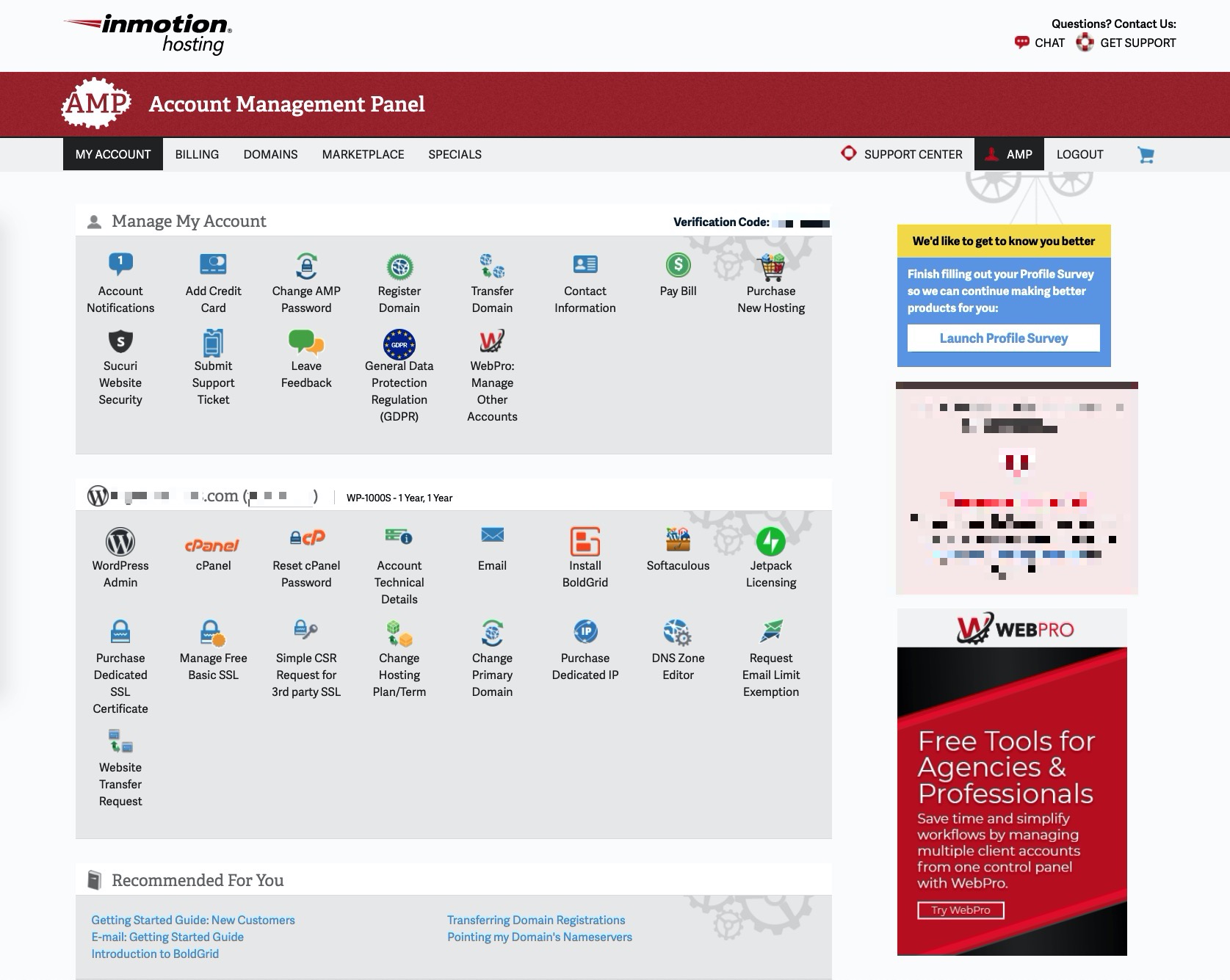
The lineup breaks down into four main categories. Shared hosting puts your site on a server alongside other customers and is the affordable on-ramp for blogs, brochure sites, and small businesses. Hosting for WordPress is essentially shared hosting tuned specifically for WordPress, with premium themes, plugins, and PHP-FPM workers included. VPS hosting gives you isolated, dedicated resources on a virtual private server with root access and far more headroom. Dedicated and bare metal servers hand you an entire physical machine for maximum performance and control. There is also reseller hosting for anyone who wants to sell hosting under their own brand.
Across the board you get NVMe SSD storage on most platforms, free SSL certificates, unmetered bandwidth, a free domain on qualifying annual terms, cPanel on shared plans, and InMotion’s UltraStack caching. UltraStack is worth calling out: it is InMotion’s own performance stack that bundles server-side caching so your pages load faster without you having to hand-assemble a pile of caching plugins. On WordPress specifically, the UltraStack ONE tier runs on VPS infrastructure and layers in tools like W3 Total Cache and Redis caching for serious speed.
Hosting plans & pricing
InMotion’s pricing follows the familiar host playbook: an attractive intro rate for your first term, then a higher renewal rate afterward. Prices shift with promotions and term length, so treat the figures below as approximate starting points rather than guarantees, and always confirm the live rate before you buy.
Shared hosting (Core, Launch, Power, Pro)
Shared hosting is the entry point, and it comes in four tiers. Core hosts a single website and is aimed at a first site or a simple brochure page. Launch steps up to two websites. Power supports around ten websites and is the popular middle choice for small businesses juggling a few projects. Pro is the agency-grade tier, hosting up to roughly forty sites with a dedicated 2 vCPU / 4 GB RAM allocation that shields you from noisy-neighbor slowdowns. Intro pricing on shared plans starts in the low single digits per month, with renewals landing around $11 and up depending on the tier. All shared plans include cPanel, free SSL, unmetered bandwidth, unlimited email, and one-click app installs.
Hosting for WordPress
The WordPress-optimized plans mirror the shared tiers (Core, Launch, Power, Pro) but come pre-tuned for WordPress with premium themes, plugins, and PHP-FPM workers. Intro pricing again starts in the low single digits per month with renewals in the roughly $11 to $15 range. If you want the fastest managed WordPress experience, UltraStack ONE runs on dedicated VPS resources and is priced accordingly higher, but with no jarring renewal jump on the annual term.
VPS hosting
VPS is where InMotion really shines. Plans start with intro pricing around $10 per month and scale up through several tiers, with renewals landing roughly in the high teens to high thirties per month depending on the resources. You get isolated resources, high-availability architecture, cloud-powered reliability, hardened security, and a choice of cPanel or Control Web Panel. Free website transfers are included when you have a control panel. This is the tier to reach for once shared hosting starts to feel cramped under real traffic.
Dedicated and bare metal servers
At the top end, dedicated servers start around $35 per month intro with renewals near $50 and up, and they offer configurable hardware, redundant infrastructure with a 99.99% uptime SLA, and a choice between managed cPanel setups or unmanaged bare metal. Newer AMD and Intel processors and up to 10 Gbps unmetered bandwidth options are available for demanding workloads. This is enterprise territory for high-traffic sites and mission-critical applications.
Whichever tier fits, it is worth pricing out both the intro and renewal cost before committing. You can Check InMotion deals to see the current numbers.
How to get the best deal (watch renewals)
Here is the honest truth about hosting pricing, and it applies to nearly every major provider, not just InMotion: the headline price you see is an introductory rate, and it goes up when you renew. There is no scandal here, it is simply how the industry works, but you need to plan for it.
A few practical tips. First, the lowest per-month prices almost always require a longer term, typically one to three years paid up front, which locks in the intro rate for longer. Second, check whether a free domain is included and factor its year-two renewal in. Third, decide whether you need paid add-ons like certain backup options, since those stack on top of the base plan. Fourth, use the 90-day money-back guarantee to actually test the service with a real workload before you are locked in.
The smartest approach is to calculate your true two-year cost, intro term plus one renewal, and compare that against competitors on the same basis. When you do, InMotion’s value looks a lot stronger than the raw renewal rate suggests, because you are paying for owned infrastructure and real support rather than a razor-thin reseller margin.
Watch: InMotion in action
If you would rather see the dashboard and setup experience before reading further, this walkthrough covers the essentials.
InMotion vs alternatives
No host exists in a vacuum. The two names that come up most often against InMotion are SiteGround and A2 Hosting, which chase the same performance-conscious, small-to-midsize audience. Here is how they stack up.
| Factor | InMotion Hosting | SiteGround | A2 Hosting |
|---|---|---|---|
| Money-back guarantee | Up to 90 days on qualifying plans | 30 days | Anytime prorated / 30-day full |
| Infrastructure | Owns its own servers & US data centers | Runs on Google Cloud | Owns servers, offers Turbo servers |
| Support | 24/7 US-based human support | 24/7 support, well regarded | 24/7 “Guru Crew” support |
| Performance stack | UltraStack caching, NVMe SSD | SuperCacher, NGINX | Turbo (LiteSpeed) on higher tiers |
| Renewal pricing | Rises after intro term | Rises sharply after intro term | Rises after intro term |
| Best fit | Scaling from shared to VPS/dedicated | Managed WordPress simplicity | Speed-focused shared hosting |
The short version: SiteGround is polished and beginner-friendly but its renewal prices climb steeply and you are ultimately on Google Cloud rather than owned hardware. A2 competes hard on raw speed with LiteSpeed Turbo servers. InMotion’s edge is owned infrastructure, the long 90-day guarantee, and a clean upgrade path up to bare metal, which makes it the better long-term home if you expect to grow. Compare for yourself and Check InMotion deals.
Uptime, speed & value
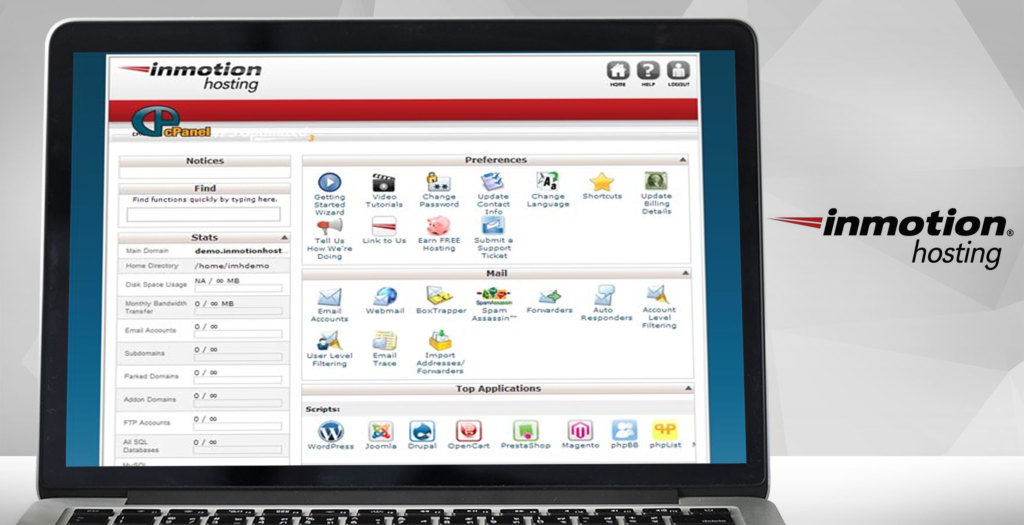
InMotion advertises a 99.99% uptime SLA, which is the figure you want to see from a serious host. In practice, independent testers and long-term customers generally report dependable uptime, though as with any provider you will occasionally find monitoring snapshots that dip slightly below the guaranteed number during a given window. That is normal, and the SLA is what gives you recourse if uptime genuinely underperforms.
On speed, the fundamentals are strong. NVMe SSD storage across most platforms, UltraStack caching, and modern PHP handling add up to fast page loads out of the box. Reviewers consistently note that shared plans perform well for typical traffic but can strain under heavy spikes, while the VPS plans handle traffic surges comfortably thanks to their isolated resources. In other words, the performance ceiling scales with the tier you choose, which is exactly what you would hope for.
On value, InMotion is not trying to be the absolute cheapest, and it is not. What you pay for is owned infrastructure, US-based human support, a long refund window, and a genuine upgrade path. Measured on total cost over a couple of years rather than the flashy first-month price, that is a fair deal for anyone whose website matters to their business.
Who should use it — and who should not
InMotion is a strong fit for a specific set of users. Growing small and midsize businesses get room to scale without ever changing providers. Agencies and freelancers managing multiple client sites benefit from the Pro shared tier and the reseller and managed options, plus white-glove migration help. Developers who want root access, VPS flexibility, and a choice of control panels will feel at home. And anyone who values talking to a knowledgeable human when something breaks will appreciate the support model.
It is a weaker fit for a few groups. If you want the rock-bottom cheapest possible hosting for a single hobby page and you will never scale, there are lower entry points elsewhere, though you often trade away support quality to get them. If you are a complete beginner who wants the most hand-holding, drag-and-drop, “never see a cPanel” experience, a fully managed platform like SiteGround may feel gentler. And if your business demands phone support at 3 a.m. specifically, note that live chat and tickets run 24/7 but phone hours can be more limited.
Honest limits
No host is perfect, and it would be dishonest to pretend otherwise. Here are the real limitations to weigh.
The biggest one is renewal pricing. The intro rates are attractive, but they rise once your first term ends, sometimes significantly. This is industry-standard behavior, but you should budget for it. Related to that, the very lowest advertised prices generally require a multi-year commitment paid up front, so the true “cheap” price has strings attached.
Add-ons are the second consideration. Some features you might assume are included, such as certain backup configurations, can carry an extra cost. Read the plan details so you know what is bundled versus what is a la carte. Third, while support is a genuine strength, phone availability is more limited than the always-on chat and ticket channels, which matters if you specifically rely on phone calls. Finally, shared hosting, like all shared hosting anywhere, can feel resource-constrained under heavy traffic; that is not an InMotion flaw so much as a reason to move up to VPS when your traffic justifies it.
InMotion discount codes & deals
InMotion runs promotions throughout the year, and the intro pricing you see is effectively the standing discount off the renewal rate. Rather than chase expiring coupon codes, the most reliable way to get the best current price is to check the live promotion and pick the term length that fits your budget, since longer commitments generally unlock the lowest per-month cost and lock the intro rate in for longer.
Because pricing and promotions change, we will not quote a coupon that might be stale by the time you read this. Instead, go straight to the source. You can Check InMotion deals to see the current intro pricing, renewal rates, and which plans include a free domain and the 90-day guarantee, then use that long refund window to test the service before you commit.
Frequently asked questions
Is InMotion Hosting good for beginners?
Yes, with a small caveat. The shared and WordPress plans include cPanel, a website builder, one-click installs, and free SSL, so getting a site live is straightforward. Beginners who want a more locked-down, fully managed experience may find a dedicated managed-WordPress platform gentler, but InMotion’s US-based support helps bridge the gap when you get stuck.
How does the 90-day money-back guarantee work?
Qualifying plans come with a 90-day money-back guarantee, which is much longer than the typical 30 days. If you prepaid for a year or more, refunds are prorated based on usage, and for the 90-day plans prorated refunds can be requested between day 31 and day 90 of the initial term. Refunds are not available after the initial 90-day period, and domains and certain add-ons are non-refundable.
Does InMotion offer free SSL and a free domain?
Yes. Free SSL is included across the plans, and a free domain is included on qualifying annual terms for the first year. Remember that the domain renews at its own rate in year two, so factor that into your long-term cost.
Where are InMotion’s servers located?
InMotion owns and operates its own data centers, with US facilities in Los Angeles and Ashburn, Virginia, plus a European data center in Amsterdam and further regional expansion planned. Owning the hardware gives it tighter control over uptime and performance.
Can I upgrade from shared hosting to VPS or dedicated later?
Yes, and this is one of InMotion’s biggest advantages. The product ladder runs from shared to WordPress to VPS to dedicated and bare metal, so you can start small and scale up within the same provider, with migration help available so you are not rebuilding from scratch.
Is InMotion’s support really US-based?
Yes. InMotion emphasizes 24/7 human support handled by its own US-based team rather than outsourced call centers or bots. Live chat and tickets are available around the clock; phone support hours can be more limited.
How to choose a web host (a quick buyer’s guide)
Whether or not you end up choosing InMotion, it helps to know what actually matters when picking a host, because the marketing noise can drown out the fundamentals. Here is a practical framework.
Start with your real needs, not the cheapest plan. Estimate your traffic, the number of sites you run, and how much growth you expect. A single low-traffic blog has very different needs from an agency running forty client sites. Buying too small means painful migrations later; buying too big wastes money.
Look past the intro price to the renewal price. Almost every host advertises a low first-term rate. Calculate your total cost over two years, including one renewal, and compare hosts on that basis. This single habit will save you from the most common hosting regret.
Value the guarantee. A long money-back window, like InMotion’s 90 days, is not just a marketing perk. It is your chance to test the service with a real workload before committing, which removes most of the risk from the decision.
Make sure there is room to grow. The best host is one you will not have to leave. A clear upgrade path from shared to VPS to dedicated means you can scale in place rather than migrating every time your traffic doubles.
Weigh InMotion against those criteria and it holds up well: owned infrastructure, a strong SLA, standout support, a long guarantee, and a genuine growth ladder. It is not the cheapest option on day one, but for a website that matters to your business, it is a dependable, honest choice. Ready to compare the current plans? Check InMotion deals.



