

Choosing a web host usually means picking a side. On one end you have cheap shared hosting that is easy to buy but quickly runs out of room. On the other you have raw cloud servers that are powerful but demand real sysadmin skills. ScalaHosting has spent years trying to sit in the middle: managed cloud VPS that behaves like a premium server, but is priced and packaged so ordinary site owners can actually use it. Founded in 2007 and headquartered in Dallas, the company now hosts hundreds of thousands of websites for more than fifty thousand customers, and it has built two in-house tools — the SPanel control panel and the SShield security system — to make that promise stick.
This review cuts through the marketing gloss. We looked at what the company actually sells, how its pricing behaves once the introductory discount ends, and where the platform shines and frustrates real users. If you are weighing ScalaHosting against SiteGround, Cloudways, or a standard shared host, this should give you an honest, grounded read before you commit. You can always Check ScalaHosting deals to see current pricing while you read.
AnalyzeBench Score: 8.4 / 10
Best for: Growing WordPress sites, agencies, and developers who want the power of a cloud VPS without managing the server themselves — and who value strong security and a genuine cPanel alternative.
What we loved:
- Fully managed cloud VPS with dedicated resources at prices well below most managed competitors
- SPanel, a free in-house control panel that replaces cPanel and uses far less server RAM
- SShield real-time security that actively blocks the overwhelming majority of web attacks
- Free, hands-off website migration performed by the support team
- Fast, knowledgeable 24/7 support that users repeatedly single out for praise
- Choice of infrastructure, including ScalaHosting’s own hardware plus AWS and DigitalOcean
Watch out for:
- Renewal prices climb steeply after the introductory term, just like most of the industry
- The entry shared plan is deliberately limited on storage and resources
- Managing billing and deployment can involve moving between two separate interfaces
- SPanel is excellent but unfamiliar if you are wedded to classic cPanel muscle memory
What makes ScalaHosting different
Most hosting companies resell the same building blocks: cPanel for control, a generic security plugin, and someone else’s cloud underneath. ScalaHosting’s pitch is that it owns more of the stack. The two pieces that matter most are SPanel and SShield, and they are the reason the company can offer managed cloud VPS at prices that undercut better-known rivals.
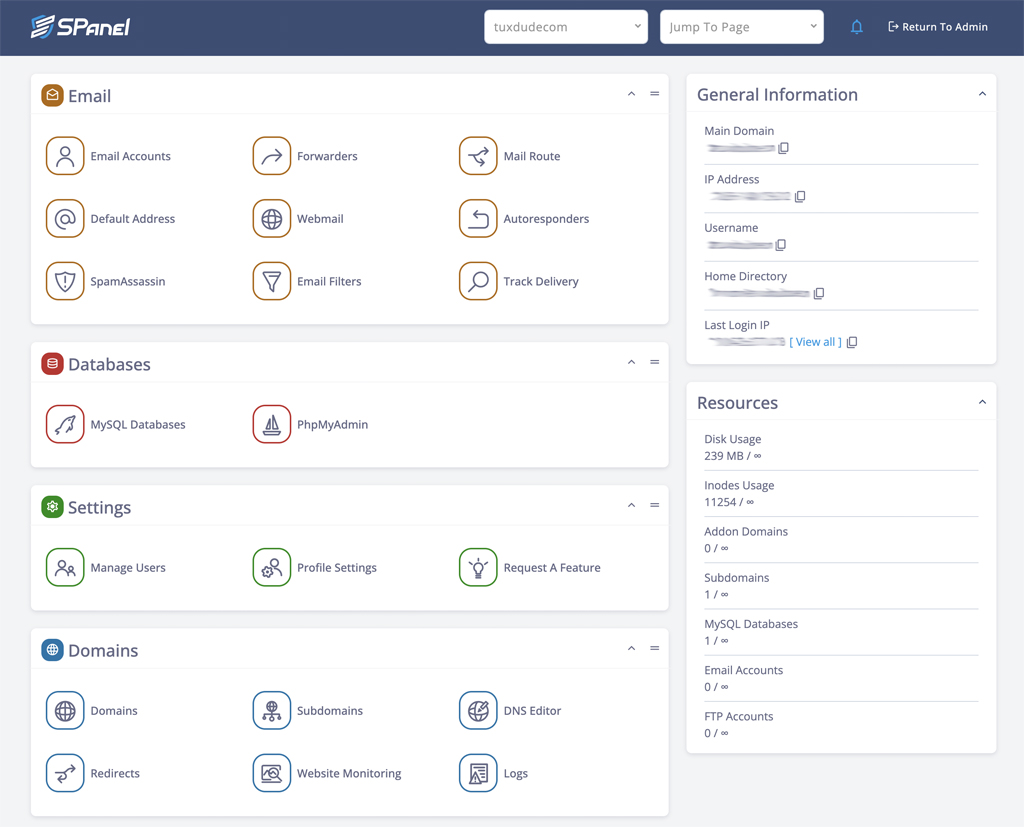
SPanel is ScalaHosting’s home-grown control panel, built as a direct alternative to cPanel. It handles the same everyday jobs — email accounts, databases, WordPress installs, SSL certificates, backups — but is included free with managed VPS plans rather than adding a per-account license fee. It is also far lighter on resources; ScalaHosting says it uses a fraction of the RAM a comparable cPanel install would consume, leaving more of your server for actually running websites. Because the company controls the code, it can patch and improve the panel on its own schedule rather than waiting on a third-party vendor.
SShield is the second differentiator: a real-time, AI-driven security monitor that watches server activity and blocks malicious behavior before it can do damage. ScalaHosting reports it stops the vast majority of web attacks automatically and notifies you if a site is ever compromised. For an owner who does not want to babysit a firewall, having this baked in at no extra cost is a meaningful advantage over hosts that upsell security.
The third piece is flexibility of infrastructure. ScalaHosting will run your managed cloud VPS on its own hardware in data centers across the US and Europe, or provision and manage a server for you on AWS or DigitalOcean — hyperscale reliability and global regions while ScalaHosting handles setup, patching, and monitoring. That combination is unusual at this price point.
The core service
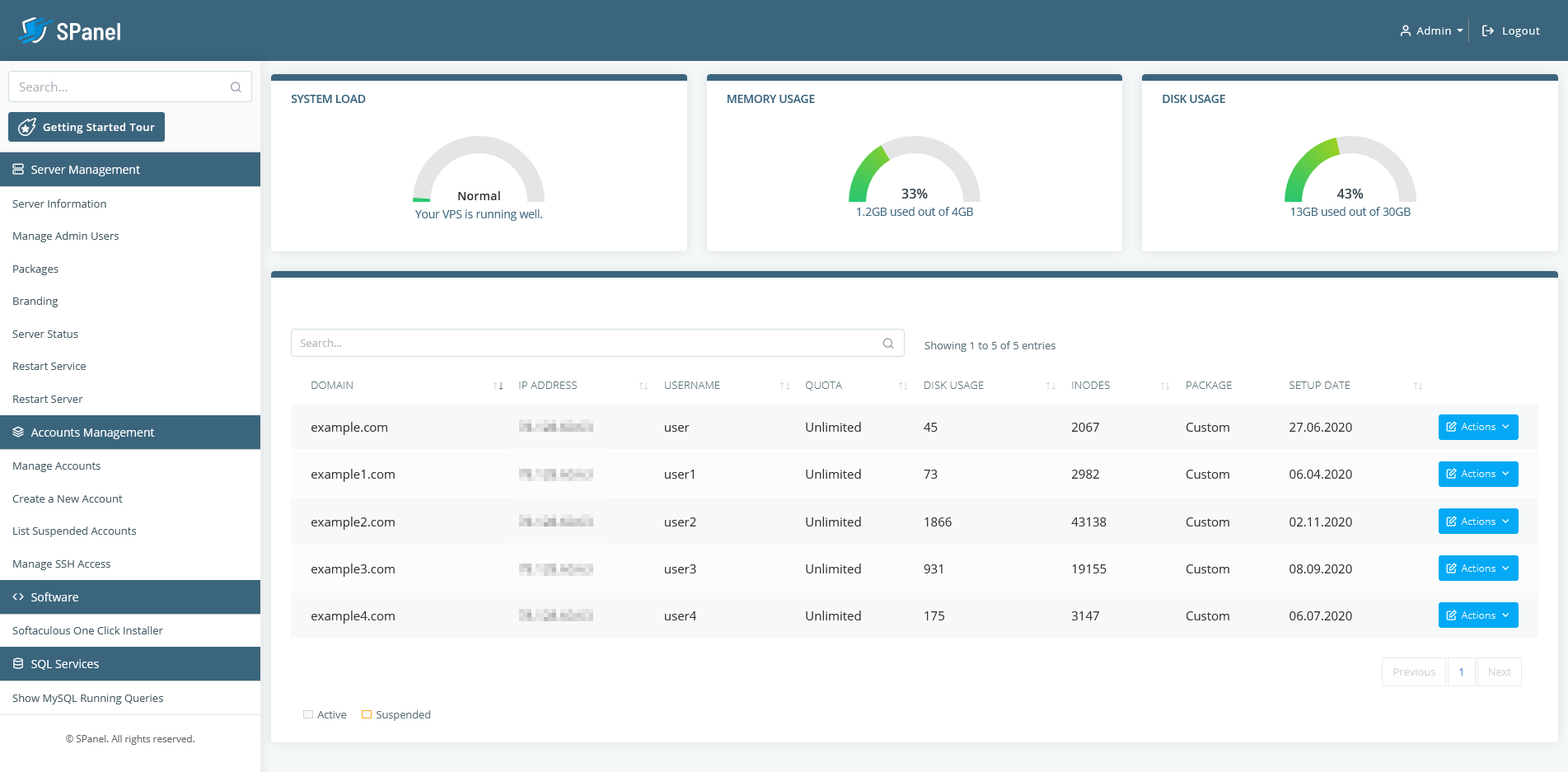
At its heart, ScalaHosting is a managed hosting company with two main product lines: traditional shared hosting for smaller sites, and managed cloud VPS for anyone who has outgrown a shared account. The unifying theme across both is management. ScalaHosting handles server setup, operating-system updates, security patches, and monitoring so that you can focus on your website rather than the machine underneath it.
On the shared side, you get the familiar experience: SPanel, one-click app installs, email hosting, free SSL, and NVMe SSD storage on a server shared with other customers. It is the right starting point for a blog, portfolio, or small business site that does not need dedicated resources yet.
The managed cloud VPS line is where ScalaHosting wants your attention. Here you get dedicated CPU cores, RAM, and NVMe storage that are not shared with anyone else, for more consistent performance under load. Crucially, it is managed — not a bare Linux box you must fend with yourself. ScalaHosting configures the server, keeps it patched, layers SShield on top, and gives you SPanel to run everything. Free migrations mean the support team moves an existing site over for you, aiming for zero downtime.
That blend — VPS-grade power with shared-hosting-grade ease — is the single most important thing to understand about ScalaHosting. It is neither the cheapest host on the market nor a barebones cloud provider. It is a managed middle path.
Plans & pricing
ScalaHosting uses the standard industry model of low introductory prices on longer terms followed by higher renewals, so the exact number you pay depends heavily on the billing cycle you choose and whether you are a new or returning customer. Prices below are approximate and change often, so always Check ScalaHosting deals for the live figures before buying.
Shared hosting
The shared tier is ScalaHosting’s entry point and typically starts around $2.95 per month on a longer introductory term. Even at the bottom of the range you get NVMe SSD storage, unmetered bandwidth, free SSL, email hosting, and SPanel. The trade-off is that the cheapest plan is deliberately modest on storage and is designed for a single small site; you will want to step up a tier if you plan to host several sites or expect meaningful traffic. Renewal pricing rises substantially after the intro term, which is the main thing to budget for.
Managed cloud VPS
This is the flagship. Managed cloud VPS plans generally start in the mid-teens per month on an introductory term and scale up as you add CPU cores, RAM, and storage. Every plan includes the full managed experience: dedicated resources, SPanel at no extra license cost, SShield security, free migration, and 24/7 support. Compared with other managed cloud providers, ScalaHosting’s VPS pricing is aggressive — even after renewal, it tends to land below comparable tiers from the bigger managed-cloud names. If you need more horsepower or a specific region, the option to run your managed VPS on AWS or DigitalOcean sits at the top of this line.
The honest summary: ScalaHosting is excellent value on the initial term and stays competitive at renewal for VPS, but like nearly every host, the renewal jump on shared hosting is significant. Buy the longest term you are comfortable with, and go in clear-eyed about the second-term bill.
How to get the best deal
Because ScalaHosting’s pricing rewards commitment, a few simple tactics help. First, choose the longest billing term you can justify — the introductory discount applies across the whole term, so a three-year signup locks in the low rate far longer than monthly. Second, right-size your plan at purchase; it is easy to scale a managed VPS up later, so you do not need to overbuy. Third, take the free migration — letting ScalaHosting’s team handle the transfer saves hours and avoids downtime, and it is included rather than an upsell.
Finally, compare the shared and VPS tiers honestly against your actual needs. If your site is small and static, shared hosting is the sensible, cheaper choice. But if you are running a growing WordPress store or several client sites, the managed VPS often delivers better value per dollar than repeatedly upgrading a crowded shared plan. When you are ready, you can Check ScalaHosting deals to compare the current promotional rates side by side.
Watch: ScalaHosting in action
If you would rather see the platform and control panel before reading further, the video below walks through ScalaHosting’s features, pricing, and overall experience so you can judge the interface for yourself.
ScalaHosting vs alternatives
ScalaHosting competes with both traditional managed hosts and pure managed-cloud platforms. Here is how it stacks up against two of the most common alternatives people cross-shop.
| Feature | ScalaHosting | SiteGround | Cloudways |
|---|---|---|---|
| Core model | Managed shared + managed cloud VPS | Managed shared & cloud on Google Cloud | Managed cloud on multiple providers |
| Control panel | SPanel (free, in-house cPanel alternative) | Custom Site Tools panel | Custom Cloudways panel (no cPanel) |
| Built-in security | SShield real-time AI protection included | Strong, with add-ons for some features | Solid, some features are paid add-ons |
| Dedicated resources | Yes, on managed VPS plans | Shared until higher cloud tiers | Yes, cloud VPS by design |
| Free migration | Yes, done by the support team | Free migration plugin / assisted | Free migration plugin |
| Renewal pricing | Higher after intro; VPS stays competitive | Notably high renewals | Flat monthly, no intro trickery |
| Best fit | Value-focused managed VPS users | Beginners wanting polish | Developers wanting flat cloud pricing |
The short version: SiteGround is the most beginner-polished but the most expensive at renewal; Cloudways offers transparent flat pricing but no cPanel-style panel and a more developer-leaning experience; ScalaHosting splits the difference with a real control panel, included security, and lower managed-VPS pricing, at the cost of a slightly less mainstream brand and a two-interface workflow.
Uptime, speed & value
Performance is where ScalaHosting earns its keep. Independent testing and long-term monitoring consistently place its uptime at or above the 99.9% mark, and some reviewers have recorded flawless uptime over their test windows. That reliability comes from a combination of NVMe SSD storage, dedicated resources on VPS plans, and modern CPUs across its data centers in the US and Europe.
On raw speed, ScalaHosting is competitive with the big names rather than record-breaking. Real-world tests show WordPress sites loading quickly and staying stable under sustained traffic, with load times around the industry average. For most business sites, blogs, and stores that is more than fast enough — and the dedicated resources on a managed VPS mean your performance is less likely to sag because of a noisy neighbor on the server.
On value, the calculation is straightforward. You are getting managed cloud VPS features — dedicated CPU and RAM, a free control panel, real-time security, and hands-on migration — at prices that typically undercut the better-known managed-cloud providers. That is the core of ScalaHosting’s appeal, and it is why the platform scores well despite a renewal model that mirrors the rest of the industry.
Who should use it — and who should not
ScalaHosting is an easy recommendation for a specific group. If you run a growing WordPress site, an e-commerce store, or a handful of client sites and have felt the ceiling of cheap shared hosting, the managed cloud VPS gives you dedicated performance without forcing you to become a sysadmin. Agencies and freelancers who want predictable performance, strong security, and a control panel their clients can use will feel at home, as will developers who like the idea of a managed AWS or DigitalOcean server.
It is a weaker fit in a couple of situations. If you only need a tiny brochure site and price is the single deciding factor, a bargain-basement shared host may be cheaper, though you give up the security and management. If you are a hardcore developer who wants full root freedom on a bare server, a pure unmanaged cloud provider gives more control for less. And if you are deeply attached to classic cPanel, SPanel will feel unfamiliar at first, though most users adapt quickly.
Honest limits
No host is perfect, and ScalaHosting has a few rough edges worth naming plainly. The most common complaint is pricing transparency: like most of the industry, the low headline price is an introductory rate, and renewals are meaningfully higher. This is not unique to ScalaHosting, but it does mean you should budget for the second term rather than the first.
The entry shared plan is intentionally limited, particularly on storage, so it is not the plan to buy if you have ambitions beyond a single small site. Some users also mention friction from working across two separate interfaces — one for billing, another for deploying sites — and temporary preview domains can be a little awkward before your real domain points at the server. None of these are dealbreakers, but they are real, and you should expect them.
Finally, brand familiarity is a soft limitation. ScalaHosting is well regarded among people who know it, but it lacks the marketing reach of the giants, so you will find fewer casual mentions and third-party tutorials than for the biggest names. For most buyers that matters little, but it is worth knowing.
ScalaHosting discount codes & deals
ScalaHosting’s best pricing comes from its standard introductory promotions on longer billing terms rather than from stackable coupon codes, so the most reliable way to save is to pick a multi-year term and lock in the discounted rate. Promotions rotate, and the exact numbers on shared and managed VPS plans change from month to month, which is why it pays to check the live offer before you commit rather than trusting any single figure quoted in a review.
To see today’s current promotional pricing across both the shared and managed cloud VPS tiers — including whatever term-length discount is running right now — Check ScalaHosting deals and compare the plans directly against your needs. Combine the promotional term with the free migration and you get most of ScalaHosting’s value with very little effort on your part.
Frequently asked questions
Is ScalaHosting good for WordPress?
Yes. WordPress runs well on both the shared and managed VPS tiers, with fast NVMe storage, one-click installs through SPanel, and SShield security guarding the site. Growing WordPress stores in particular benefit from the dedicated resources on a managed cloud VPS, which keep performance stable under traffic.
What is SPanel and do I have to pay for it?
SPanel is ScalaHosting’s in-house control panel, built as a free alternative to cPanel. It handles email, databases, WordPress installs, SSL, and backups, and it is included at no extra license cost on managed VPS plans. It also uses far less server RAM than cPanel, leaving more resources for your sites.
How does SShield security work?
SShield is a real-time, AI-driven monitoring system that watches server activity and automatically blocks malicious behavior before it causes harm. ScalaHosting says it stops the large majority of web attacks, and it alerts you if a site is ever compromised, all at no additional cost.
Does ScalaHosting offer free migration?
Yes. The support team will migrate an existing website from your current host for free and aims to do it with no downtime, so you do not have to move files and databases yourself. This is included rather than sold as an add-on.
Are the renewal prices higher than the intro price?
Yes. Like most of the industry, ScalaHosting advertises low introductory rates on longer terms, and prices rise at renewal. The jump is most noticeable on shared hosting; managed VPS renewals tend to stay competitive with rival managed-cloud providers. Budget for the second-term price when you sign up.
Can I run ScalaHosting on AWS or DigitalOcean?
Yes. In addition to its own data centers in the US and Europe, ScalaHosting can provision and fully manage a cloud VPS for you on AWS or DigitalOcean, giving you hyperscale reliability and more region choices while it handles the setup and maintenance.
How to choose a web host: a quick buyer’s guide
ScalaHosting is a strong option, but the right host always depends on your situation. Use these principles to make a confident choice, whether or not you end up with ScalaHosting.
Start with your growth curve, not today’s traffic. A host perfect for a brand-new blog may become a bottleneck in a year. If you expect to grow, favor a platform that lets you scale from shared to VPS without migrating providers — one of ScalaHosting’s genuine strengths.
Weigh managed versus unmanaged honestly. Managed hosting costs more but saves you from patching servers, configuring security, and firefighting outages. If your time is worth more than the price difference, managed is the smarter buy; if you enjoy server work, unmanaged cloud can be cheaper.
Read the renewal price, not just the headline. Nearly every host advertises a low introductory rate. Find out what you will actually pay in year two, and factor that into your decision from the start. A host that is transparent about long-term cost deserves credit.
Prioritize security and backups. A compromised or lost site can cost far more than a few dollars of monthly savings, so built-in real-time security like SShield and automatic backups are worth checking for in any host.
Test the support before you rely on it. Fast, competent support is the difference between a five-minute fix and a ruined weekend, so favor a host with responsive 24/7 help — an area where ScalaHosting is repeatedly praised.
Balance those factors against your budget and you will land on the right choice. If a managed cloud VPS with strong security, a real control panel, and competitive pricing matches what you need, ScalaHosting deserves a place at the top of your shortlist — you can Check ScalaHosting deals to see how its current plans fit your project.



