

Windsurf is the AI editor that bet everything on the agent — and priced it to undercut the leader. Cascade, its agentic core, plans multi-file changes, runs commands, watches your recent edits for context and iterates on its own errors, wrapped in a deliberately calmer UX than rivals. Pricing after the 2026 overhaul: Free (unlimited autocomplete, light agent use), Pro $20/month, Max $200, Teams $40/user — with quota-based limits replacing the old credit accounting.
The company's turbulent 2025 (acquisition drama, team departures) settled into a clear position: the value-priced, agent-first alternative in a market Cursor leads — with its own SWE-series coding models reducing dependence on frontier-lab pricing.
Our verdict: the strongest price-to-capability ratio in AI editors and the best free tier for casual coders. Teams choosing between the leaders should trial both against a real sprint — Cursor's velocity versus Windsurf's economics is a genuine decision, not a default. Score: 8.2 / 10.
→ Try Windsurf — see current pricing

What makes Windsurf different
Cascade's design philosophy: fewer knobs, more flow — it tracks your recent actions as implicit context, so "continue what I was doing" works eerily well, and its command execution asks permission at sensible boundaries rather than every step. Unlimited free Tab autocomplete is a genuine differentiator (rivals meter theirs), the in-house SWE models handle routine agentic work at lower cost than frontier calls, and the VS Code-fork familiarity makes migration frictionless — extensions, keybindings and themes port straight across.
Pricing
| Plan | Price | Reality |
|---|---|---|
| Free | $0 | Unlimited Tab, daily agent quota — a real working tier for light use |
| Pro | $20/mo | Full Cascade quotas, SWE models, cloud sessions |
| Max | $200/mo | Power-user quotas for all-day agent work |
| Teams | $40/user/mo | Admin, analytics, centralised billing |
The quota system (daily/weekly allowances instead of credits) made costs predictable — the community's loudest historical complaint, addressed. Annual billing trims ~17%.
The daily-driver experience
Cascade shines on scoped features and refactors: describe, watch the plan, approve the diffs — with a lower prompt-engineering burden than most agents because the recent-edit context fills gaps automatically. The honest gaps: on very large monorepos, indexing and context selection trail Cursor's; the ecosystem (guides, templates, community fixes) is thinner; and model velocity — how fast the newest frontier models arrive — has occasionally lagged the leader by weeks.
Windsurf vs Cursor vs Copilot
Against Cursor: the review's central question. Cursor wins feature velocity, ecosystem depth and large-repo behaviour; Windsurf wins price (identical $20 buys more agent quota), free-tier generosity and a UX many find less noisy. Individual developers doing product work: trial both for a sprint each. Against Copilot: Copilot's enterprise procurement and $10 entry undercut both, but its agent mode remains behind the fork-editors' integration depth. The market read: two strong leaders, one incumbent catching up — and switching costs near zero, so loyalty is earned monthly.
Pros, cons and limits
Pros: best-value Pro tier; unlimited free autocomplete; Cascade's low-friction agent flow; in-house models cut costs; predictable quotas; painless VS Code migration.
Cons: ecosystem and community trail Cursor; large-monorepo context selection weaker; frontier-model arrival sometimes delayed; corporate-history questions linger for risk-averse buyers; Max tier pricing matches rivals without clearly exceeding them.
Windsurf deals
Free tier needs no card and is the correct evaluation path; annual billing ~17% off. Students and OSS maintainers should check current discount programs.
Cascade in practice: a working session, narrated
The agent's texture reveals itself in a real task. Assignment: add CSV export to an existing dashboard's report page. Cascade's opening move — scanning recent edits and the open file — means the prompt can be terse: "add CSV export for the filtered results table, match our existing download patterns." It locates the analogous PDF-export implementation unprompted, proposes a plan (utility function, button component, wire-up), writes across three files, runs the type-checker, catches its own import error, fixes it, and presents the diff set for approval. Elapsed: four minutes, one human decision. The pattern generalises: Cascade's recent-actions context makes it unusually good at "continue in our style" tasks — the implicit brief that other agents need spelled out. Where the narration gets less flattering: on a sprawling monorepo task touching an unfamiliar service, context selection missed a relevant config until manually @-mentioned, and a long session's quality degraded until a fresh conversation reset it — the same hygiene rules as every current agent, applied to a tool whose marketing implies you need them less. You still need them.

The supervision calibration that emerges from daily use: green-light Cascade on scoped features, refactors and test generation; keep hands on the wheel for cross-service changes and anything touching auth, payments or migrations — not because it fails often, but because its failures there are expensive and its successes merely convenient.
The SWE models: the strategic bet under the hood
Windsurf's in-house SWE-series models are the platform's most consequential differentiator, and the reasoning deserves unpacking. The economics: frontier-lab API calls are the dominant cost in every AI editor's margins, and rivals pass that cost through as metered pricing; in-house models handling the routine majority of agent operations (file edits, simple completions, command orchestration) let Windsurf sell more agent-hours per dollar — the quota generosity this review keeps crediting. The performance reality: SWE models are competitive on the routine tier, and the platform routes hard reasoning to frontier models automatically — users experience the blend, not the components. The risk symmetry: if in-house models keep closing the gap, Windsurf's cost structure becomes a durable moat; if frontier capability keeps outrunning them, the platform pays the same API tolls as everyone while carrying training costs rivals skip. For buyers, the practical takeaway is the pricing stability the bet has already purchased — and a reason the $20 Pro tier undercuts equivalents without visible quota stinginess.

Teams deployment: the rollout view
The Teams tier's $40/user buys the admin layer — centralised billing, usage analytics, policy controls (model allowlists, privacy enforcement), and SSO at enterprise — and the deployment pattern mirrors the Cursor guidance with Windsurf-specific notes. The free tier changes pilot economics: an entire team can trial meaningfully at $0, with only the heavy users graduating to paid — a procurement path Cursor's metered free tier does not offer, and the quiet reason Windsurf pilots spread bottom-up in cost-conscious organisations. Rules files (the .windsurfrules equivalent of house conventions) deserve day-one investment: encoded naming standards, error-handling patterns and test expectations keep agent output on-pattern across the team. The analytics honesty: usage dashboards show adoption and quota consumption, not productivity — pair rollout with your own cycle-time baselines, because "acceptance rate" flatters and ticket-throughput tells. Sequenced so, teams report the same shape of outcome as with the category leader: meaningful cycle-time gains concentrated in boilerplate-heavy work, dependent on review discipline holding the quality line.
Migration and coexistence: the zero-cost trial reality
Because Windsurf is a VS Code fork, the switching mechanics are almost anticlimactic: settings, keybindings, themes and extensions import on first launch; projects open identically; and the muscle-memory tax is a day, not a month. The coexistence pattern deserves normalising: many developers run Windsurf and a rival simultaneously through an evaluation month — same repo, alternating days or task types — because nothing about either tool locks the codebase, and the head-to-head on your actual work outperforms any published benchmark. What to log during the trial beyond the obvious: quota headroom at week's end (the number that decides whether $20 covers your usage pattern), interruption frequency (Cascade's permission boundaries versus rivals' — a feel difference that compounds daily), and large-repo behaviour on your worst monorepo (the known relative weakness, worth measuring rather than assuming). The exit cost if the verdict goes the other way: zero — which is precisely why this category's competition stays honest and why running the trial costs nothing but the calendar fortnight.
The 2025 turbulence, priced honestly
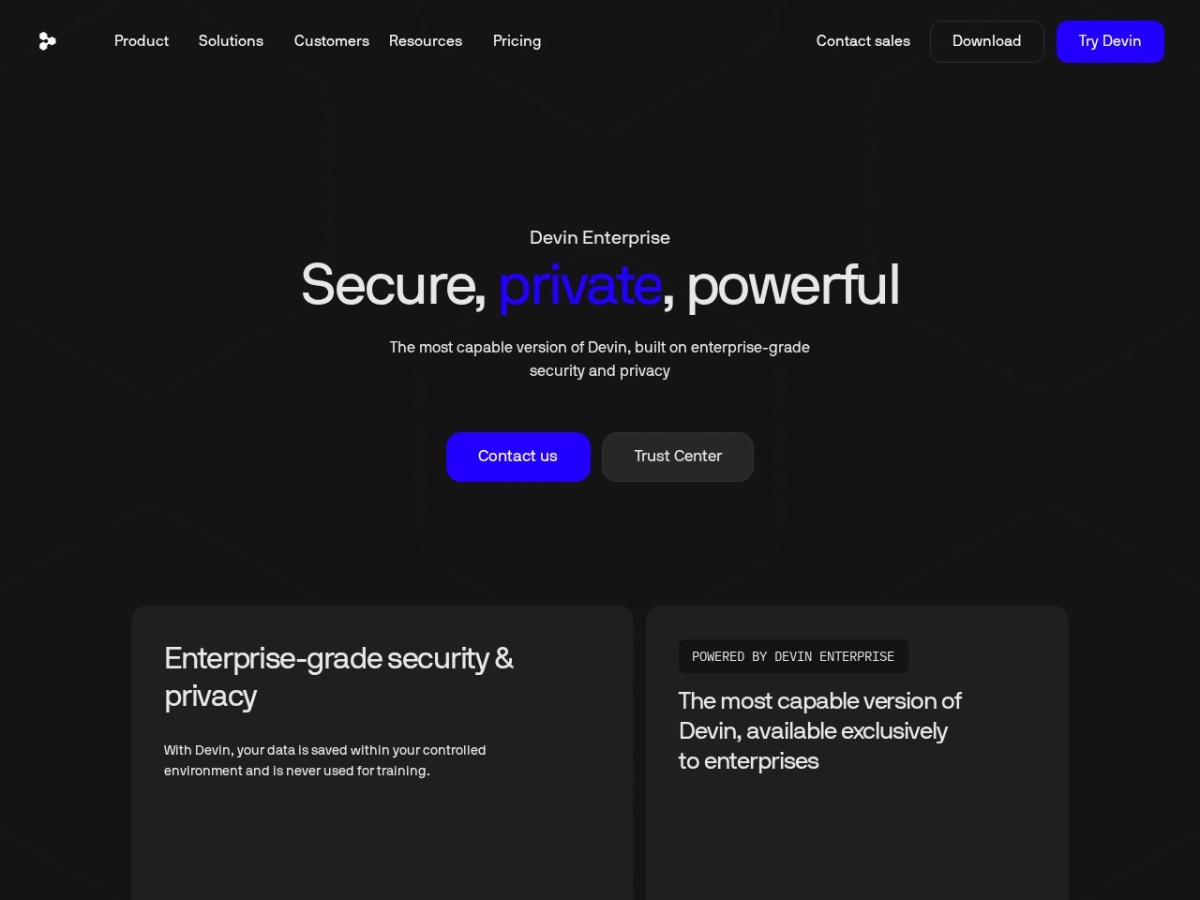
The corporate drama — the abandoned OpenAI acquisition, the Google licensing deal that took the founders, the Cognition acquisition of the remainder — deserves a sober paragraph because risk-averse buyers ask. The through-line: the product kept shipping through all of it, the 2026 pricing overhaul and model releases signal active investment, and Cognition's Devin lineage gives the current ownership obvious strategic logic — an agent company owning an agent-first editor. The residual risks a procurement memo should note: roadmap priorities could tilt toward Cognition's enterprise agenda, and the talent that built the original vision largely sits elsewhere now. The mitigations are the same facts as the migration section: zero switching costs, no data lock-in, monthly billing — platform risk in this category is rented, not owned, and Windsurf's post-acquisition execution has so far outrun its obituaries. Judge the shipping cadence quarterly; it is the only signal that has stayed reliable through the noise.
Windsurf for learners and the free-tier economy
The unlimited free autocomplete deserves its own audience callout, because it quietly makes Windsurf the best zero-budget setup in programming education. A learner gets a full modern editor, unlimited Tab completions that teach idiom by suggestion, and a daily agent quota sufficient for the explain-this-error and build-this-exercise loop that beginners actually run — where rivals' free tiers meter exactly the exploratory usage learning requires. The pedagogical caution transfers from every AI-learning discussion: completion-assisted speed is not comprehension, and learners who let Tab write what they cannot yet write themselves build debt instead of skill. The protocol that works: accept completions for syntax you already understand, type out what is new, and spend agent quota on explanations rather than solutions. For bootcamp students, hobbyists and the self-taught — including the spreadsheet-automating operations crowd this site serves — the configuration costs nothing and the ceiling arrives exactly when a real budget would be justified anyway.

Final synthesis: Windsurf's position is the disciplined challenger — structurally cheaper via its model bet, calmer by design philosophy, generous where the leader meters, and behind on the frontier features that decide benchmark bragging rights. Markets need exactly this competitor, and developers benefit from its existence whether or not they subscribe: the $20 that buys more agent-hours here is the same $20 the leader must keep justifying. Run the two-sprint bake-off; let your own diff history vote. Score: 8.2 / 10.
Windsurf's enterprise posture and the procurement view
For the buyer carrying a security questionnaire, the checklist state: SOC 2 attestation, zero-data-retention modes on paid tiers, hybrid deployment options at enterprise scale, model allowlisting for compliance-constrained teams, and the SSO/SCIM plumbing that IT expects. The differentiated procurement angle: the in-house SWE models offer a data-governance story rivals cannot match — routine agent operations can run on Windsurf-controlled models rather than third-party frontier APIs, shrinking the vendor-exposure surface that legal reviews measure. The Cognition ownership cuts both ways in procurement: a better-capitalised parent than the standalone startup was, against the roadmap-alignment questions any acquisition raises. Net: the enterprise story is credible and the pilot cost remains the category's lowest — which is how infrastructure decisions should be de-risked.
The verdict, restated for the fence
If the review's length obscured its shape: Windsurf is the right choice when the bill matters, the free tier is the on-ramp, and the agent-first philosophy fits how you already want to work; the leader remains right when frontier-day-one features and the deepest ecosystem outweigh cost. The gap between them is a preference, not a chasm — and preferences deserve two sprints of evidence, not a comparison table's verdict. Whichever editor wins your bake-off, the war between them is the feature developers benefit from most: capability compounding quarterly while the price of entry stays a lunch. Score: 8.2 / 10.
FAQ
Is the free tier actually usable?
For learning, side projects and light daily coding — yes, uniquely so in this category. Heavy agent work exhausts the daily quota by design.
Windsurf or Cursor, in one line?
Cursor if you live in Agent mode all day on a big codebase; Windsurf if you want 90% of that for a friendlier bill and calmer UX.
Do the in-house SWE models matter?
Practically: routine agent tasks run on them cheaply and fast, frontier models handle the hard parts — the routing is invisible and the bill is lower. Strategically: it hedges the platform against lab pricing.
Is my code private?
Zero-retention modes and SOC 2 posture cover standard corporate requirements on paid tiers; enterprises should review current attestations as with any AI tool.
What changed in the 2026 pricing?
Credits died; daily/weekly quotas replaced them. Costs became predictable, and the free tier's unlimited autocomplete survived — the two facts that matter.
The two-sprint bake-off
Sprint one: Windsurf on your real ticket flow — Tab always on, Cascade for one scoped feature daily, note the quota headroom and the interruptions you did not get. Sprint two: same protocol on the leading rival. Compare four numbers: tickets closed, diffs reverted, dollars spent, and — the one developers forget to log — how often you fought the tool. Most engineers discover the gap between the leaders is smaller than the discourse suggests, at which point the bill and the feel decide. Windsurf's pitch is winning exactly those two tiebreakers. Score: 8.2 / 10.
{“@context”:”https://schema.org”,”@type”:”Review”,”name”:”Windsurf review”,”itemReviewed”:{“@type”:”SoftwareApplication”,”name”:”Windsurf”,”applicationCategory”:”DeveloperApplication”,”operatingSystem”:”Windows, macOS, Linux”},”reviewRating”:{“@type”:”Rating”,”ratingValue”:”8.2″,”bestRating”:”10″,”worstRating”:”1″},”author”:{“@type”:”Organization”,”name”:”AnalyzeBench”},”publisher”:{“@type”:”Organization”,”name”:”AnalyzeBench”}}



