

Choosing a web host is one of those decisions that feels small until it isn’t. Pick well and you forget your hosting even exists; pick badly and you spend your weekends fighting slow load times, cryptic error pages, and support agents who answer in copy-paste. FastComet has spent more than a decade positioning itself as the antidote to that second experience: a fully managed, cPanel-based cloud host that handles the technical grunt work so you can get back to your website. In this review we dig into what FastComet actually offers, where it genuinely shines, and where it falls short compared to both budget hosts and premium competitors.
The goal is simple: give you enough honest detail to decide whether FastComet fits your project, or whether your money is better spent elsewhere. If you want to skip ahead and see current offers, you can always Check FastComet deals and follow along.
AnalyzeBench Score: 8.4 / 10
Best for: Bloggers, freelancers, small businesses, and WooCommerce store owners who want a genuinely managed, support-heavy hosting experience with a global datacenter footprint, and who value stability over rock-bottom pricing.
What we loved:
- Fully managed service with a support team that resolves the large majority of tickets fast.
- Free migration, free SSL, free Cloudflare CDN, and free daily backups bundled on every plan.
- A modern performance stack: NVMe SSD storage, AMD EPYC CPUs, and LiteSpeed caching for WordPress.
- Around a dozen datacenters across the Americas, Europe, Asia, and Oceania, so you can host close to your audience.
- cPanel included free on all plans, which many hosts now charge extra for or have dropped entirely.
Watch out for:
- Introductory pricing renews at the regular rate, so year-two costs jump noticeably.
- Storage is capped per tier rather than “unlimited,” which matters for media-heavy sites.
- Base prices sit above true budget hosts, so it is not the cheapest way to get online.
- VPS and dedicated tiers get expensive quickly relative to entry-level shared hosting.
What makes FastComet different
Plenty of hosts call themselves “cloud” hosting because it sounds modern. FastComet’s version of the term is more substantive than most in the shared-hosting bracket. Rather than cramming thousands of accounts onto a single legacy server, FastComet runs its shared plans on a container-based cloud architecture, which means each account gets isolated, guaranteed resources. In practice that translates to more consistent performance and better resistance to the “noisy neighbor” problem, where one overloaded site on a server drags everyone else down with it.
The second thing that sets FastComet apart is how much it bundles for free. Migration, SSL certificates, a CDN, daily and weekly backups, DDoS protection, and server monitoring are all included rather than sold as upsells. For a beginner, that removes a long list of decisions and hidden costs; the functional setup is the default rather than something you assemble from paid add-ons.
Third, FastComet is unapologetically a fully managed host, handling caching, security patching, server-level updates, and performance tuning on your behalf. That is a meaningful distinction from unmanaged VPS providers where you keep the stack healthy yourself. If you would rather not think about server administration at all, that managed model is a core reason to consider it. You can Check FastComet deals to see exactly what is bundled at each tier.
The core service
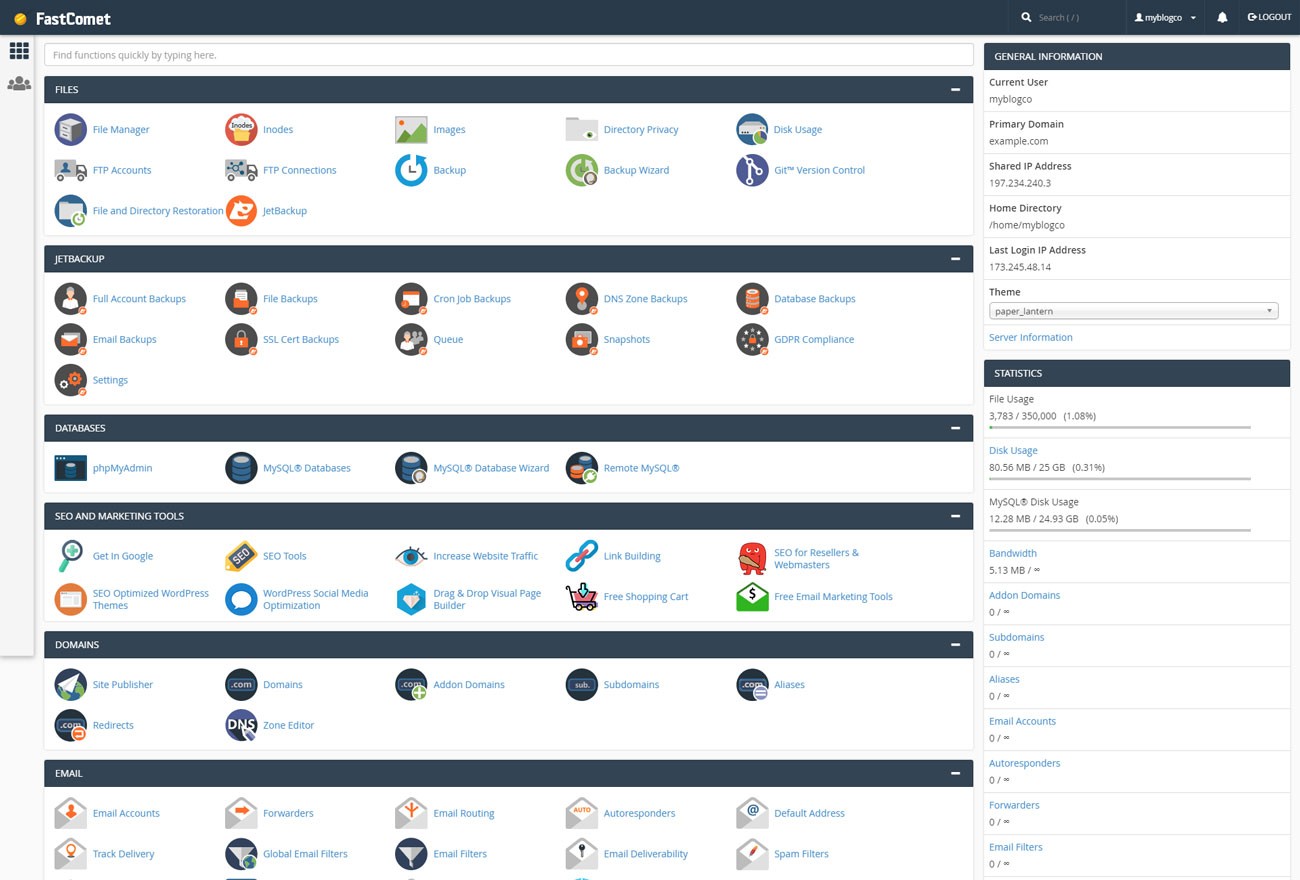
At its heart, FastComet is a managed cloud hosting company built around cPanel, the control panel most beginners and freelancers already know. Every plan ships with cPanel free of charge, which is increasingly rare now that several large hosts have either dropped it or folded its cost into higher prices. If you have used shared hosting before, you will feel at home immediately: file manager, one-click app installs via Softaculous, email account management, database tools, and DNS controls all sit where you expect them.
The performance stack underneath is genuinely current. FastComet uses NVMe SSD storage rather than older SATA SSDs, pairs it with AMD EPYC processors, and layers on LiteSpeed with the LiteSpeed Cache plugin for WordPress. A free Cloudflare CDN integration extends your reach across hundreds of global access points, which helps visitors far from your primary datacenter load pages quickly. FastComet advertises meaningfully faster websites as a result, and while your mileage will always depend on how your site is built, the ingredients here are the right ones.
Security is handled through Imunify360, which bundles a web application firewall, daily malware scanning, and free SSL certificates. Combined with always-on DDoS protection and automated backups, the baseline posture is solid for the small-to-medium sites FastComet targets, and one-click installs cover over 450 applications.
Hosting plans & pricing
FastComet organizes its lineup into three broad families: shared cloud hosting, Cloud VPS, and dedicated CPU servers. The shared tier is where most individuals and small businesses will start, and it is priced with an introductory promotional rate for the first term. Below we break down each family. A quick, important caveat: promotional prices apply to your first billing term only and then renew at the regular rate, so always budget for the renewal, not just the sign-up price.
Shared cloud hosting (FastCloud family)
The shared plans are tiered as FastCloud, FastCloud Plus, and FastCloud Extra. The entry FastCloud plan starts at a promotional rate in the low single digits per month (FastComet advertises pricing starting around $1.99/mo for the first term) and is built for a single website with a modest but real SSD storage allowance. Stepping up to FastCloud Plus roughly doubles your CPU and memory resources, lifts the storage ceiling, and removes the single-site limit so you can host multiple websites. FastCloud Extra sits at the top of the shared range with the most CPU, RAM, and storage, aimed at busier sites or small stores that have outgrown the entry tier. All three include cPanel, free SSL, free CDN, daily backups, and free migration.
Cloud VPS hosting
When shared resources are no longer enough, FastComet’s Cloud VPS tier offers dedicated RAM, SSD storage, and CPU cores in a still-managed environment. These plans carry a substantially higher monthly cost than shared hosting, reflecting the guaranteed resources and greater control you receive. They suit growing sites, small SaaS projects, or agencies managing multiple client sites that need more headroom than a shared plan provides, without the responsibility of running an unmanaged server.
Dedicated CPU servers
At the top end, FastComet offers dedicated CPU servers for projects that need the full resources of a machine. This is a premium tier with pricing to match, and it is overkill for most personal sites or small blogs. It becomes relevant when you are running resource-intensive applications, high-traffic stores, or workloads that cannot tolerate any resource contention. As with the other tiers, FastComet keeps the management burden low. To compare the current rates across all three families, Check FastComet deals.
How to get the best deal
The single biggest lever on your total cost with FastComet is term length. Because the promotional price applies only to your first billing term, choosing a longer initial term locks in the discounted rate for longer before you hit the regular renewal price. If you are confident you will keep the site running, committing to a multi-year term up front usually delivers the lowest effective monthly cost.
Second, match the plan to your actual needs rather than the plan the checkout page nudges you toward. If you are launching a single blog, the entry FastCloud plan is often plenty, and you can upgrade later without re-migrating. Paying for FastCloud Extra “just in case” wastes money you could keep for a year until your traffic genuinely demands more.
Third, use the bundled freebies rather than buying them elsewhere; because migration, SSL, CDN, and backups are already included, you should not pay a third party for them on top of your hosting. And keep an eye on the current landing-page offer, since the introductory rate does move. You can Check FastComet deals before you commit.
Watch: FastComet in action
If you prefer to see the control panel, onboarding flow, and real-world performance before deciding, the video below walks through FastComet as a hosting platform and weighs its strengths and weaknesses.
FastComet vs alternatives
FastComet does not exist in a vacuum. Its closest competitors in the managed shared-hosting space are SiteGround, long regarded as a premium beginner-friendly host, and A2 Hosting, which markets aggressively on speed. Here is how they broadly compare on the factors that matter most.
| Factor | FastComet | SiteGround | A2 Hosting |
|---|---|---|---|
| Control panel | cPanel, free on all plans | Custom Site Tools panel (no cPanel) | cPanel included |
| Renewal pricing | Intro rate renews at regular rate | Notably steep renewal increases | Intro rate renews higher |
| Free CDN & SSL | Yes, Cloudflare CDN and SSL | Yes, Cloudflare CDN and SSL | Yes, CDN and SSL |
| Datacenter locations | Around a dozen worldwide | Several across regions | Multiple across regions |
| Performance stack | NVMe SSD, AMD EPYC, LiteSpeed | Google Cloud, NGINX, custom caching | NVMe SSD, LiteSpeed (Turbo plans) |
| Best known for | Bundled freebies and support | Polished UX and reliability | Raw speed on Turbo tiers |
The short version: SiteGround feels the most polished but has drawn criticism for aggressive renewal pricing and dropping cPanel in favor of its own panel. A2 Hosting competes hard on speed and keeps cPanel, but its cheapest plans do not include the Turbo performance features. FastComet’s advantage is the breadth of what it bundles for free and its cPanel-on-every-plan stance, at a base price that sits between budget hosts and the premium end.
Uptime, speed & value
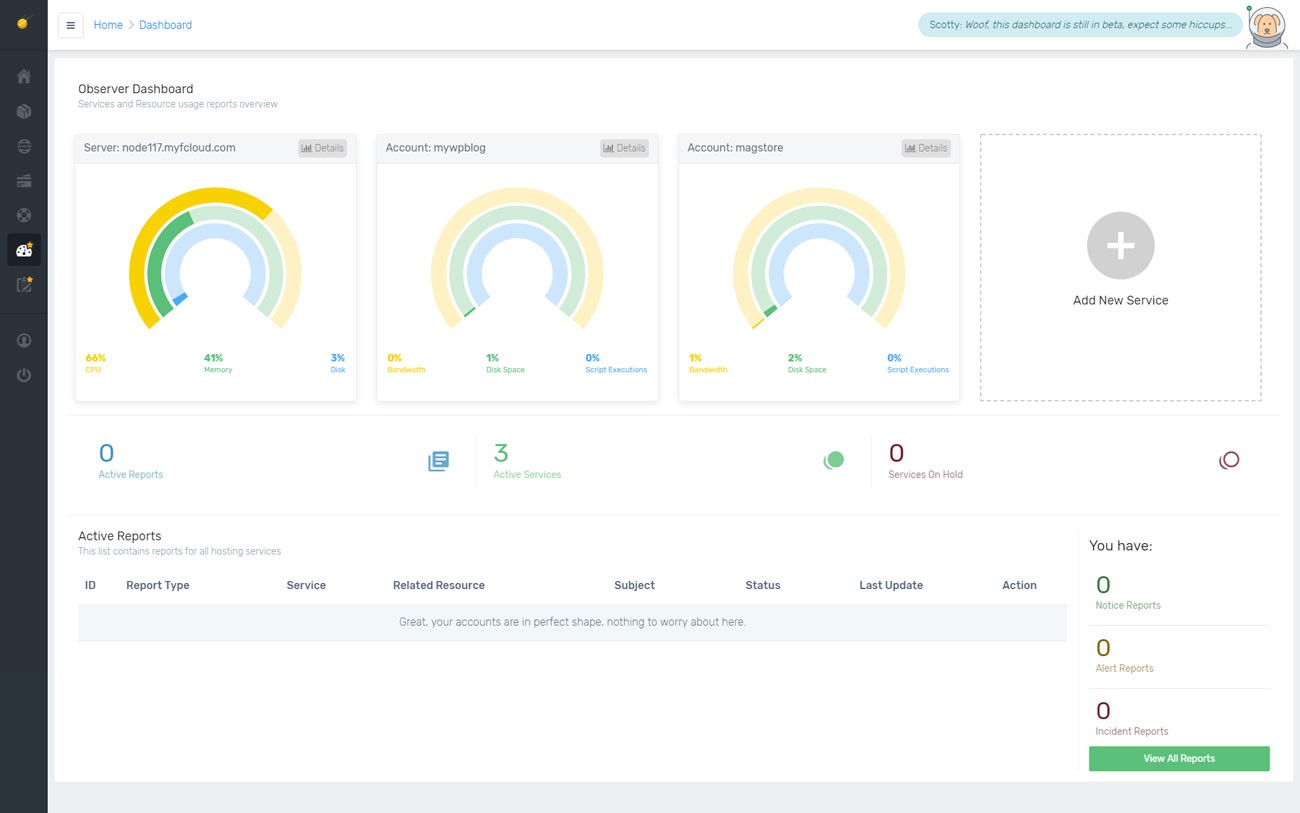
FastComet commits to keeping uptime above the industry-standard 99.9% for its network and your core services, and it publishes a live status page so you can verify the network’s health yourself. Independent testing over the years has generally found FastComet reliable, though as with every host, occasional incidents do happen; no provider is immune, and honest reviews that claim perfect uptime should be treated with suspicion.
On speed, the combination of NVMe storage, AMD EPYC CPUs, LiteSpeed caching, and a free CDN gives FastComet a strong foundation. Real-world load times depend heavily on how your site is built, which datacenter you choose, and how well your caching is configured, but the underlying hardware and software are current rather than legacy. FastComet’s own claim of up to 70% faster performance is marketing, but the ingredients that would produce those gains are genuinely present.
On value, the picture is nuanced. FastComet is not the cheapest host at sign-up or at renewal. What you pay for is a fully managed experience, a generous bundle of included services, and a highly rated support team. If those matter to you, the value holds up; if you simply want the lowest possible price for a hobby site, cheaper options exist. To weigh current pricing against what is included, Check FastComet deals.
Who should use it — and who should not
FastComet is a strong fit if you are a blogger, freelancer, small-business owner, or WooCommerce merchant who wants hosting that mostly manages itself. If you value responsive human support, want your SSL, CDN, backups, and migration handled without extra fees, and appreciate the familiarity of cPanel, FastComet delivers exactly that experience. Its global datacenter spread also makes it a sensible pick if your audience is concentrated outside North America, since you can host physically closer to your visitors.
It is a weaker fit in a few scenarios. If your only priority is the absolute lowest price, a budget host will undercut FastComet, especially at renewal. If you run a mediamheavy site, the per-tier storage caps may push you up the ladder sooner than you would like. And if you are a developer who wants full root control over an unmanaged server, FastComet’s managed model may feel restrictive relative to a bare VPS from a cloud infrastructure provider.
Honest limits
No host is perfect, and being straight about the downsides is the whole point of an honest review. FastComet’s most-cited limitation is renewal pricing: the attractive introductory rate applies only to your first term, and the regular rate that follows is materially higher. This is standard practice across the industry, but it still catches people off guard, so budget for the real long-term cost from day one.
Storage is the second constraint. FastComet’s plans provide defined SSD allowances rather than the “unlimited” storage some budget hosts advertise. In fairness, “unlimited” is usually a fiction hedged by fair-use policies, and FastComet’s transparency here is arguably more honest. But if you genuinely need lots of space, you will need to plan for a higher tier.
Third, the base price sits above true budget hosts. You are paying a premium for the managed service and bundled extras, which is fair, but FastComet is not the pick if raw cheapness is your only metric. Some reviewers have also flagged that certain VPS software and interface elements can feel dated, and that VPS and dedicated tiers scale up in price quickly. None are dealbreakers for the typical shared-hosting customer, but they are worth knowing.
FastComet discount codes & deals
FastComet’s best pricing generally comes from its standing introductory promotion rather than one-off coupon codes, and the entry rate is applied automatically when you sign up for a promotional term. Because that intro price covers only the first billing term, the most reliable way to save money is to choose a longer initial term so you lock in the discounted rate for as long as possible before renewal.
Rather than hunting for expired coupon codes across the web, the simplest approach is to check the current live offer directly. Promotions shift over time, and the landing page reflects whatever discount is active right now. When you are ready, Check FastComet deals to see today’s introductory pricing, the included free services, and the term options available, then match the plan to your actual needs rather than the most expensive one on offer.
Frequently asked questions
Is FastComet good for beginners?
Yes. FastComet is one of the more beginner-friendly managed hosts because it includes cPanel on every plan, handles migration for you, and offers 24/7 support with a strong track record for fast resolutions. The one-click installers and bundled security make getting a WordPress or WooCommerce site online straightforward even if you have never managed hosting before.
Does FastComet include free migration?
Yes. Free website migration is included on all plans, handled by FastComet’s team rather than an error-prone automated tool. This is a genuine advantage if you are moving an existing site from another host and want to avoid downtime or broken links during the transfer.
Does the price go up after the first term?
Yes. Like most hosts, FastComet’s advertised introductory price applies to your first billing term and then renews at the regular rate. To minimize the impact, choose a longer initial term so you enjoy the discounted rate for longer before the standard pricing kicks in.
What is included for free with FastComet?
Every plan bundles cPanel, free SSL certificates, a free Cloudflare CDN, daily and weekly backups, free website migration, DDoS protection, and Imunify360 security. This is one of FastComet’s strongest selling points, since many hosts charge extra for several of these services.
How many datacenters does FastComet have?
FastComet operates around a dozen datacenters spread across the Americas, Europe, Asia, and Oceania, giving you the option to host physically close to your primary audience for faster load times. A free CDN extends that reach further across hundreds of global access points.
Is FastComet worth it compared to cheaper hosts?
It depends on what you value. FastComet costs more than bargain-basement hosts, but you get a fully managed service, a generous bundle of included features, and highly rated support. If those matter to you, it is worth the premium. If you only want the lowest possible price for a hobby project, a cheaper host may suit you better.
How to choose a web host: a practical guide
Whether or not FastComet ends up being your pick, the process of choosing a host is the same. Start by being honest about what you are building. A personal blog, a brochure site, and a high-traffic store have very different needs, and buying far more or far less than you need is the most common and costly mistake. Right-sizing your plan to your real requirements is the foundation of a good decision.
Next, look past the sign-up price to the renewal price. Nearly every host in this market advertises a low introductory rate that increases when your first term ends. Calculate the true multi-year cost, not the first-month sticker, and compare hosts on that basis. A host that looks cheapest at checkout can easily become the most expensive over three years.
Then, weigh what is actually included. Free SSL, a CDN, automated backups, and migration all have real value, and a host that bundles them can be better value than a cheaper one that charges for each separately. Pay attention to the control panel too; cPanel remains the most widely supported and portable option, which matters if you ever decide to move.
Consider performance and location too. Modern storage (NVMe SSD), current CPUs, and server-side caching like LiteSpeed all contribute to speed, and hosting near your audience reduces latency. Finally, do not underestimate support: when something breaks at midnight, fast, knowledgeable, round-the-clock help is the difference between a ten-minute fix and a ruined weekend. Read recent, specific reviews about support quality rather than trusting star ratings alone.
Measured against those criteria, FastComet scores well on included features, control panel, performance stack, global reach, and support, while asking you to accept a higher-than-budget price and per-tier storage caps in return. If that trade sounds right for your project, it is a well-rounded, honest choice. When you are ready to compare the current plans and pricing for yourself, Check FastComet deals.



