

If you have ever watched a page crawl its way onto the screen while visitors quietly click away, you already understand why speed sits at the center of any serious hosting decision. A2 Hosting built its entire reputation on that single promise: pages that load fast, servers that stay responsive under load, and a technology stack tuned for performance rather than the lowest possible sticker price. It is an independent host (not part of the giant EIG/Newfold portfolio that swallowed so many familiar brand names), and that independence has historically shaped both its engineering choices and its support culture.
In this review we look at what A2 Hosting actually delivers, where its Turbo servers earn their keep, how the plans and pricing really work once the introductory discount expires, and who should think twice before signing up. We tested claims against independent reviews, dug into the plan structure, and kept the focus on the two questions that matter most: is it genuinely fast, and is it genuinely worth it?
AnalyzeBench Score: 8.4 / 10
Best for: Speed-conscious site owners, WordPress and WooCommerce users, developers, and small businesses that want faster page loads than budget shared hosting delivers, and are willing to choose a Turbo plan to get it.
What we loved:
- Turbo servers with LiteSpeed, NVMe SSD storage, and caching that deliver a real, measurable speed advantage over standard shared hosting.
- An anytime money-back guarantee, one of the most genuinely risk-free refund policies in the industry.
- Independent ownership and a knowledgeable in-house “Guru Crew” support team.
- Free SSL, free site migration, and developer-friendly features like staging, SSH, and multiple PHP versions.
Watch out for:
- Steep renewal pricing: the low intro rates jump substantially when your first term ends.
- The headline “20x faster” speed only applies to the Turbo plans, not the entry-level Startup plan.
- Live chat wait times can stretch during busy periods.
What makes A2 Hosting different
Most shared hosting sits on Apache web servers with spinning or basic SSD storage, tuned to pack as many customers onto a machine as possible. A2 Hosting takes a different angle. Its premium plans, branded “Turbo,” run on LiteSpeed web servers paired with NVMe SSD storage and a built-in caching layer. LiteSpeed is a drop-in Apache replacement that handles high traffic far more efficiently, and when combined with server-side caching (LiteSpeed Cache for WordPress users) the difference in real-world page loads is easy to feel.
A2 markets this as pages loading “up to 20x faster” than standard hosting. That specific figure is a best-case marketing claim, but the underlying reality holds up: independent reviewers repeatedly clock Turbo plans two to three times faster than typical budget shared hosting from the big-box providers. The technology is real, not vapor.
The second thing that sets A2 apart is its refund policy. Where most hosts cap their money-back window at 30 to 90 days, A2 offers a 30-day full refund plus an anytime prorated refund after that. If you cancel six months in, you get back the unused portion of your term. That is unusually customer-friendly and takes much of the risk out of committing to a longer plan.
Third, A2 remains independently owned. It is not part of the sprawling conglomerate that operates dozens of hosting brands off shared infrastructure and call centers. That independence shows up in an in-house support team and engineering decisions that prioritize performance. (Worth noting: A2 Hosting has been rebranding under the “hosting.com” umbrella, but the Turbo technology, plan structure, and service you are buying are the same.)
The core service
At its heart, A2 Hosting is a full-stack web host. Shared hosting is the flagship product and where most individuals and small businesses will start, but the ladder extends well beyond it: managed WordPress hosting, VPS (both managed and unmanaged), and dedicated servers for heavy workloads. That range means you can start small and scale up on the same provider rather than migrating away when you outgrow shared hosting.
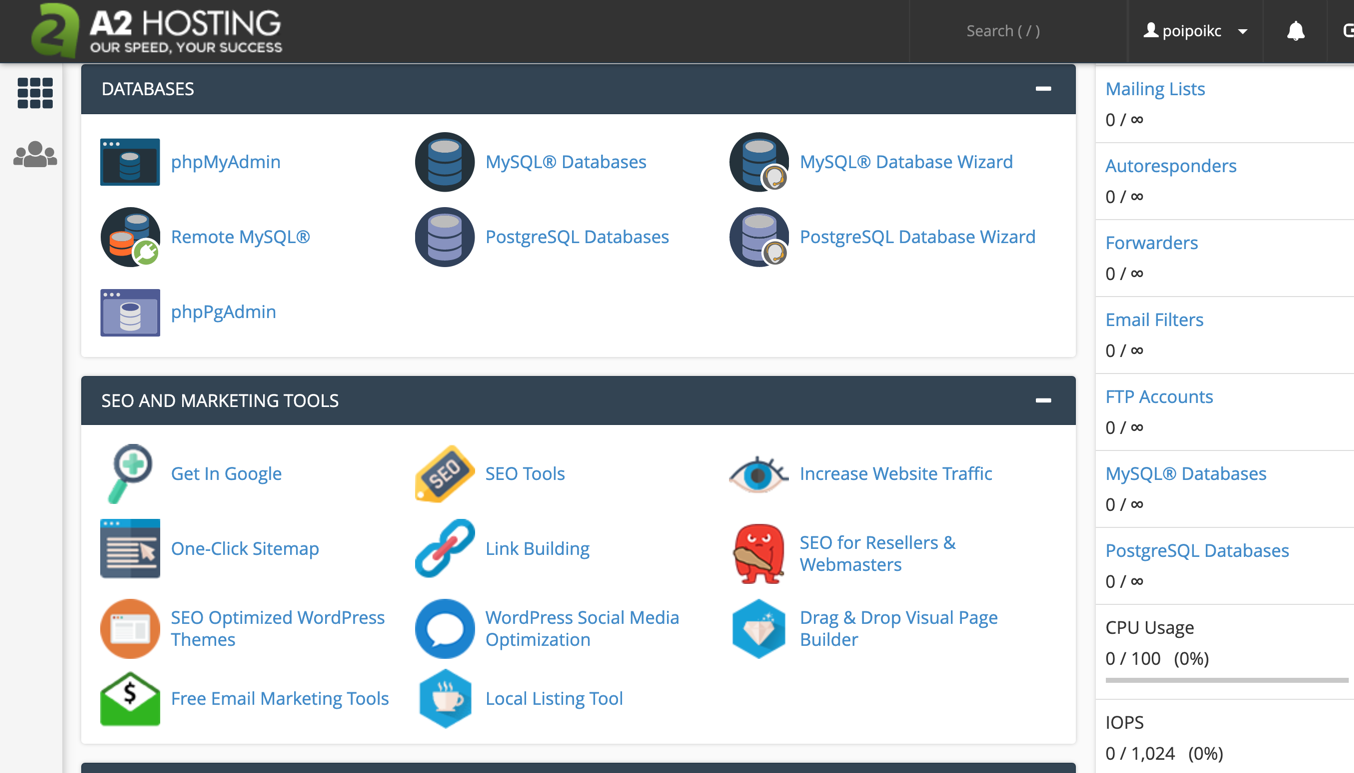
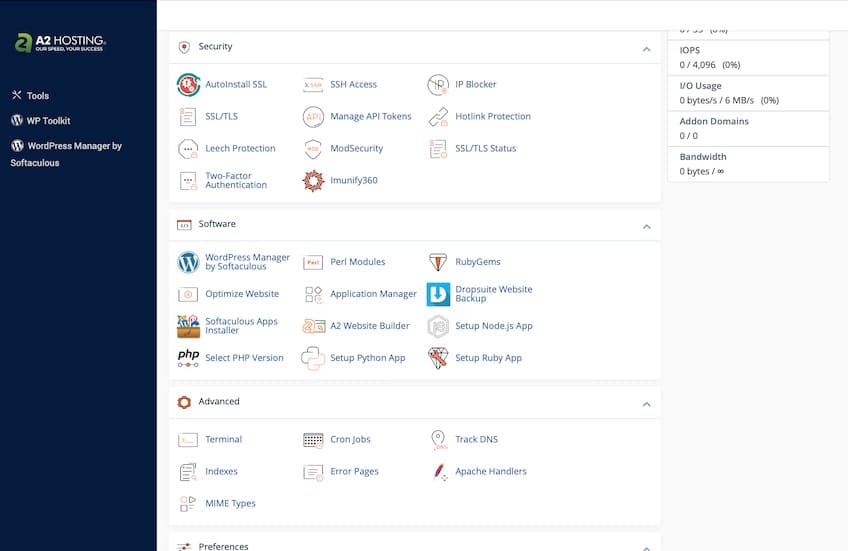
Every plan includes the essentials you should expect in a modern host: free SSL certificates, free and free-to-request site migration, a control panel (cPanel on the classic shared plans), automatic backups on most tiers, and a 99.9% uptime commitment backed by an SLA. Developers get the tools they care about, SSH access, Git, staging environments, multiple selectable PHP versions, and Node.js support on higher tiers.
For WordPress specifically, A2 leans into its speed story. The Turbo stack plus LiteSpeed Cache is a strong combination for WordPress and WooCommerce, where server response time directly affects both user experience and search rankings. If you run an online store or a content-heavy site, this is exactly the workload A2’s architecture is designed for.
Hosting plans & pricing
A2’s shared hosting is organized into four tiers. The pattern is simple: the two lower plans run on standard servers, and the two “Turbo” plans unlock the LiteSpeed performance stack. Here is how they break down.
Startup
The entry point. Startup is aimed at a single website with a generous storage allowance, free SSL, email, and a CDN. It runs on standard (non-Turbo) infrastructure, so it does not get the headline speed benefit. Intro pricing is very low, but this plan is best understood as a starter tier for a small, low-traffic site, not the plan that delivers A2’s famous performance.
Drive
A step up that removes the single-site limit. Drive supports unlimited websites and storage, adds automated daily backups, and increases database and resource allowances. It still runs on standard servers rather than the Turbo stack, so choose it when you need to host several modest sites but do not need maximum speed.
Turbo Boost
This is where A2 becomes A2. Turbo Boost adds the full Turbo server stack: LiteSpeed, NVMe SSD, Turbo Cache, and more RAM and CPU allocation than the lower tiers. For most speed-conscious WordPress and WooCommerce users, this is the sweet-spot plan and arguably the best value in the lineup, because it is the cheapest way to get the performance A2 is actually known for.
Turbo Max
The top shared tier. Turbo Max provides substantially more server resources than Turbo Boost (A2 markets it as several times the RAM and CPU), aimed at busier sites that push a lot of traffic while staying on shared hosting. If your Turbo Boost site starts feeling resource-constrained, this is the upgrade before you jump to VPS.
Beyond shared hosting, managed WordPress plans wrap the same performance stack in a more hands-off experience, while VPS and dedicated servers step up for applications that need guaranteed resources or root-level control. Across the board, the pricing model is the same: an attractive introductory rate on your first term, then renewal at the standard rate.
How to get the best deal (watch renewals)
Here is the single most important thing to understand before you buy: A2 Hosting’s low advertised prices are introductory rates that apply to your first billing term only. When that term ends, the plan renews at the standard rate, which is meaningfully higher. This is standard practice across nearly the entire hosting industry, but the gap between intro and renewal at A2 is large enough that it deserves your attention.
The practical way to maximize savings is to lock in the longest available introductory term. A2 typically offers its deepest discount on a 36-month commitment, which means you pay the low intro rate for three full years before renewal pricing kicks in. If you are confident you will keep the site online (and the anytime refund policy means you are not locked in even if you change your mind), the longer term stretches your discount window as far as it will go.
A few concrete tips:
- Compare the total cost over the whole term, not just the monthly headline number, so the intro-versus-renewal math is clear before you commit.
- If you only want the true speed benefit, budget for a Turbo plan (Boost or Max) rather than being drawn in by the rock-bottom Startup price.
- Set a calendar reminder a month before renewal so the higher rate never surprises you.
- Because refunds are prorated after the first 30 days, a long term is lower-risk here than at most hosts.
Watch: A2 Hosting in action
If you want to see the interface, speed tests, and setup flow before committing, this walkthrough covers the performance and feature side of A2 Hosting in practice.
A2 Hosting vs alternatives
A2 does not exist in a vacuum. Two of the names it is most often weighed against are Hostinger (the budget-value leader) and SiteGround (the managed-experience premium option). Here is how they compare on the factors that matter.
| Factor | A2 Hosting | Hostinger | SiteGround |
|---|---|---|---|
| Core strength | Raw speed via Turbo/LiteSpeed servers | Lowest entry pricing | Polished managed experience and support |
| Speed stack | LiteSpeed + NVMe on Turbo plans | LiteSpeed on most plans | Google Cloud + custom caching |
| Refund policy | Anytime prorated refund (industry-leading) | 30-day money-back | 30-day money-back |
| Renewal pricing | High jump after intro term | Moderate jump | High jump after intro term |
| Best for | Speed-focused WordPress/WooCommerce and developers | Budget-conscious beginners | Users who want hands-off managed hosting |
The short version: Hostinger usually wins on price, SiteGround wins on the fully managed, hand-holding experience, and A2 wins on the combination of raw speed plus its uniquely flexible refund policy. If speed is your priority and you are comfortable choosing a Turbo plan, A2 is the strongest of the three on performance-per-dollar.
Uptime, speed & value
On uptime, A2 backs all shared plans with a 99.9% commitment written into an SLA, and steps that up to 99.99% on VPS. In practice, most users report solid reliability, though (as with any host) individual server experiences vary, and some independent reviewers have flagged occasional dips. The SLA gives you recourse, but treat 99.9% as the realistic expectation rather than a guarantee of literal perfection.
On speed, the Turbo plans are the real story. LiteSpeed plus NVMe SSD plus server-side caching is a genuinely fast combination, and it consistently outperforms standard Apache-based budget hosting in independent testing. The important caveat, which A2’s marketing understates, is that this speed advantage lives on the Turbo tiers. Buy the Startup plan and you get competent standard hosting, not the 20x headline experience.
On value, the picture depends entirely on which plan you pick and how you read the pricing. At the introductory rate, a Turbo plan is excellent value for the performance you get. At renewal, the math tightens, and you should compare A2’s standard rate against competitors before your term ends. The anytime refund policy meaningfully improves the value equation, because it removes the “locked in and stuck” risk that makes long commitments nerve-wracking elsewhere.
Who should use it — and who should not
A2 Hosting is a strong fit if you are a WordPress or WooCommerce user who cares about page speed, a developer who wants SSH, staging, Git, and flexible PHP versions, or a small business that has felt the sluggishness of cheap shared hosting and wants a genuine performance upgrade without jumping straight to a VPS. If you are willing to choose a Turbo plan, A2 delivers exactly what it advertises.
It is a weaker fit if your only priority is the absolute lowest price (Hostinger will usually beat it), if you want a fully managed, do-everything-for-me experience with minimal technical involvement (SiteGround’s managed WordPress leans further in that direction), or if you plan to buy the cheapest Startup plan expecting the headline speed, because that plan does not include the Turbo stack that makes A2 special.
Honest limits
No host is perfect, and A2 has real trade-offs worth naming plainly. The renewal pricing jump is significant, and if you forget to plan for it the second-term bill can be a jolt. The best-in-class speed is gated behind the Turbo plans, so the entry-level price and the headline performance do not belong to the same product. Support, while knowledgeable, can have longer live-chat waits during peak periods. And uptime, while backed by an SLA, is not immune to the occasional dip that affects essentially every shared host.
None of these are dealbreakers on their own, but they are the difference between a fair recommendation and a hyped one. Go in expecting to pay for a Turbo plan, plan for renewal pricing, and lean on the refund policy as your safety net, and A2 tends to deliver on its promises.
A2 Hosting discount codes & deals
A2 runs its best promotions as introductory pricing rather than one-off coupon codes, and the deepest discount is typically tied to the longest term. The most reliable way to get the current best price, and to see exactly which plan the discount applies to, is to check the live deal directly rather than trusting a static code that may have expired.
Because the anytime prorated refund lets you cancel and recover unused time, committing to a longer discounted term is lower-risk here than at most hosts, which makes locking in the intro rate a sensible move if A2 fits your needs.
Check the latest A2 Hosting deals here
Frequently asked questions
Is A2 Hosting actually fast?
Yes, on its Turbo plans. The LiteSpeed web server, NVMe SSD storage, and server-side caching deliver a real, measurable speed advantage over standard budget shared hosting. The “up to 20x faster” claim is a best-case marketing figure, but independent testing consistently shows Turbo plans outpacing typical big-box shared hosting by a meaningful margin. The entry-level Startup plan does not include the Turbo stack.
What is the difference between the Turbo plans and the standard plans?
The Startup and Drive plans run on standard servers. The Turbo Boost and Turbo Max plans add the full Turbo performance stack: LiteSpeed, NVMe SSD, Turbo Cache, and more allocated resources. If speed is the reason you are considering A2, you want a Turbo plan.
How does the money-back guarantee work?
A2 offers a 30-day full money-back guarantee, plus an anytime prorated refund after that. If you cancel partway through your term, you get back the unused portion. This is one of the most flexible refund policies in the hosting industry and makes longer commitments far less risky.
Why is the renewal price so much higher than the intro price?
Like nearly every web host, A2 advertises a discounted introductory rate that applies to your first billing term only. When the term ends, the plan renews at the standard rate. Locking in the longest available term (often 36 months) keeps you on the low intro price for as long as possible before renewal.
Is A2 Hosting good for WordPress?
Yes. The Turbo stack combined with LiteSpeed Cache is a strong pairing for WordPress and WooCommerce, where server response time directly affects both user experience and search performance. A2 also offers dedicated managed WordPress plans for a more hands-off setup.
Can I upgrade later as my site grows?
Yes. A2 offers a full ladder, from shared hosting up through managed WordPress, VPS, and dedicated servers, so you can start small and scale on the same provider rather than migrating elsewhere when you outgrow shared hosting.
Is A2 Hosting the same as hosting.com?
A2 Hosting has been rebranding under the hosting.com umbrella, but the underlying Turbo technology, plan structure, and support you are buying remain the same. If you signed up for A2’s performance and refund policy, those core elements carry over.
How to choose a web host: a quick buyer’s guide
If you are shopping beyond just A2, a few principles will save you money and regret. First, separate the intro price from the renewal price and always compare hosts on the total cost of the full term. A rock-bottom first-year rate that triples on renewal is often worse value than a slightly higher rate that stays stable.
Second, match the plan to the workload. Speed matters most for stores and content sites, where a slow server directly costs you conversions and rankings, so a performance-focused stack like LiteSpeed and NVMe is worth paying for. A tiny brochure site can live happily on a basic plan. Do not overbuy, but do not starve a growing site of resources either.
Third, weigh the refund and commitment terms. A generous, prorated refund policy (like A2’s anytime guarantee) lowers the risk of a long term dramatically, which changes the math on whether to lock in a multi-year discount. A rigid 30-day window means a long commitment is a bigger gamble.
Fourth, check what is genuinely included: free SSL, backups, migration, staging, and the support model. And finally, read independent reviews for uptime and support quality rather than relying on the host’s own marketing. Apply that checklist and A2 Hosting stacks up well for anyone whose top priority is speed, with eyes open about renewal pricing and the fact that the best performance lives on the Turbo tiers.



