
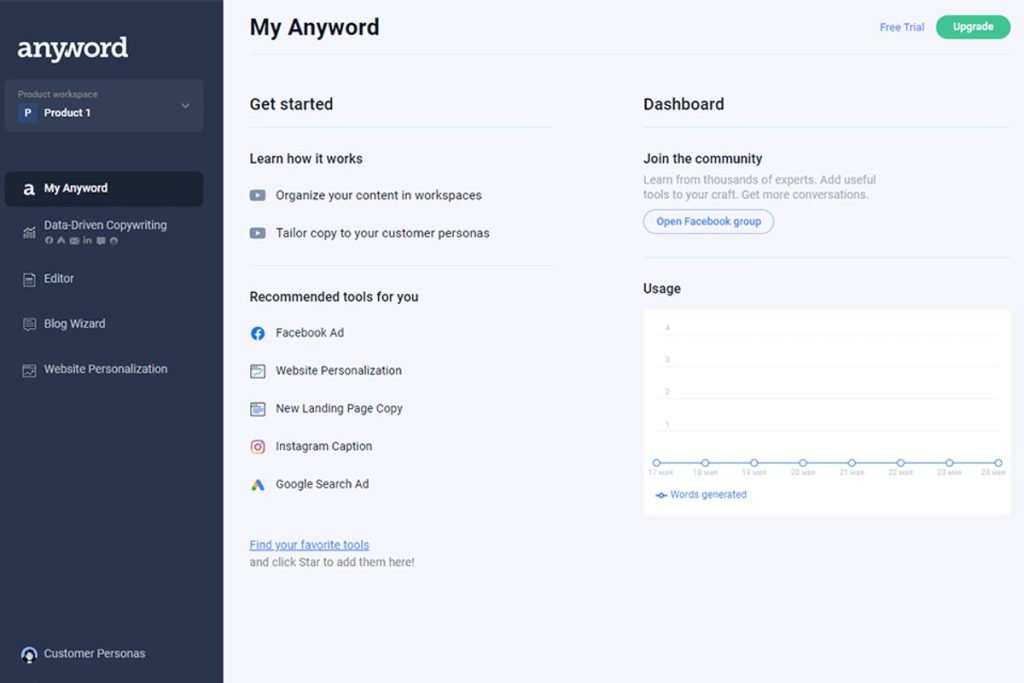
Anyword attacks the problem every marketer actually has: not writing copy, but knowing which copy will convert before you spend money on it. Its predictive performance score — trained on historical campaign data — claims 82% accuracy at picking the winning variation, versus roughly 52% (a coin flip) for generic models like GPT-4o. That single feature reframes AI copy from creative toy to media-budget protection.
It comes at marketer prices: $39–$79/month annual for self-serve, with unlimited generation but capped scoring. We tested whether the predictions justify the premium over ChatGPT-and-pray.
Our verdict: Anyword is the AI copy platform for performance marketers who test at volume — the prediction score genuinely changes prioritisation and pays for itself against ad spend — but casual content writers should not pay the premium. Score: 8.1 / 10.
→ Try Anyword — see current pricing
What is Anyword and who is it for
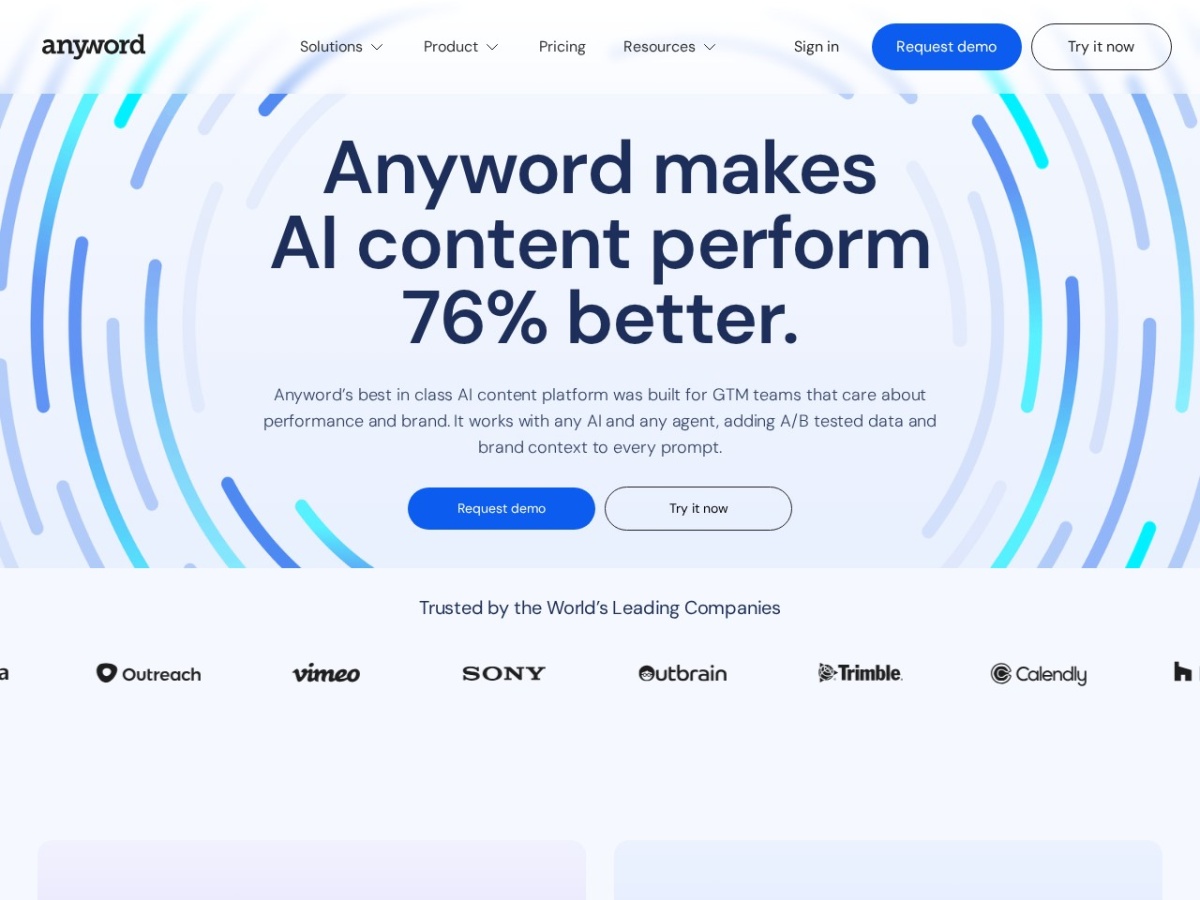
Anyword is an AI copywriting platform built for marketing performance. It generates ads, landing pages, emails, product descriptions and social copy like its rivals — then scores each variation with a predicted performance rating grounded in real campaign outcomes, so you test the likely winners instead of guessing.
It is for performance marketers, growth teams, agencies and ecommerce brands whose copy directly drives paid results — people who A/B test weekly and feel every CTR point in the budget. Over a million marketers use it, and it holds a 4.8/5 on G2 across 1,200+ reviews with an average reported 30% performance lift.
It is overkill for bloggers, casual content and anyone not running campaigns — generic tools cover that free or cheap.
Anyword pricing and plans
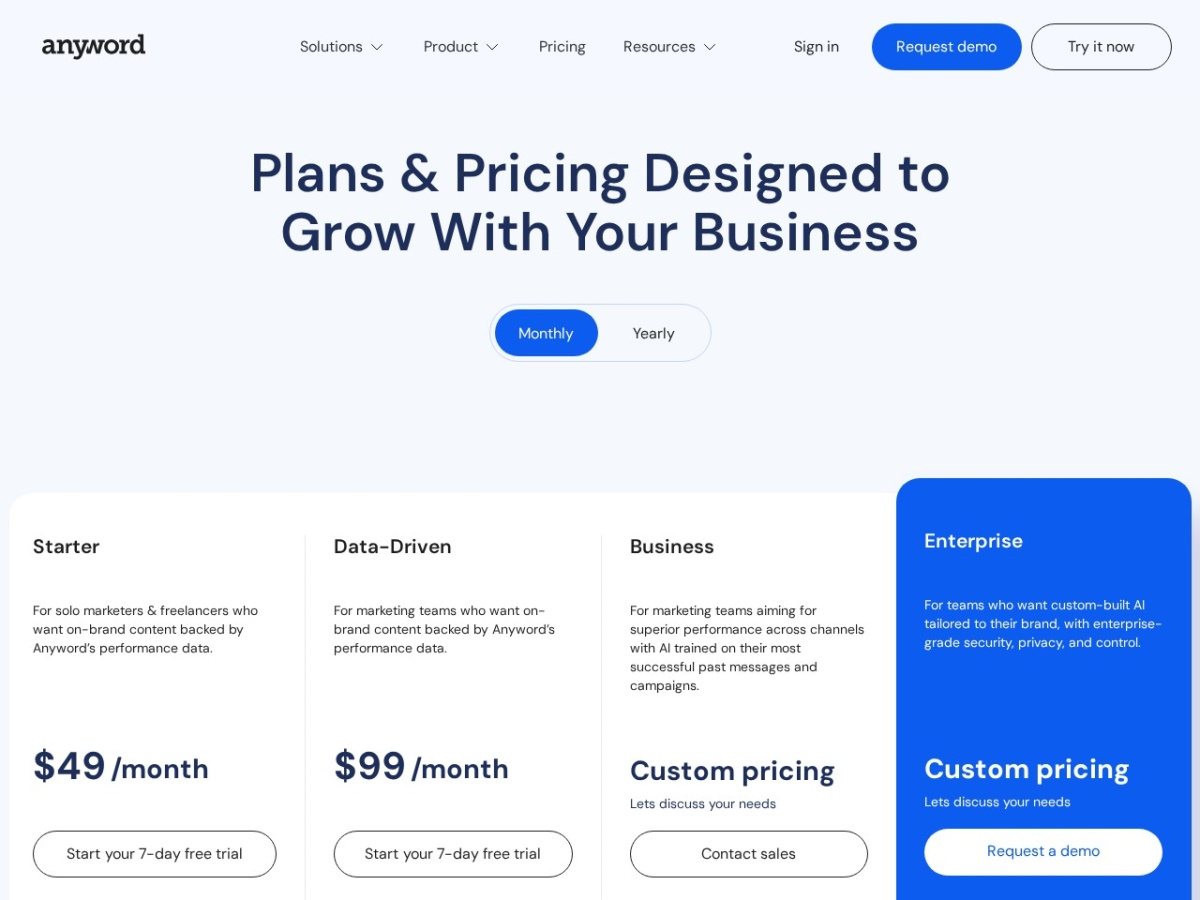
Self-serve runs $49–$99/month, or $39–$79/month on annual billing (20% off), with Business/Enterprise above that. The model is distinctive: unlimited copy generation on every tier, with limits instead on performance-score checks — the thing that makes Anyword Anyword.
That inversion matters for budgeting: heavy testers comparing 15+ variations can burn a month of prediction credits in days on starter tiers. Price by your scoring appetite, not your word count.
| Plan | Annual price | Generation | Scoring |
|---|---|---|---|
| Starter | ~$39/mo | Unlimited | Capped |
| Data-Driven | ~$79/mo | Unlimited | Higher caps |
| Business+ | Custom | Unlimited | Scaled + integrations |
The predictive performance score
The headline feature earns its billing. Each generated variation gets a score predicting engagement/conversion likelihood, benchmarked from a dataset of real campaign results. Anyword claims 82% accuracy at identifying the outperforming variation — meaningfully better than model-vibes alone — and users report the score aligning well with subsequent live results.
The practical shift: instead of testing five random variants, you test the top-two scored ones, compressing learning cycles and saving spend. Connected accounts let it learn your audience specifics over time, sharpening predictions further.
Generation quality and brand voice
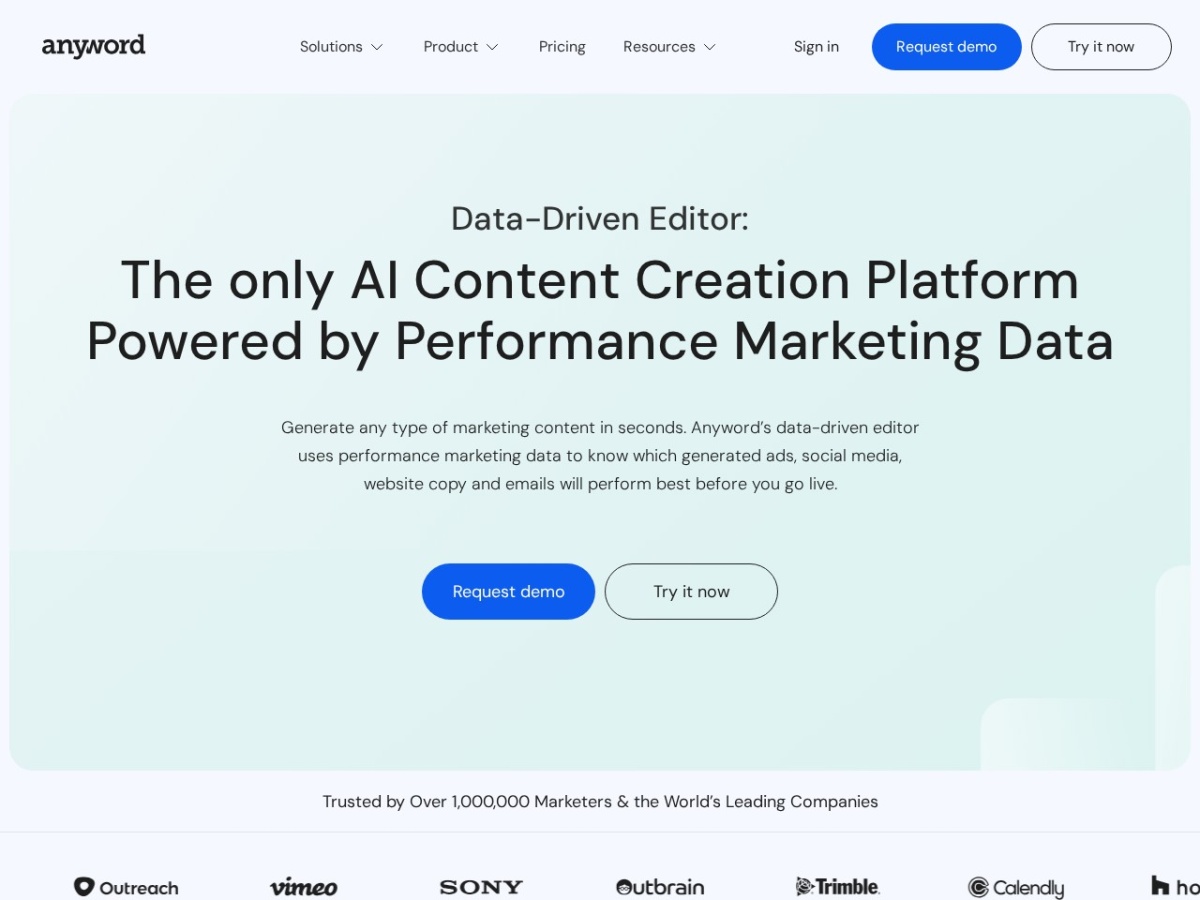
Copy quality is solidly competitive with Jasper-class tools: strong ad hooks, decent long-form, reliable frameworks. Brand-voice training keeps output on-tone, and custom mode targeting (audience, channel, objective) shapes drafts toward the metric you care about. It is professional-grade — the scoring is what differentiates, not raw prose flair.
Ease of use
Clean, marketer-shaped workflows: pick asset type, feed product and audience, generate, score, iterate. Integrations and a browser extension bring scoring into your existing stack. Onboarding is quick; the only learning curve is trusting the score enough to let it prune your variants.
Anyword vs the alternatives
Against Jasper: comparable generation, but Jasper leans brand/content teams while Anyword owns performance prediction. Against Copy.ai: cheaper workflows, no scoring. Against raw ChatGPT: free-ish, but you are back to coin-flip variant selection. For paid-media copy, prediction is the moat.
| Tool | Best for | Edge |
|---|---|---|
| Anyword | Performance marketing copy | 82%-accurate prediction score |
| Jasper | Brand content teams | Brand voice depth |
| Copy.ai | Cheap volume workflows | Price |
| Writesonic | SEO content | Article tooling |
Pros and cons
Pros: Predictive score with claimed 82% winner-pick accuracy; unlimited generation on all tiers; learns your audience from connected data; strong G2 rating (4.8/5, 1,200+ reviews); reported ~30% average performance lift; brand-voice controls; marketer-native workflows.
Cons: Premium pricing for small teams; prediction credits deplete fast under heavy testing; prose quality is competitive, not category-best; casual writers get little from the differentiator; best value requires annual commitment.
Who should use Anyword — and who should not
Use it if copy feeds paid campaigns and you test variations regularly — the scoring discipline compounds into real budget savings and faster learning.
Look elsewhere if you write content rather than campaigns, or budget rules everything — Copy.ai or ChatGPT cover generation without the predictive premium.
Frequently asked questions
What makes Anyword different from ChatGPT?
The predictive performance score: variations are rated against historical campaign data, with claimed 82% accuracy at picking winners versus ~52% for generic models.
How much does Anyword cost?
Self-serve $49–$99/month, or $39–$79/month annual. All tiers include unlimited generation; tiers differ mainly in prediction-score credits.
Is the performance score real or marketing?
It is trained on real campaign outcomes and users widely report alignment with live results; treat it as strong prioritisation signal, then confirm with actual A/B tests.
Does Anyword learn my brand?
Yes — brand-voice training plus connected performance data tailor both generation and scoring to your audience over time.
Anyword or Jasper?
Performance marketers → Anyword. Brand/content teams wanting deep voice control → Jasper. Generation quality is comparable; the differentiators differ.
The bottom line
Anyword answers the question generic AI cannot: which of these will actually work? For teams spending real money on copy-driven campaigns, the prediction score converts variant roulette into ranked bets — and that discipline typically outearns the subscription. Casual writers can skip the premium; performance marketers should trial it against next month ad spend. Score: 8.1 / 10.



