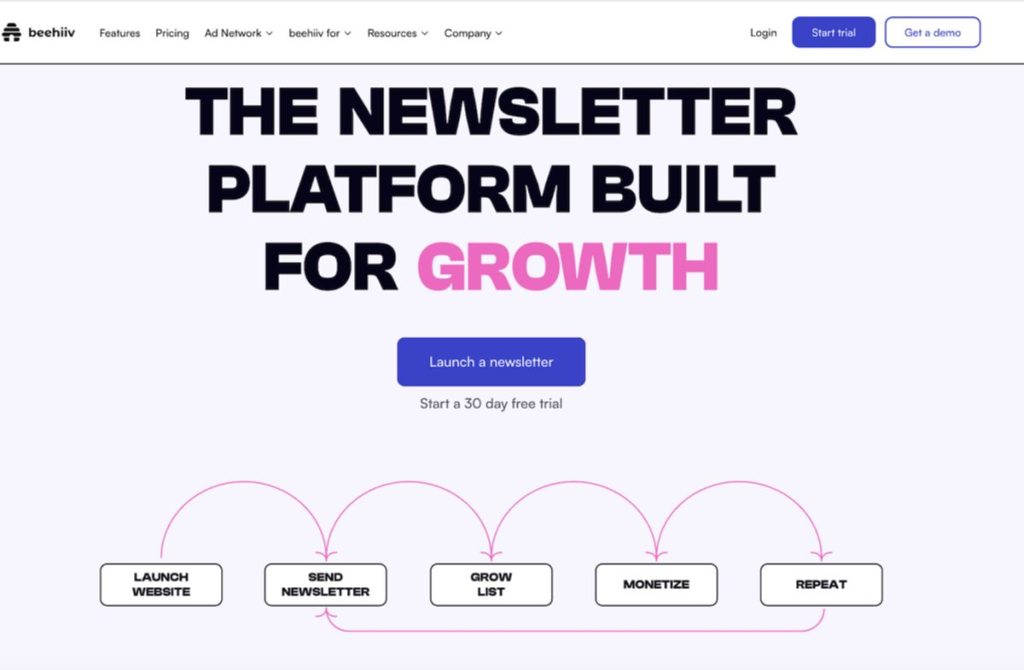
Beehiiv is the newsletter platform for people who treat newsletters as businesses. Built by ex-Morning Brew operators, it flips Substack's revenue model on its head: flat subscription pricing (free to ~$109/month by list size) with zero platform cut on paid subscriptions — you keep 100% where Substack takes 10% forever. At $5K monthly revenue, that is $49–109 to Beehiiv versus $500+ to Substack, the arithmetic that powers every migration story.
The toolkit matches the business framing: referral programs (the Morning Brew growth engine, productised), an ad network monetising free readers, boosts (paid cross-promotion between newsletters), segmentation, automations and real analytics — the operator stack Substack's simplicity philosophy deliberately omits.
Our verdict: Beehiiv is the clear choice for scaling a newsletter into revenue — the monetisation stack and keep-100% economics compound with growth — while Substack retains the write-first crowd its network effects serve. Score: 8.7 / 10.
→ Try Beehiiv — see current pricing
What makes Beehiiv different
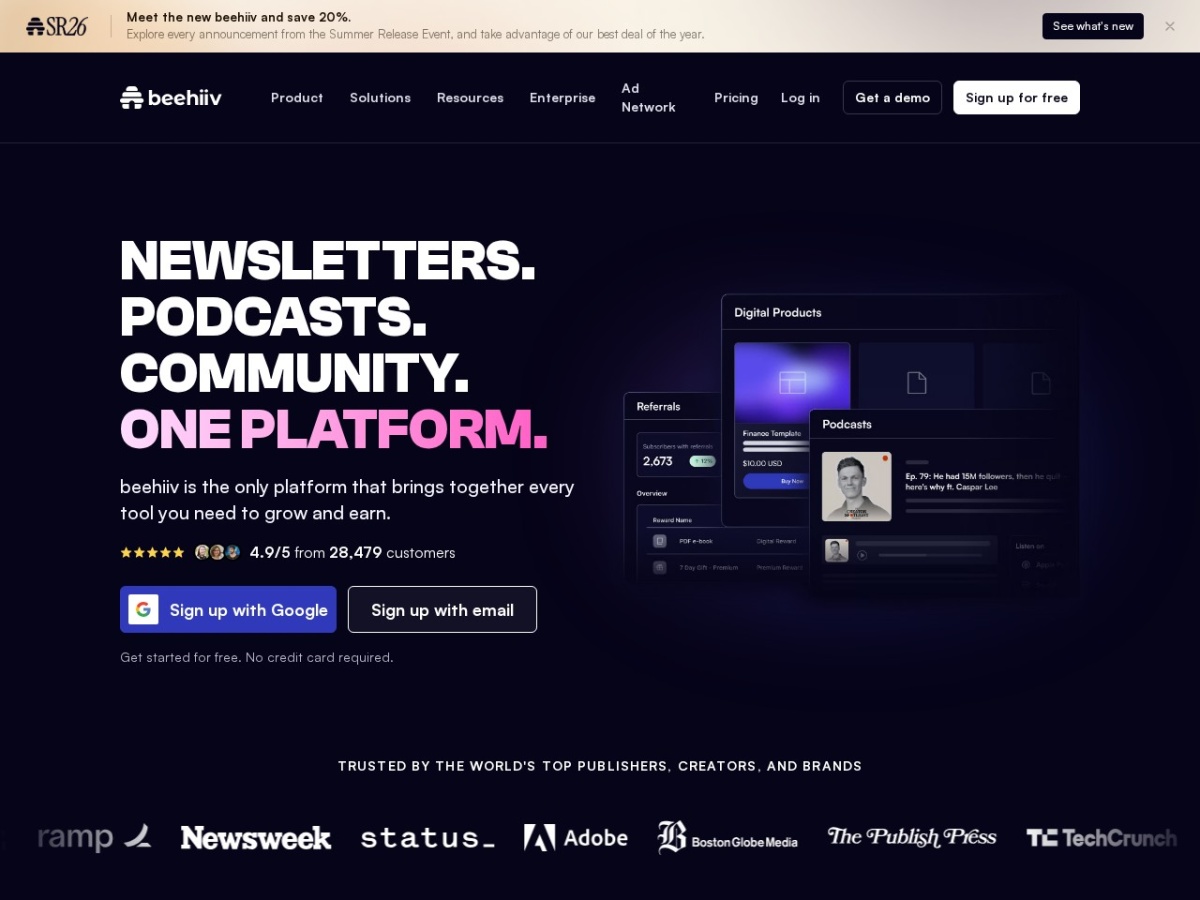
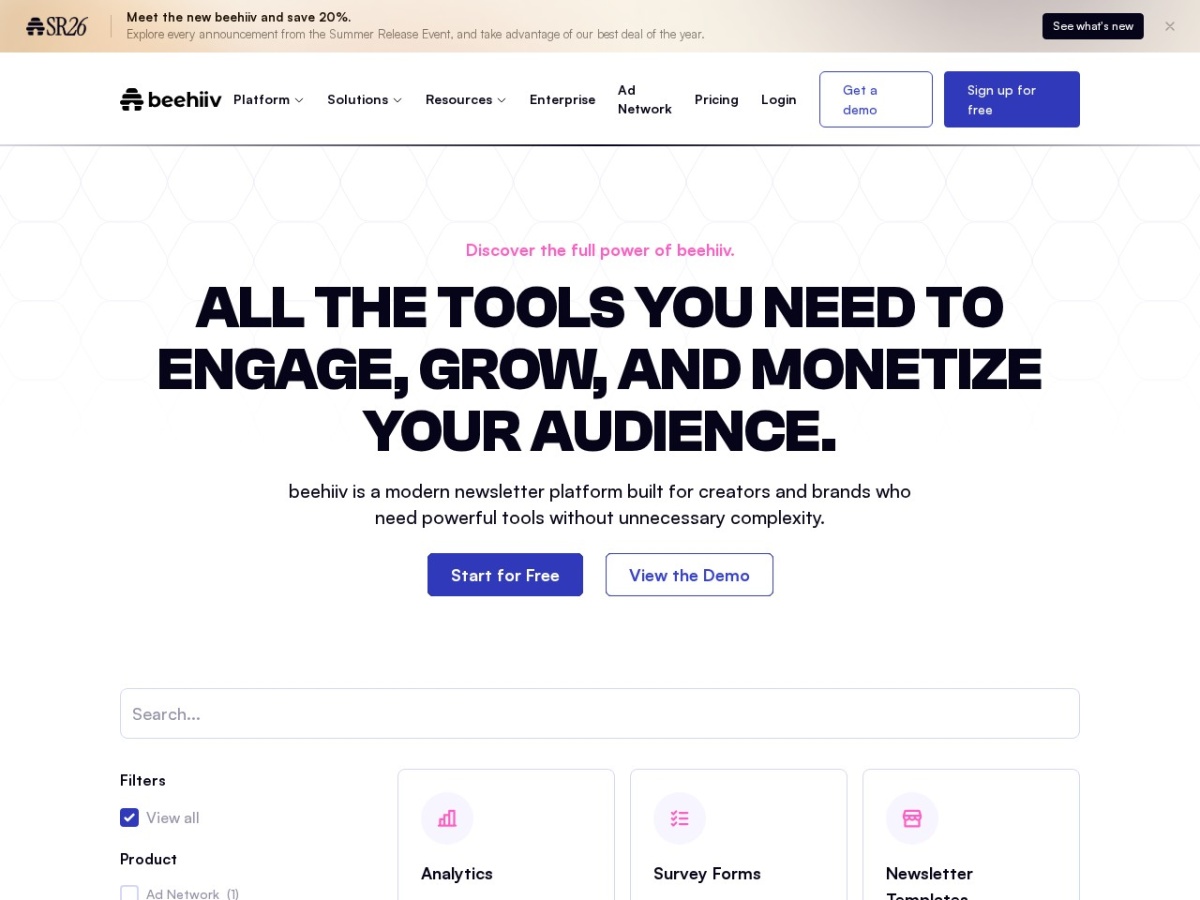
The operator DNA shows in the feature ledger: referral program tooling (milestone rewards driving subscriber-powered growth), the ad network connecting your audience to sponsors without your sales calls, boosts where established newsletters pay for your recommendations, and paid subscriptions with no platform tax. Analytics run acquisition-cohort deep, automations handle onboarding sequences, and the website layer makes the newsletter a real property with SEO surface.
Pricing versus the 10% forever
| Monthly revenue | Substack cost (10%+Stripe) | Beehiiv cost |
|---|---|---|
| $1,000 | ~$130 | $0–49 |
| $5,000 | ~$650 | $49–109 |
| $20,000 | ~$2,600 | ~$109 |
The crossover happens early and widens forever — the flat-fee model is a bet on your growth that pays you, not the platform. The counterweight: Substack's discovery network genuinely sources subscribers for some writers, the one asset money does not replicate.
The operator experience
The editor is clean and fast, the growth dashboard actually informs decisions (acquisition source, cohort retention), and the monetisation toggles — paid tiers, ad slots, boost marketplace — convert audience into revenue lines without duct tape. The 90-day reviewer arc repeats: migration painless, referral program live in week one, first ad revenue by month three.
Beehiiv vs the field
Against Substack: business tooling and economics versus simplicity and network — the fork this review priced. Against ConvertKit/Kit: Beehiiv is newsletter-native where Kit is creator-email-general; overlapping but different centres. Against Ghost: self-serve SaaS polish versus open-source control. The lane: the newsletter-as-company crowd, served completely.
Pros, cons and limits
Pros: keep-100% paid subscriptions; referral engine; ad network and boosts; deep analytics; scaling-friendly flat pricing; painless migration tooling.
Cons: no Substack-style discovery network; tier pricing climbs with list size; the feature depth is overkill for hobby writers; design flexibility trails full website builders.
Beehiiv deals
Trials on scale tiers and annual discounts cycle — check current pages; the free tier (up to launch-scale lists) makes the evaluation costless.
Inside the growth stack: referrals, boosts and the ad network
The three growth engines deserve individual scrutiny because they are the purchase decision. The referral program productises the Morning Brew playbook: set milestone rewards (a sticker at 3 referrals, a shoutout at 10, merch at 50), and Beehiiv handles unique links, tracking, fraud filtering and automated fulfilment emails. Realistic expectations from operators running it: an engaged list adds 5-15% monthly growth from referrals alone once rewards resonate — meaningful compounding, not magic. Boosts is the marketplace where established newsletters pay for subscribers: as a recommender you monetise your signup flow by suggesting other newsletters (earning per verified subscriber sent), and as a buyer you acquire readers at a transparent cost-per-subscriber, typically $1.50-3.50, with quality controls that filter churn-and-burn signups. For niche newsletters, Boosts has quietly become one of the few paid acquisition channels with sane unit economics.
The ad network completes the triangle: Beehiiv matches sponsors to newsletters by audience profile, handles the insertion order, creative specs and payment, and takes its cut invisibly. Open a slot, approve the sponsor, publish — the sales motion that consumes days of a solo operator's month becomes a checkbox. CPMs vary hard by niche (finance and B2B command multiples of lifestyle), but the strategic value is constant: revenue from readers who will never pay for a subscription.
Pricing mapped to list size
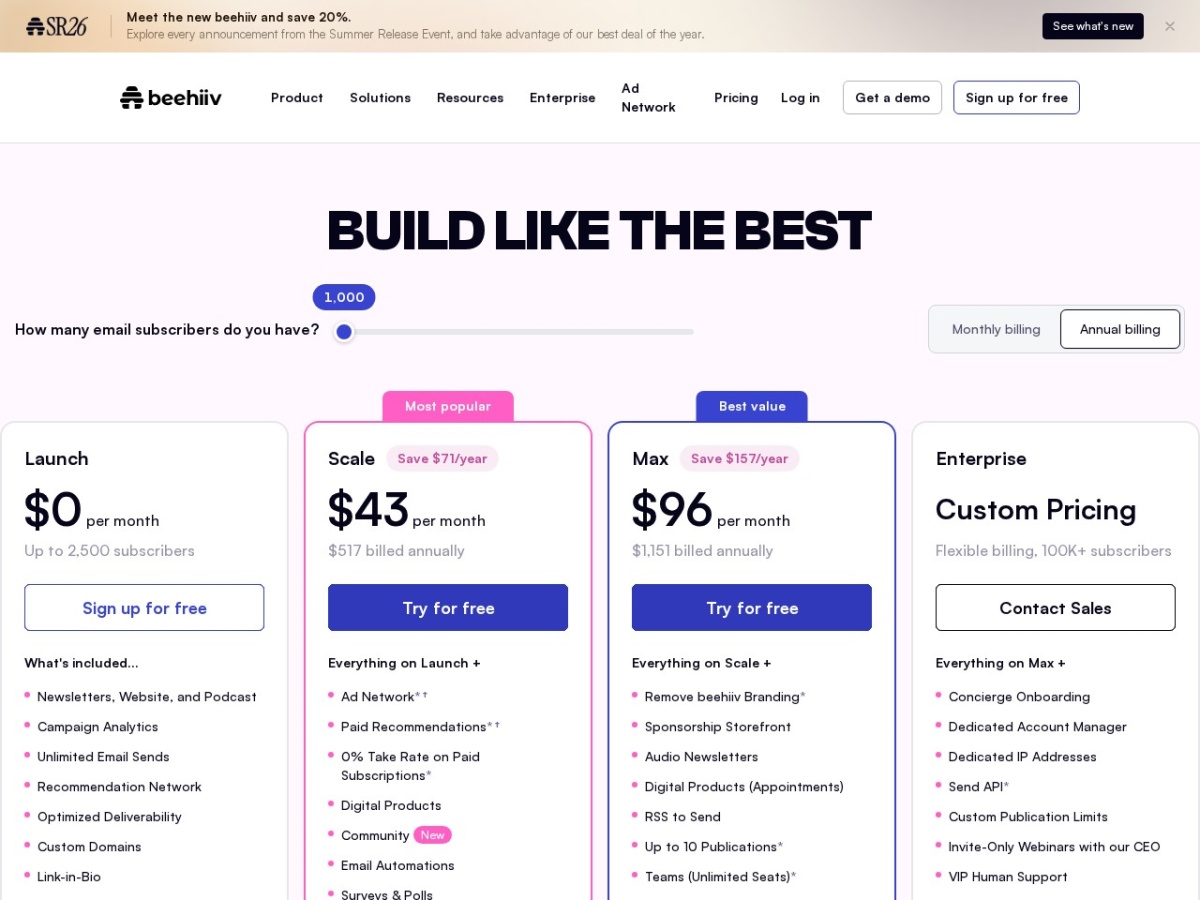
| Plan | Price | Ceiling | The unlock |
|---|---|---|---|
| Launch (free) | $0 | 2,500 subs | Full editor, website, referral basics |
| Scale | ~$39-49/mo | Tiered by list | Paid subs, automations, ad network, Boosts |
| Max | ~$99-109/mo | Higher tiers | Remove branding, priority support, deeper tools |
The comparison that matters is lifetime, not monthly. A newsletter growing from 1,000 to 25,000 subscribers over two years pays Beehiiv a few hundred dollars per year on a known schedule; the same trajectory on Substack with a paid tier surrenders 10% of revenue forever — at $60,000 annual subscription revenue, that is $6,000 a year, every year, versus a flat SaaS bill. The flat-fee model is effectively an option on your own success, and the earlier you believe in the growth, the more the arithmetic shouts.
The writing and publishing experience
The editor is fast, block-based and built for email-first composition: polls, referral blocks, sponsor slots and paywall breaks drop inline, and the same post publishes to your hosted site with SEO basics handled. Automations cover the operator essentials — welcome sequences, re-engagement flows for cold subscribers, and trigger-based journeys — without pretending to be a full marketing-automation suite. Segmentation is practical: engagement tiers, acquisition source, custom fields, all usable in sends and automations. The deliverability story, the invisible make-or-break of the category, holds up in operator reports: dedicated sending infrastructure, list-hygiene tooling and enforced double-opt-in options keep inbox placement competitive with the specialist ESPs — the thing Beehiiv had to prove against incumbents, and by scale has.
Beehiiv vs Substack vs Kit vs Ghost, decided by scenario
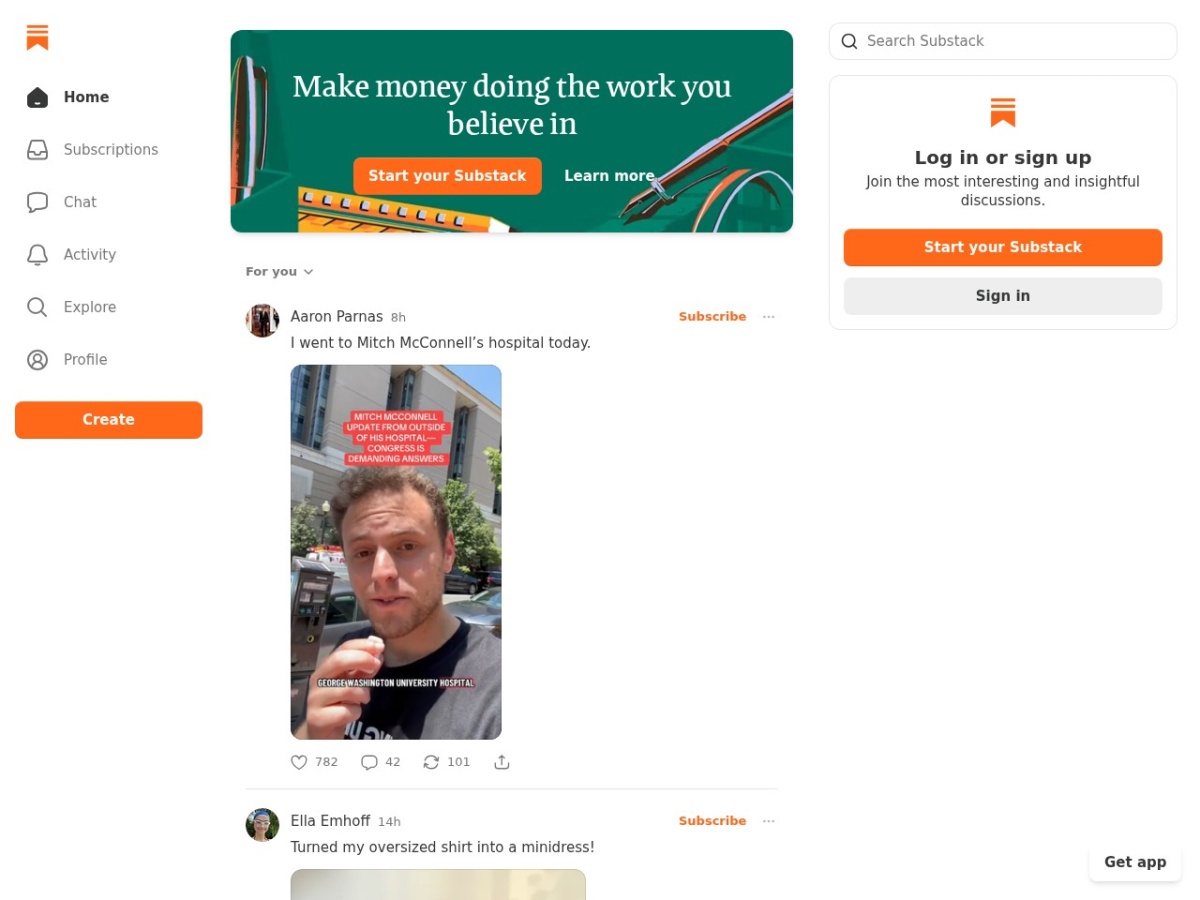
The fork with Substack is philosophical: Substack sells a network (recommendations drive real discovery for resonant writers) and charges 10% of paid revenue for it; Beehiiv sells infrastructure and charges rent. Writers whose growth comes from Substack's network should respect that dependency; operators who drive their own traffic are donating a tithe. Kit (formerly ConvertKit) is the creator-ESP generalist — stronger for selling digital products across channels, weaker as a newsletter-native home. Ghost offers open-source control and zero platform fees at the cost of self-serve everything. The clean decision tree: network-dependent writer → Substack; product-selling creator → Kit; control maximalist → Ghost; newsletter-as-business operator → Beehiiv, and it is not close.
Migration without losing your list
The operational fear that delays switching is mostly obsolete. Subscriber CSV import is trivial; archive import brings your back catalogue; and paid-subscriber migration — the scary part — is a documented Stripe-coordination process where subscriptions transfer without re-asking anyone for a card. The genuine care points: warm up sending gradually on the new infrastructure rather than blasting your full list day one, map old post URLs to the new archive for SEO continuity, and expect a temporary open-rate dip as inbox providers re-learn your sending identity — normal, recovering within weeks. Operators consistently report the move consumed an anxious weekend and returned a better dashboard on Monday.
A 90-day operator plan on Beehiiv
Days 1-30: migrate or launch, ship twice weekly, referral program live with one attainable reward, welcome automation converting new subscribers into readers of your three best pieces. Days 31-60: read the acquisition dashboard weekly and double down on the one channel actually working; open a Boost slot as recommender to start the monetisation flywheel with zero audience cost. Days 61-90: switch on the revenue line your size supports — ad slots past ~5,000 engaged subscribers, a paid tier the moment your free content proves willingness to pay — and run the P&L honestly. The platform's thesis is that a newsletter run like a business behaves like one; ninety days of this cadence returns a dashboard that either proves it or tells you what to fix, which is more than most platforms' analytics can honestly claim. Score: 8.7 / 10.
Beehiiv for niche and non-English audiences
The platform's tooling is language-agnostic in the ways that matter — editor, automations, referral mechanics and paid subscriptions all run identically for a Vietnamese-language operations newsletter or a Portuguese finance brief — and the flat-fee model is actually kinder to non-US operators than revenue-share platforms, since local-currency willingness-to-pay does not change your platform bill. The constraint to plan around is the ad network, whose sponsor pool skews English-language B2B and consumer; non-English operators typically monetise through direct local sponsorships (sold manually, inserted through the same sponsor blocks), paid tiers, or affiliate placements instead. The Boosts marketplace similarly thins outside English niches, making the referral program proportionally more important — and referral mechanics translate perfectly, because a reward your specific audience wants beats a generic one in any language.
For a niche operator — logistics, regional business, a professional vertical — the strategic note is that Beehiiv's analytics make small-list monetisation legible: a 3,000-subscriber list of the right professionals supports a direct sponsor at rates that would require 50,000 general readers, and the dashboard's engagement segmentation is exactly the evidence page that closes those sponsorship conversations. Niche density, not raw size, is the asset; Beehiiv is unusually good at proving you have it.
The honest annoyances
Balance requires the gripe list. Tier pricing steps by subscriber count, so a growth spurt can bump your bill mid-quarter — correct behaviour, occasionally surprising. The website builder, though improved, remains a newsletter site builder rather than a Framer competitor; operators wanting a distinctive web presence bolt one on separately. Email design flexibility trails dedicated ESPs for image-heavy layouts. Support responsiveness tracks your tier, which stings precisely when a send goes wrong on a lower plan. And the platform's feature velocity — a genuine strength — carries the cost of occasional UI reshuffles that relocate settings you had memorised. None of these move the verdict for the target operator; all of them are worth knowing before the migration weekend, because the platform you commit to is the one whose flaws you have priced in advance. Score: 8.7 / 10.
Deliverability discipline: the operator's edge
Because every platform claim ultimately routes through the inbox, the habits that protect deliverability deserve their own section. Enforce double opt-in from day one — a smaller, cleaner list outperforms an inflated one on every metric sponsors and algorithms care about. Run the sunset automation: subscribers cold for 90 days get a win-back sequence, then removal; carrying dead weight drags your engagement signals and, eventually, your inbox placement for the readers who want you. Authenticate properly — Beehiiv walks you through SPF, DKIM and DMARC on a custom sending domain, and skipping it caps your ceiling invisibly. Watch the spam-complaint rate like a KPI (under 0.1% is the working target), and treat any spike as a content-or-acquisition diagnosis, not noise. Finally, respect the warm-up: new domains and migrated lists earn trust gradually, and the operators who ramp sends over two weeks rather than blasting day one consistently report faster recovery to baseline open rates.
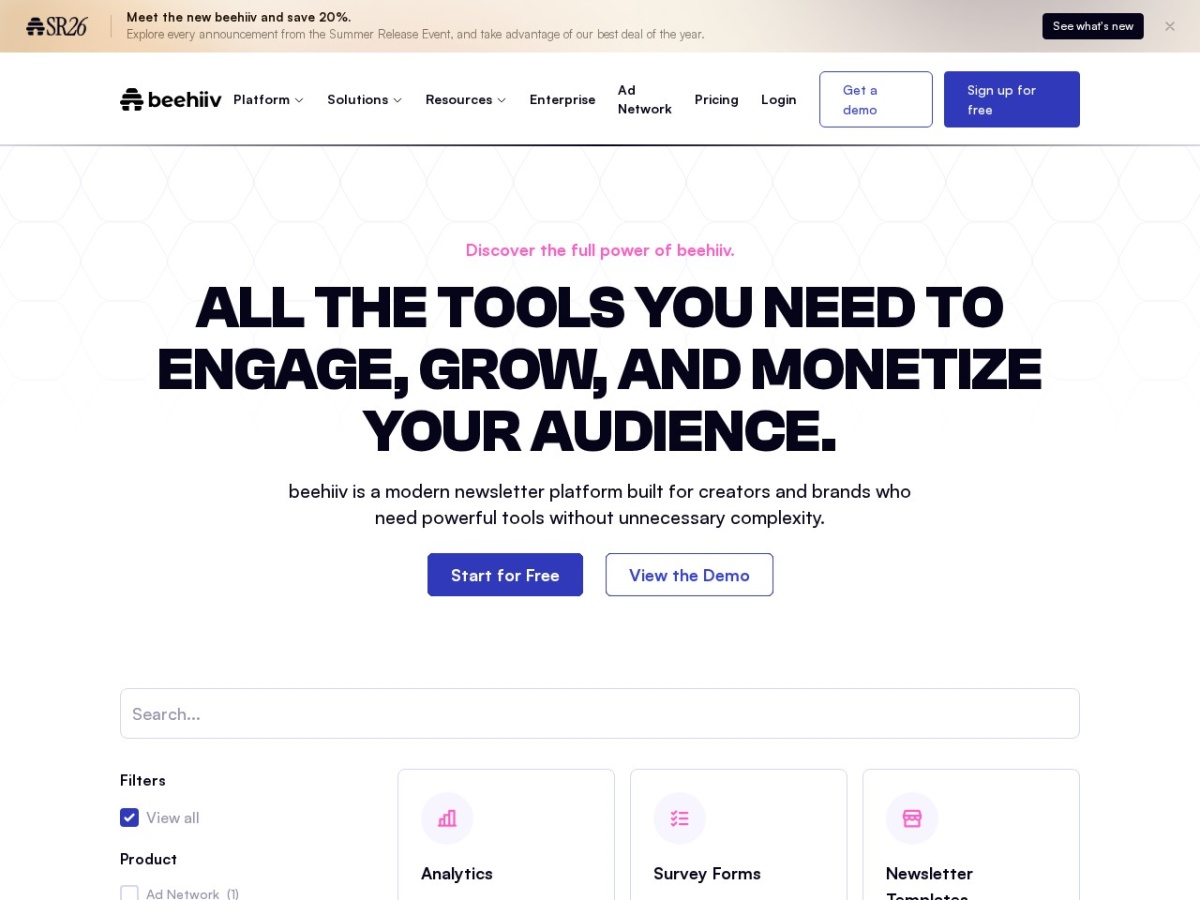
These habits compound with the platform's growth engines in a virtuous loop: clean lists open more, engaged opens improve placement, better placement makes referral and Boost acquisition convert, and the dashboard makes every step measurable. That loop — infrastructure, incentives and instrumentation pointing the same direction — is the real product Beehiiv sells, and after ninety days of operating inside it, most serious newsletter builders stop asking whether the subscription is worth it and start asking why they ran a media business without it. Score: 8.7 / 10.
Paid subscriptions on Beehiiv: mechanics that matter
For operators planning the paid tier, the implementation details shape revenue more than the platform choice. Beehiiv's paywall drops mid-post — the craft is placing it after genuine value but before the payoff, teaching free readers exactly what paying buys. Tier structure supports monthly and annual with a founding-member option, and the operators converting best run annual-first pricing with a deliberately modest monthly anchor, because newsletter churn concentrates in monthly subscriptions. The upgrade automations — triggered by engagement streaks rather than blasted at everyone — convert at multiples of generic pitches. And the keep-100% economics change experimentation psychology: on a revenue-share platform every pricing test shares its upside; on flat-fee infrastructure a failed price test costs nothing extra, which quietly encourages the iteration that finds the right price. The operators' consensus benchmark — 2-5% of an engaged free list converting to paid within a year — is achievable on any platform, but the margin difference at scale is a mortgage payment.
FAQ
Should I leave Substack?
If paid revenue is real or planned, the 10%-forever math answers itself. If Substack's network drives your growth, price that against the fee honestly.
How hard is migration?
Import tooling covers subscribers and archives; the 90-day reviews rate it painless. Paid-subscriber migration needs Stripe coordination — documented, doable.
What is the ad network really like?
Sponsor matching at meaningful list sizes — revenue per send scales with audience quality; the passive option Substack never built.
Do referral programs actually work?
Morning Brew built an empire on the mechanic; productised, it reliably adds percentage growth for newsletters readers actually like.
Is the free tier usable?
Genuinely — launch-scale lists run free with core features, making the platform test costless until growth forces the (good) problem of upgrading.
The 90-day newsletter business plan
Month one: migrate or launch, referral program configured with a real reward, welcome automation live. Month two: publish cadence held, acquisition dashboard read weekly, first boost experiments. Month three: monetisation switch-on — paid tier or ad slots per audience size — and the P&L review where flat-fee economics reveal themselves. The platform's entire thesis is that newsletters are businesses wearing emails; ninety days of operating like one, tool-supported, settles whether yours is. Score: 8.7 / 10.