
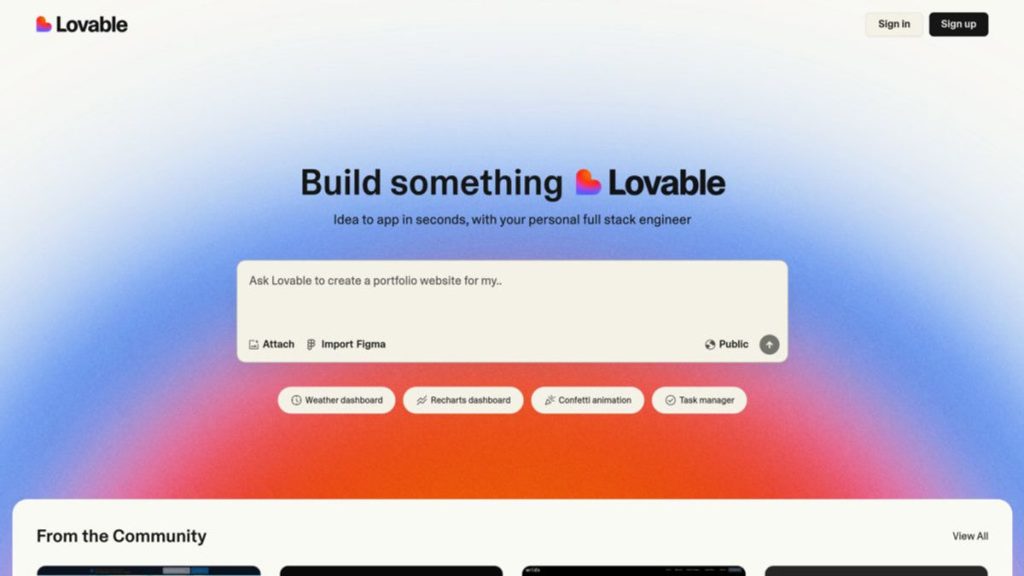
Lovable is the tool that made “describe an app, get an app” real for non-developers. Type a plain-English brief and it generates the interface, database, authentication and a live shareable URL in minutes — full-stack output (Supabase backend, real user accounts) that the 2026 reviewer consensus ranks as the category's best for actual web applications, not just landing pages.
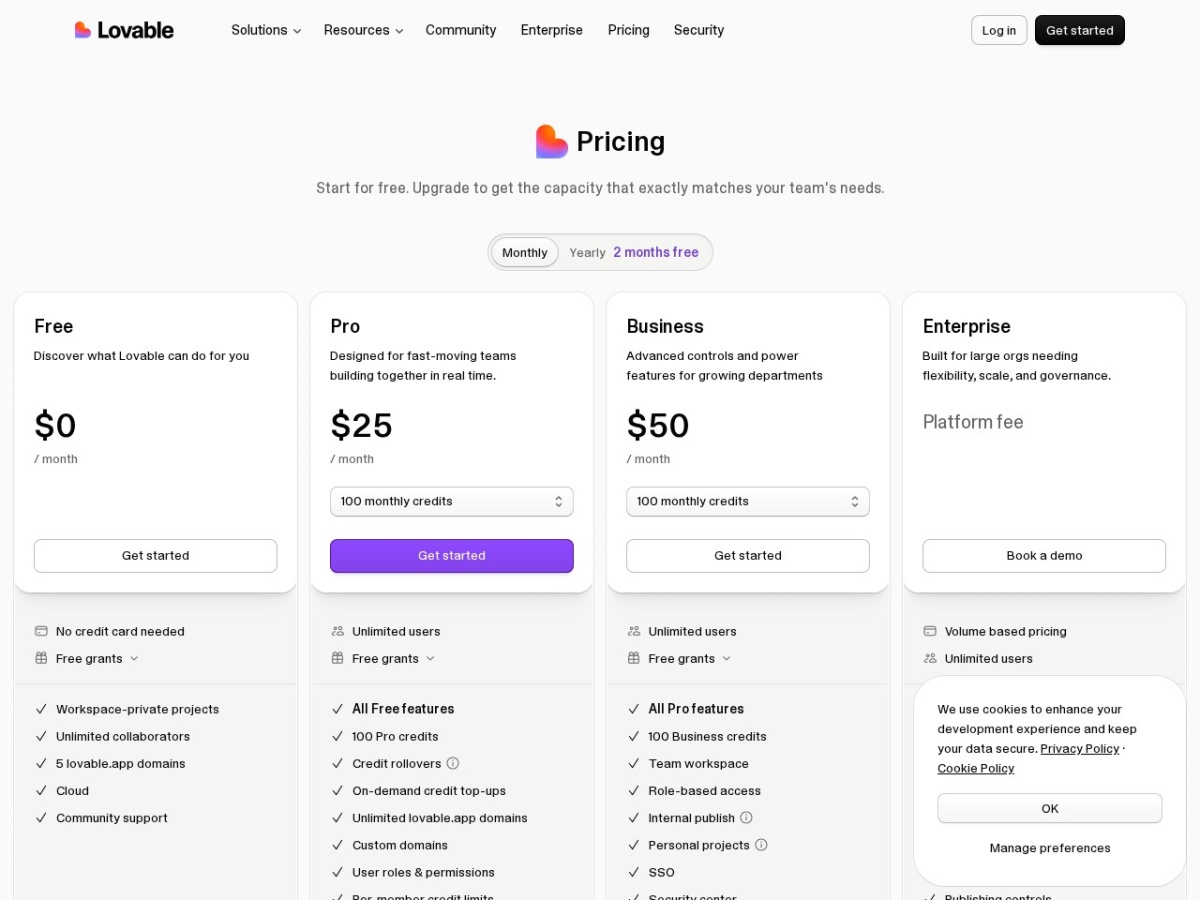
Pricing runs freemium: five daily credits free, Pro at $25/month, Business at $50/month — with the documented reality that heavy users land at $30–50 effective monthly once debugging sessions and top-ups bite, because iteration burns credits and complex logic makes the AI iterate.
Our verdict: Lovable is the fastest idea-to-working-prototype path in no-code — genuinely full-stack, with code ownership and GitHub sync as the adult features — best for founders and builders who ship MVPs, with credit-burn discipline as the learned skill. Score: 8.5 / 10.
→ Try Lovable — see current pricing
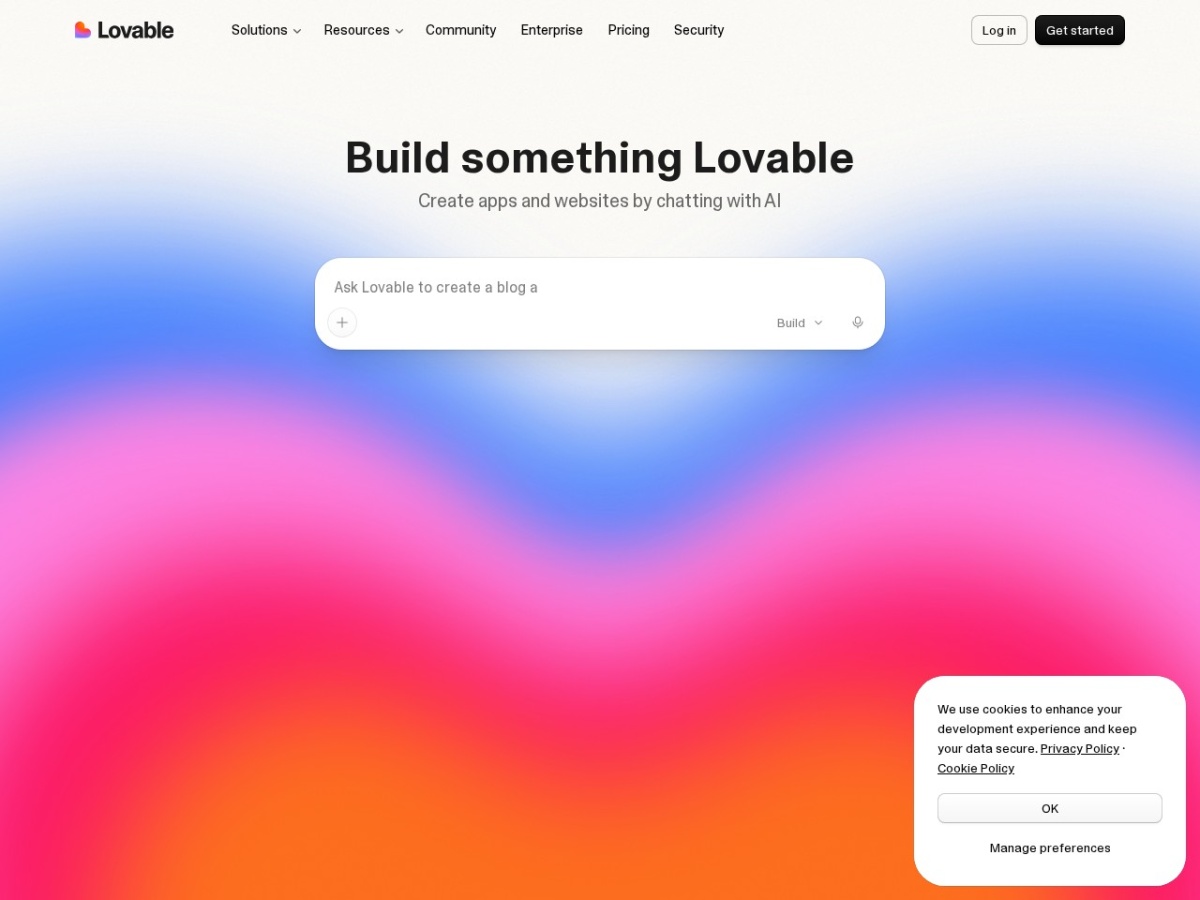
What makes Lovable different
The full-stack claim is the separator: where site-builders generate pages, Lovable generates applications — Supabase-backed databases, working authentication, CRUD flows — from conversation. Context persistence across edits keeps iteration coherent (“make the dashboard cards clickable” understands your dashboard), and the escape hatches matter: GitHub sync and code ownership mean the prototype graduates to real engineering instead of dying in a walled garden. Figma import and integration breadth round the professional story.
Pricing and the credit economy
| Plan | Price | Reality |
|---|---|---|
| Free | $0 | 5 credits/day, public projects |
| Pro | $25/mo | The individual standard |
| Business | $50/mo | Teams, higher limits |
The credit lesson every user learns: generation is cheap, debugging is expensive — vague prompts produce iterations, iterations bill. The prompt discipline that halves costs: specific briefs, one change per message, and screenshots when describing visual issues.
The build experience
The magic-hour arc reviewers describe: brief typed, app scaffolded in minutes, the first “it actually works” login moment — then the plateau where complex logic (multi-step workflows, edge cases) trips the AI and the credit meter spins. The successful pattern: Lovable for the 80% scaffold, GitHub export for the 20% engineering — the pipeline that makes it a founder tool rather than a toy.
Lovable vs the field
Against Bolt and Replit agents: trading blows, with Lovable's Supabase maturity and UX polish leading the full-stack lane per comparisons. Against Framer/site-builders: different species — applications versus marketing sites. Against hiring developers: the MVP math (days and dollars versus weeks and thousands) that built the category. The lane: fastest credible prototype, with real code as the exit.
Pros, cons and limits
Pros: true full-stack generation; Supabase backend with real auth; context-aware iteration; GitHub sync and code ownership; instant deploys; unlimited collaborators on free.
Cons: complex logic trips the AI; debugging burns credits; effective cost lands above sticker for heavy use; message limits pinch power users; production-grade polish still needs engineers.
Lovable deals
Annual discounts and launch promos cycle; the free tier's five dailies genuinely suffice for evaluation — spend nothing until the scaffold moment convinces you.
Inside the Lovable build loop
The workflow that the 30-second demos compress deserves an honest walkthrough. You describe an app — "a booking tool for a nail salon with services, time slots and SMS-style confirmations" — and Lovable scaffolds a real React + Tailwind front end with a Supabase backend: database tables, auth, and working CRUD in the first generation. From there development is conversational: each message is a change request, each response a visible diff and a live preview. The crucial mental model is that you are not prompting a mockup generator — you are directing a codebase. Everything lands as editable code you can eject to GitHub at any point, which is the escape hatch that separates Lovable from the no-code tools it superficially resembles.
The skill curve is real but short. First-day users over-prompt ("build my entire startup") and get a sprawling half-right scaffold; second-week users have learned the professional rhythm — one feature per message, screenshot-paste for visual bugs, and the magic phrase "do not change anything else" appended to risky edits. The Knowledge feature (project-level instructions) works like a product spec the AI re-reads every prompt: teams that fill it with their stack conventions and tone get dramatically more consistent output than those who treat every chat as a blank slate.
Pricing and the credit reality
| Plan | Price | Reality |
|---|---|---|
| Free | $0 | 5 daily credits — enough to feel the loop, not ship |
| Pro | from $25/mo | 100 monthly credits + rollover; the solo-builder tier |
| Business | from $50/mo | Team workspaces, SSO, more credits |
A credit is roughly one AI edit, and this is where budgeting matters: a simple landing page consumes 10-20 credits; a real CRUD app with auth and payments burns 100-300 across its life as you iterate. The efficiency lever is prompt discipline — vague prompts trigger fix-the-fix spirals that eat credits without progress, while specific, one-change prompts routinely land first try. Experienced users report their credit burn halving between month one and month two purely from prompting maturity.
Where the ceiling actually is
The honest boundary map, from teams that pushed it: Lovable excels at CRUD applications — dashboards, booking systems, directories, internal tools, marketplaces at MVP scale — and at the Supabase-shaped world of auth, database and edge functions. It strains on complex state machines (multi-step wizards with interdependent validation), real-time collaborative features, pixel-perfect implementations of existing brand systems, and anything requiring a non-Supabase backend. Performance of generated code is respectable but unaudited: expect unindexed queries and chatty API patterns that a developer would tighten before real traffic. The pattern that works at the ceiling is hybrid: build to 80% in Lovable, sync to GitHub, and let a developer (or Cursor) finish the last mile in code — the two tools compose surprisingly well.
Lovable vs Bolt vs v0 vs hiring out
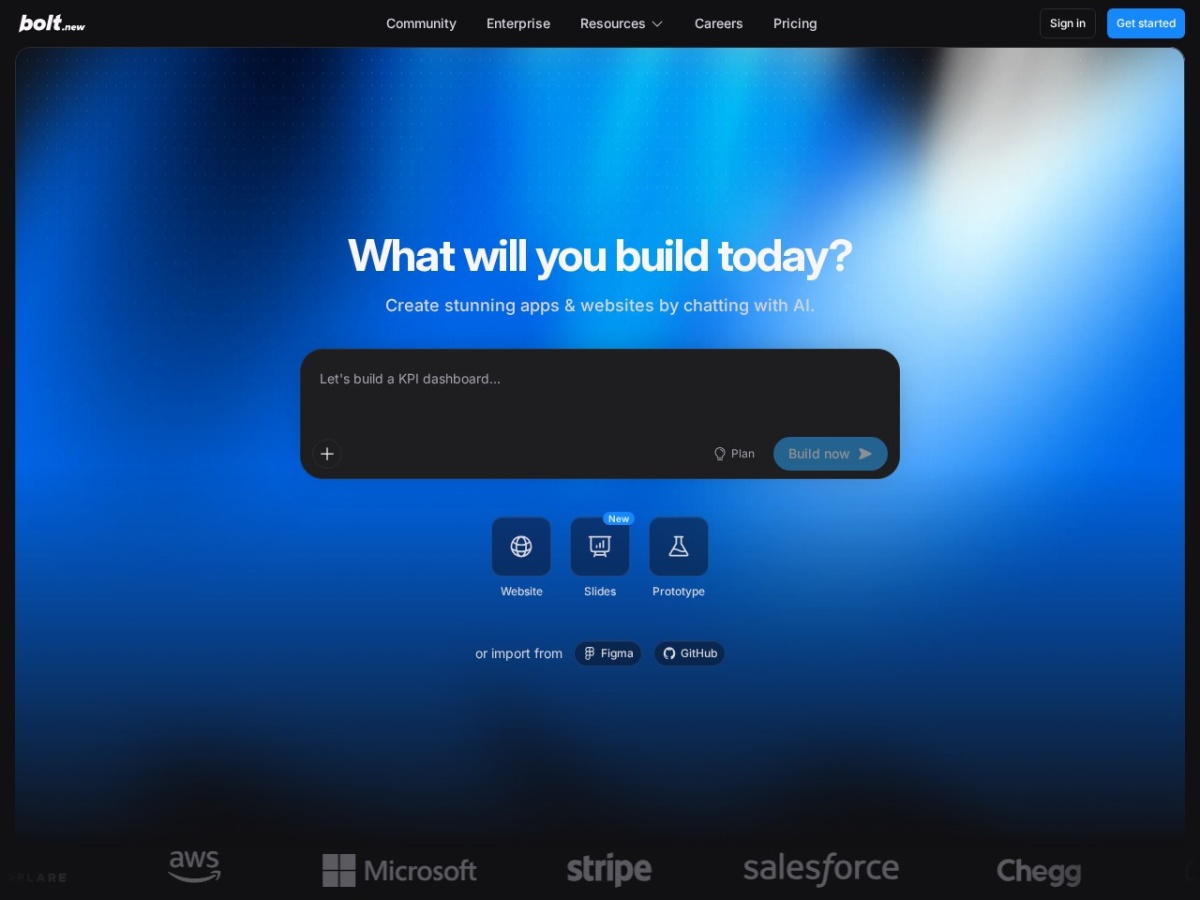
Against Bolt.new: Bolt exposes more of the underlying dev environment (you watch the terminal, you can touch anything), which developers prefer and non-developers find noisy; Lovable's curated Supabase integration ships working backends with less friction. Against v0 (Vercel): v0 is a component-generation specialist — superb UI, but you assemble the app yourself; Lovable owns the full build-deploy loop. Against a freelance build: a $2,000-8,000 MVP quote with a three-to-six-week timeline competes against $25 and a weekend — the freelancer wins on polish and edge cases, loses catastrophically on iteration speed for idea validation. The emerging division of labour: validate on Lovable, then spend the freelancer budget on the version customers already proved they want.
Security and the things founders forget
Vibe-coded apps have a documented failure pattern: shipping with Supabase row-level security misconfigured, exposing every user's rows to every other user. Lovable has added guardrails and security scanning, but the responsibility remains yours. The pre-launch ritual that catches most of it: ask Lovable directly to "review this project's RLS policies and list every table a logged-in user can read or write"; test with two accounts in two browsers; keep API keys in Supabase secrets rather than client code (Lovable defaults correctly, but iterative edits can regress it); and put payments behind a real provider's hosted checkout rather than anything hand-rolled. An hour of this diligence covers the classes of mistake that generate the cautionary screenshots on X.
A realistic 30-day launch plan
Week one: build the core loop of your app — the single flow a user pays for — and nothing else; resist sidebar features. Week two: put it in five real users' hands, screenshot every confusion, and iterate conversationally; this is where Lovable's speed is unfair versus traditional dev. Week three: harden — the security ritual above, custom domain, empty states, error messages that speak human. Week four: connect Stripe via Supabase edge functions, launch to your list, and let real usage tell you whether the ceiling matters for your product. Most ideas die before the ceiling is ever reached — which is precisely the argument for validating at $25 instead of $8,000.
Lovable for agencies and side-hustle builders
A quietly profitable use case has formed around Lovable: freelancers and small agencies selling "custom web apps" to local businesses — booking systems for salons, quote calculators for contractors, member portals for gyms — built in days and priced against the four-figure custom-dev alternative. The economics work because the client is buying the outcome, not the hours: a $500-1,500 deliverable that costs 40 credits and two evenings clears margin traditional subcontracting never could. The operators doing this sustainably follow three rules: scope in writing before prompting (the credit spiral punishes vague clients as much as vague prompts), keep each client on their own Supabase project for clean separation and handover, and sell a monthly "hosting and updates" retainer that costs minutes of conversational edits to service. For the Vietnamese market and similar price-sensitive segments, this arbitrage is if anything stronger — local small businesses that would never commission custom software will pay for a working booking link, and Lovable's output quality comfortably clears that bar.
The skill that compounds fastest is a reusable prompt library: an opening scaffold prompt encoding your preferred stack decisions, a security-review prompt, a polish checklist prompt covering empty states and mobile spacing. Agencies report new-project setup time falling from a day to an hour once the library matures — at which point the constraint is sales, not delivery, which is a better problem.
The GitHub escape hatch, tested
Because vendor lock-in is the standard fear with app builders, the export path deserves specifics. Lovable's two-way GitHub sync is real: every project can push to a repository you own, the code is standard React, TypeScript, Tailwind and Supabase client calls with no proprietary runtime, and a developer can clone, install and run it locally without Lovable in the loop. Changes made in code sync back, so the hybrid workflow — product person iterating conversationally, developer refining in an editor — is a daily reality for teams rather than a marketing diagram. The one asymmetry to know: heavy manual restructuring can drift the project beyond what conversational edits handle gracefully, so teams that go hybrid usually converge on Lovable owning features and layout while code-side work sticks to optimisation, integrations and the last-mile hardening. As exits go, this is about as clean as the category offers — materially better than classic no-code platforms where cancellation means rebuilding from screenshots — and it converts the "what if we outgrow it" objection from a blocker into a scheduling question.
Common Lovable mistakes that burn credits and launches
The recurring failure patterns are consistent enough to list as a pre-flight checklist. Prompting redesigns mid-build ("actually make it look more modern") instead of finishing function first — visual churn is the most expensive category of edit. Skipping the Knowledge file, then repeating the same stack preferences in every prompt and getting drift anyway. Building features no user asked for because generation feels free — credits are not the real cost, launch delay is. Testing only as the owner account and discovering onboarding is broken for fresh users on launch day. Connecting a custom domain last-minute without checking DNS propagation timing. And the classic: treating the first working version as the finished product, when the entire economic argument for Lovable is that iteration after real feedback is nearly free — teams that ship at 80% and iterate weekly consistently outperform ones polishing privately toward an imagined 100%.
One more habit worth institutionalising: version checkpoints. Lovable keeps history, but deliberately naming known-good states before risky changes ("checkpoint: booking flow works end-to-end") turns the inevitable bad-edit spiral into a ten-second revert instead of an hour of conversational archaeology. Combined with the one-change-per-prompt rhythm and the security ritual, these habits close most of the gap between the horror stories and the success stories — the tool is the same in both; the operating discipline is not. That, more than any feature, is the honest summary of where vibe coding stands in 2026: the platforms have become good enough that outcomes are now determined by how you drive them, and Lovable currently offers the best driver's seat for non-developers with real products to ship.
What Lovable's roadmap velocity tells you
A platform bet is partly a bet on trajectory, and Lovable's shipping cadence has been among the category's fastest — security scanning added after the community's RLS incidents, multiplayer workspaces for teams, custom domains natively, and steady model upgrades under the hood that improved generation quality without user action. The pattern worth noticing is that the roadmap consistently targets the gap between demo and production — exactly the gap this review's criticisms live in — which suggests the honest weaknesses listed here are shrinking rather than structural. The competitive read: the vibe-coding category will consolidate around whoever makes production-readiness boring first, and Lovable's Supabase-native architecture gives it a head start on the auth-database-security triangle that kills most AI-built apps. For a buyer today the actionable takeaway is simple: re-evaluate quarterly, because the ceiling documented in any review of this category has been moving upward at a pace traditional software never managed.
FAQ
Can non-coders really ship with it?
Prototypes and simple products, yes — the login-and-database moment works. Production complexity still summons engineers, via the GitHub exit.
Who owns the code?
You do — sync to GitHub and take it anywhere, the feature that separates it from walled-garden builders.
Why did my credits drain?
Debugging loops — vague prompts iterate expensively. Specific briefs and single-change messages are the economy.
Lovable or Bolt?
Consensus tilts Lovable for full-stack maturity and backend depth; both iterate weekly — trial both free tiers on your actual idea.
What backend does it use?
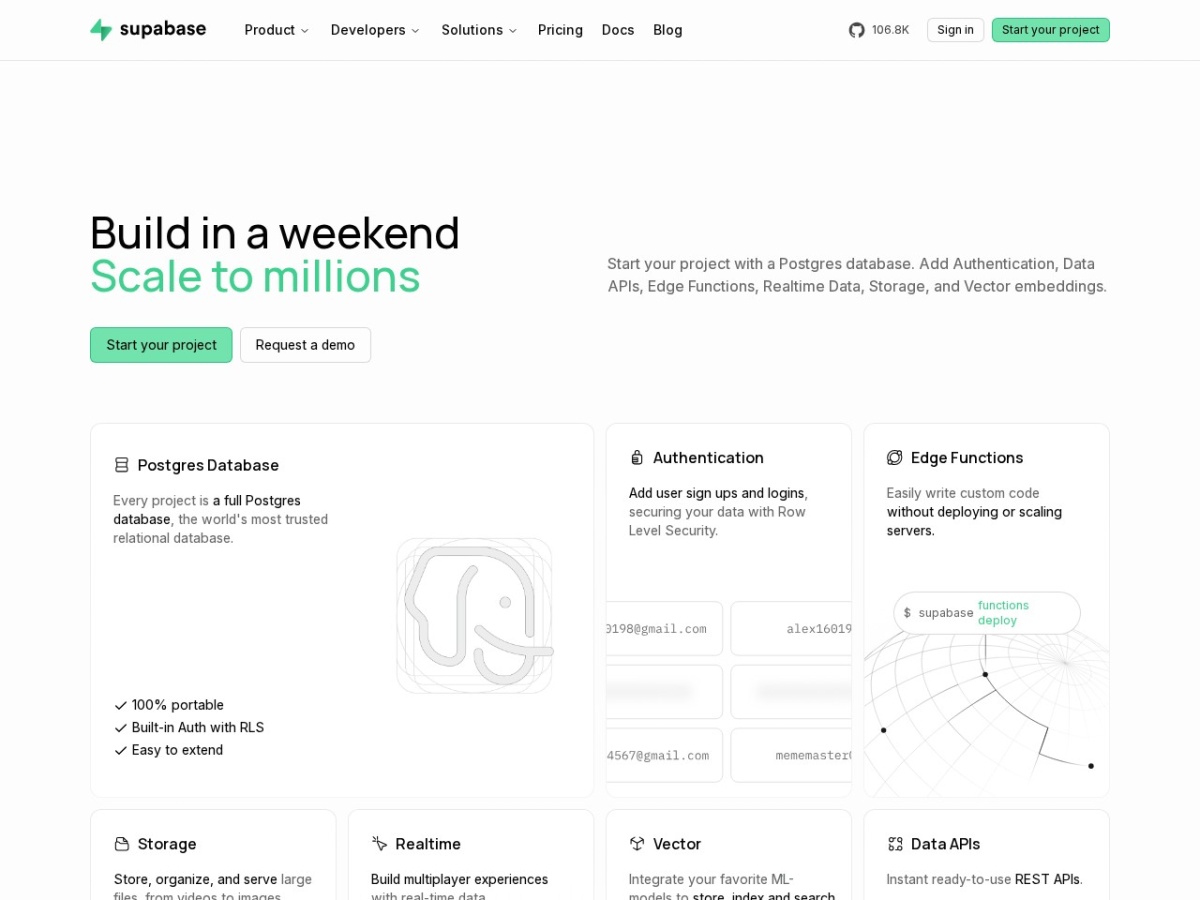
Supabase — real Postgres, real auth, real APIs — the architectural choice behind the “actual apps” claim.
The weekend MVP protocol
Friday night: the one-paragraph brief, scaffold generated, share-link sent to two honest friends. Saturday: iteration with prompt discipline — specific asks, single changes, screenshots for visuals — the credit meter respected. Sunday: GitHub sync, the code opened once (know what you own), and the decision every founder-tool sale rests on: does the working prototype justify building for real? Lovable's entire value is compressing that decision from a month to a weekend — and at free-tier price, the experiment costs exactly nothing but the Friday. Score: 8.5 / 10.



