

If you have ever shopped around for a domain name, you have almost certainly bumped into Namecheap. The company has spent more than two decades building a reputation as the place to go when you want a web address without the upsell circus, the surprise fees, or the aggressive checkout tricks that made some of its rivals famous. Today Namecheap is far more than a registrar: it sells shared hosting, managed WordPress hosting through its EasyWP platform, VPS and dedicated servers, business email, SSL certificates, a VPN, and a growing stack of marketing tools. That breadth is exactly why it deserves a proper, unhurried look.
This review walks through what Namecheap does well, where it falls short of the specialists, and who should sign up versus who should keep looking. We dug into the dashboard, the pricing (including the part nobody enjoys, renewals), and the honest trade-offs so you can decide with your eyes open. If you want to skip ahead and see current offers, you can always Check Namecheap deals.
AnalyzeBench Score: 8.4 / 10
Best for: Individuals, freelancers, startups, and small businesses that want cheap, transparent domain registration with free privacy, plus solid-value hosting and email under one roof.
What we loved:
- Consistently low domain prices with free domain privacy included on eligible domains, at no extra charge, for life
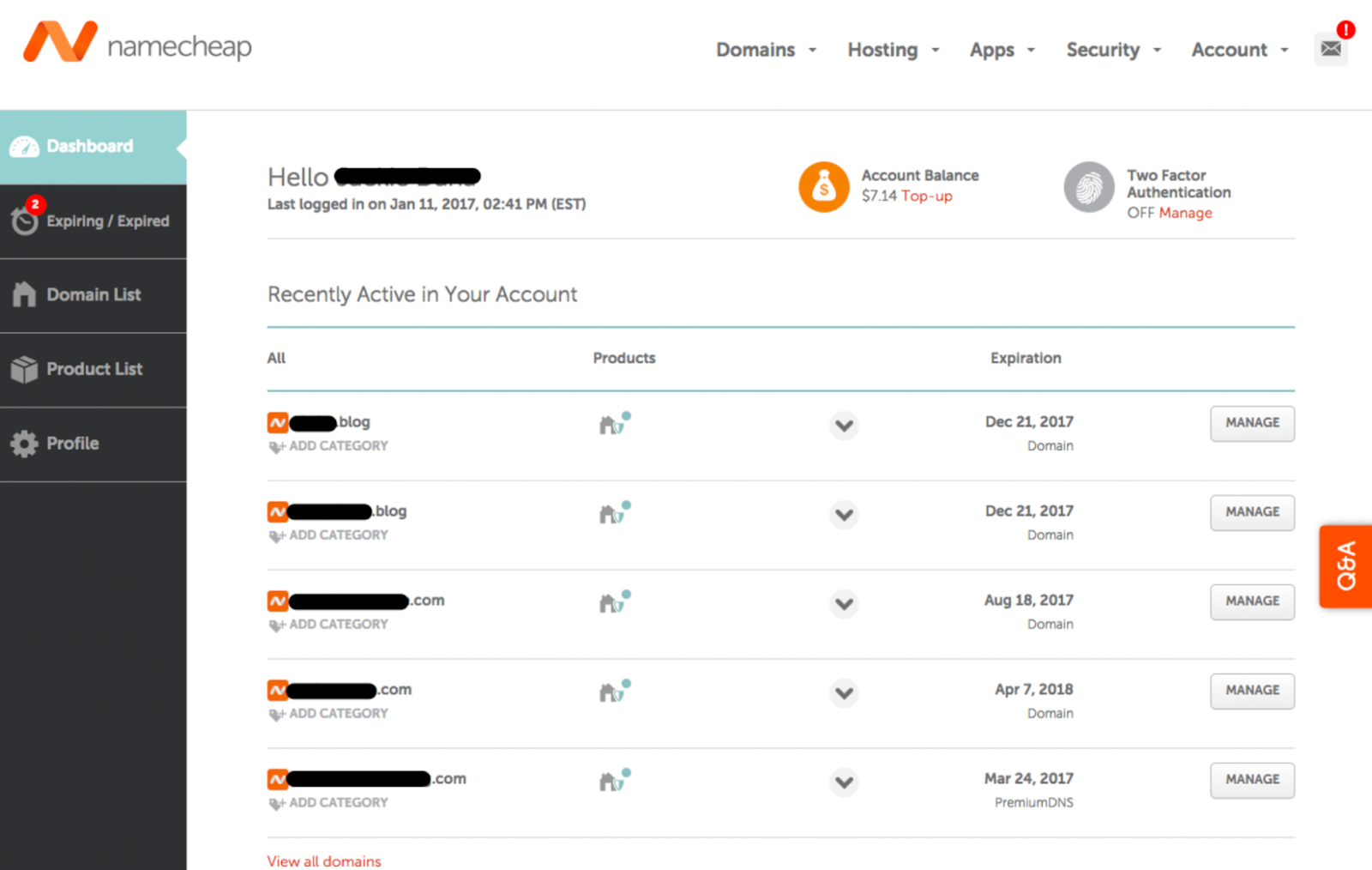
- A clean, mature dashboard that makes managing domains, DNS, and renewals genuinely painless
- EasyWP delivers fast, no-fuss managed WordPress hosting at a very approachable price
- 24/7 live chat support that is quick to answer and generally knowledgeable
- A trusted, ICANN-accredited registrar with a long track record and millions of customers
Watch out for:
- Renewal prices are noticeably higher than the eye-catching first-year promos
- Shared hosting performance is fine for smaller sites but trails dedicated hosting specialists
- No telephone support, and email hosting is a paid add-on rather than a freebie
What makes Namecheap different
Namecheap launched in 2000 and has been serving customers since 2001, growing into one of the largest ICANN-accredited registrars in the world with well over 18 million domains under management. That scale matters, because domains are infrastructure. When your web address is the front door to your business, you want it held by a company that is not going to disappear, get acquired into oblivion, or quietly change the rules on you.
The brand was built on a simple contrast. For years, the biggest name in domains was notorious for a checkout process that felt like running a gauntlet of add-ons, plus privacy protection sold as a paid extra. Namecheap positioned itself as the opposite: fair prices, privacy included for free, and a checkout that does not try to trick you. That reputation for being consumer-friendly, combined with vocal support for digital rights causes, has earned it a loyal following among developers and small business owners.
The other thing that stands out is how much Namecheap now bundles into one account. You can register a domain, point it at managed WordPress hosting, secure it with an SSL certificate, add a professional inbox, and turn on a VPN, all from the same dashboard. For someone who just wants their site online without juggling four vendors, that consolidation is a real, practical benefit. If that sounds like you, it is worth taking a moment to Check Namecheap deals before committing.
The core services
Namecheap covers a lot of ground, but three pillars matter most to the typical buyer: domains, hosting, and its EasyWP managed WordPress product.
Domains
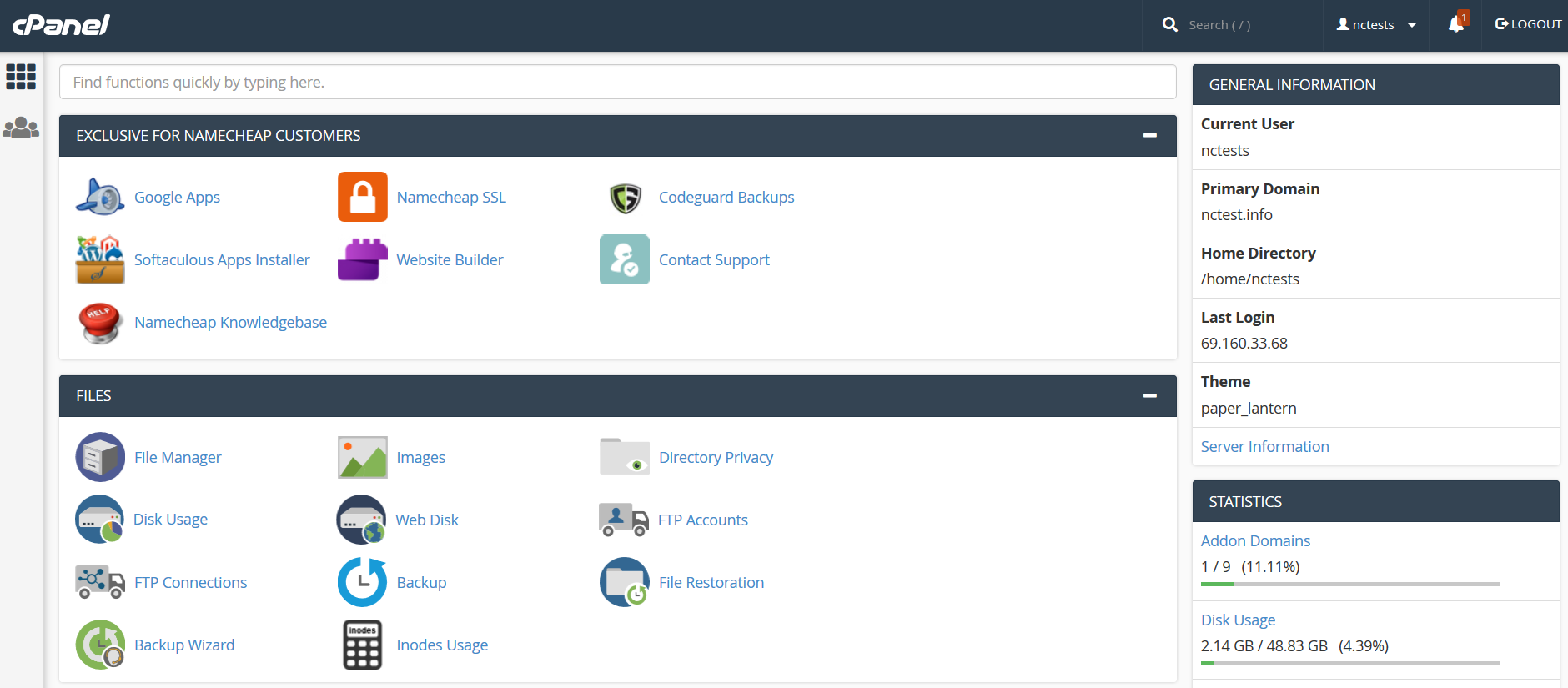
This is the heart of the company and where it is strongest. Namecheap supports hundreds of top-level domains, from the classic .com, .net, and .org to modern extensions like .io, .dev, .co, and dozens of niche options. Registration is cheap, transfers are free and straightforward, and, crucially, domain privacy is included at no cost on eligible TLDs. That privacy protection (historically branded WhoisGuard) keeps your name, address, phone number, and email out of the public WHOIS database, something several competitors still charge for. The domain management panel is mature: bulk tools, easy DNS editing, a free DNS service, PremiumDNS, and clear renewal controls all live in one place.
Hosting
Namecheap offers the full spectrum of hosting. Its shared hosting plans (branded Stellar) are aimed squarely at beginners and small sites, with cheap entry pricing, free SSL, and generous storage. Above that sit VPS plans for people who need more control and dedicated resources, and full dedicated servers for demanding workloads. There is also reseller hosting for agencies and freelancers who want to host client sites under their own brand. Datacenters in the US and the UK give you some geographic choice for your audience.
EasyWP
EasyWP is Namecheap’s managed WordPress platform, and it is arguably the most interesting product in the lineup. Instead of running WordPress on traditional shared hosting, EasyWP uses a containerized setup designed specifically for WordPress, with a free Cloudflare-powered CDN, free SSL, one-click staging and cloning on higher tiers, and a stripped-down control panel that hides the usual cPanel complexity. In independent testing, EasyWP sites have posted strong performance grades and quick load times, which is impressive given the low price point. It is a genuinely good option for someone who wants a fast WordPress site without becoming a server administrator.
Plans & pricing
Namecheap’s pricing is aggressive at the top of the funnel and more ordinary at renewal, which is the single most important thing to understand before you buy. Here is how the main lines break down.
Domains
New .com registrations regularly run at promotional first-year prices well under ten dollars, with the exact figure shifting depending on current promos. Renewals settle at the standard rate, which is higher, so the real annual cost is the renewal price, not the teaser. Free domain privacy is included, which quietly saves you money that some registrars still charge for.
Shared hosting (Stellar)
Shared plans start very cheap on the introductory term, especially if you commit to a longer billing cycle up front, and include free SSL, unmetered bandwidth on most tiers, and daily backups on higher tiers. As with domains, the renewal rate is meaningfully higher than the intro rate, so budget for year two.
EasyWP managed WordPress
EasyWP is tiered from an entry Starter plan up through higher tiers with more storage, more monthly visitor capacity, and extras such as a CDN boost and backups. The entry tier is one of the cheaper ways to get onto genuinely managed WordPress hosting, and there is typically a free trial so you can test it before paying.
Business email
Namecheap’s Private Email is a paid add-on rather than a freebie bundled with hosting, but it is inexpensive on an annual basis and includes a webmail client, calendar, and modern spam filtering. It is a sensible way to get professional @yourdomain addresses without paying enterprise suite prices.
SSL, VPN, and extras
Namecheap resells SSL certificates (from basic domain-validated options up to extended validation) at competitive rates, and sells a VPN, PremiumDNS, and other security add-ons. Two-factor authentication is free on every account. To see exactly what a given plan costs today, it is best to Check Namecheap deals directly, since promotions rotate.
How to get the best deal (watch renewals)
The golden rule with Namecheap is simple: the price you see at signup is not the price you pay forever. Almost every product has a promotional first term and a higher standard renewal rate. This is normal across the industry, but it is worth planning around.
A few tactics genuinely help. First, if you are confident in a domain or a hosting plan, registering or committing for a longer term locks in the lower promotional rate for more years before renewals kick in. Second, always check the renewal price, not just the headline, and compare that renewal number against competitors rather than the intro number. Third, keep an eye on Namecheap’s promos page and seasonal sales, where transfer discounts and bundle deals appear regularly. Fourth, remember that domain transfers into Namecheap are cheap and usually add a year to your registration, so moving an existing domain over can be a smart, low-cost consolidation move.
The company is at least transparent about it: renewal pricing is shown clearly rather than buried. Expect to pay the standard rate from year two and you will never feel misled.
Watch: Namecheap in action
If you would rather see the dashboard and the buying flow before you commit, this independent walkthrough is a useful, honest overview of what Namecheap is like to actually use.
Namecheap vs alternatives
No registrar exists in a vacuum. Here is how Namecheap stacks up against the two names people most often compare it with: GoDaddy, the giant, and Cloudflare, the at-cost minimalist.
| Factor | Namecheap | GoDaddy | Cloudflare |
|---|---|---|---|
| Domain pricing | Low intro, moderate renewal | Low intro, higher renewal | At wholesale cost, no markup |
| Domain privacy | Free on eligible TLDs | Often an upsell | Free |
| Hosting | Shared, VPS, dedicated, managed WordPress | Full hosting range plus site builder | No traditional hosting (Pages/Workers only) |
| Checkout experience | Clean, few upsells | Heavier upselling | Minimal, developer-focused |
| Best suited to | Beginners and small businesses wanting an all-in-one | Users wanting brand recognition and add-ons | Technical users who only want domains at cost |
The short version: Cloudflare is unbeatable if you only want domains at the lowest possible price and are comfortable managing everything yourself with no hosting attached. GoDaddy has the broadest product range and the biggest brand, but a pushier sales experience. Namecheap sits in the sweet spot for most ordinary users, cheaper and calmer than GoDaddy, but far more full-featured and beginner-friendly than Cloudflare.
Value & support
Value is where Namecheap earns its name. On a dollars-per-feature basis, especially for domains with free privacy and for EasyWP managed WordPress, it is hard to beat. You are paying for competent infrastructure at a fair price, and the free extras (privacy, two-factor authentication, free DNS) add up.
Support is 24/7 and delivered primarily through live chat and a ticket system. In our experience, and in the broad consensus of other reviewers, chat responses come quickly and agents are generally knowledgeable enough to resolve common domain, DNS, and hosting questions without endless escalation. The notable gap is the lack of telephone support, which some users still prefer for urgent issues. For a company operating at this price point, though, the support quality is a genuine strength rather than a weakness.
Who should use it — and who should not
Namecheap is an excellent fit for a clear set of people. If you are an individual, freelancer, blogger, startup founder, or small business owner who wants to register a domain cheaply, keep your personal details private, and optionally add reliable hosting and email without stitching together multiple vendors, this is close to an ideal choice. It is also a great home for anyone who wants managed WordPress hosting on a budget through EasyWP, and for agencies that want reseller hosting for client sites.
It is a weaker fit if you are running a high-traffic, performance-critical application that needs top-tier speed under heavy or spiky load, in which case a dedicated hosting specialist or a cloud platform will serve you better than Namecheap’s shared tiers. It is also not the right pick if telephone support is a hard requirement, or if you specifically want free bundled email with your hosting, since Namecheap treats email as a separate paid product. And if you are a purely technical user who only wants domains at literal wholesale cost with no hosting, Cloudflare will edge it out on price alone.
Honest limits
To keep this review balanced, it is worth being direct about the trade-offs. Shared hosting performance, while perfectly adequate for small and medium sites, is not class-leading, and heavier sites can feel the ceiling of shared resources. Renewal pricing, as covered above, erodes some of the headline value, so the intro price is not the number to plan your budget around. Email being a paid add-on will annoy people who expect it bundled. The EasyWP entry tier, while a great value, comes with practical limits such as a single-site focus and visitor caps on lower plans, so growing publishers may need to step up tiers. And the absence of phone support is a real limitation for anyone who wants to talk to a human in a hurry.
None of these are dealbreakers for the target audience, but they are the honest edges of an otherwise strong product. Knowing them upfront is exactly how you avoid buyer’s remorse.
Namecheap discount codes & deals
Namecheap runs frequent promotions rather than a single static coupon, so the best savings usually come from timing rather than a magic code. New-customer domain promos, transfer discounts, seasonal hosting sales, and bundle offers rotate throughout the year, and the deepest cuts tend to land around major sale events. Because these offers change constantly, the smartest move is to check the current live pricing before you buy rather than relying on a code you found elsewhere.
You can always Check Namecheap deals to see what is active right now, compare the intro and renewal rates side by side, and grab a longer term if the promotional pricing is attractive.
Frequently asked questions
Is Namecheap a trustworthy registrar?
Yes. Namecheap is an ICANN-accredited registrar that has operated since 2001, manages well over 18 million domains, and serves millions of customers. It has a long, stable track record and a strong reputation for consumer-friendly practices, including free domain privacy and clear renewal pricing.
Does Namecheap include free domain privacy?
Yes, on eligible top-level domains Namecheap includes domain privacy protection for free, for as long as the domain is registered with them. This keeps your personal contact details out of the public WHOIS record without an extra charge, something several competitors still treat as a paid upsell.
Is Namecheap hosting any good?
For small to medium websites, yes. Shared hosting is inexpensive and reliable enough for blogs, portfolios, and small business sites, and the EasyWP managed WordPress product performs impressively for its price. If you run a very high-traffic or performance-critical site, a dedicated hosting specialist may serve you better, but for most users the hosting is solid value.
What is EasyWP?
EasyWP is Namecheap’s managed WordPress hosting platform. It runs WordPress on a container-based setup optimized for speed, includes a free CDN and SSL, hides the usual server complexity behind a simple dashboard, and typically offers a free trial. It is designed for people who want a fast WordPress site without managing a server.
Why is my renewal price higher than what I paid?
Namecheap, like most registrars and hosts, offers a discounted promotional rate for your first term and then charges the standard rate at renewal. This is disclosed at checkout. To minimize the impact, you can register or subscribe for a longer initial term to lock in the lower rate for more years.
Does Namecheap offer email hosting?
Yes, through its Private Email product, which is a low-cost paid add-on rather than a free inclusion. It gives you professional addresses at your own domain, along with webmail, a calendar, and spam filtering.
Can I transfer an existing domain to Namecheap?
Yes. Domain transfers into Namecheap are inexpensive and usually add a year to your registration in the process. It is a common way for people to consolidate domains from pricier registrars into one tidy, cheaper account.
How to choose a domain registrar: a short buyer’s guide
Whichever provider you choose, it helps to know what actually matters when picking a registrar. Use this checklist to compare any provider fairly.
Look past the intro price to the renewal. The number that governs your real long-term cost is the renewal rate, not the promotional first year. Always compare renewals against renewals across providers.
Check whether privacy is free. Domain privacy hides your personal details from the public WHOIS database. Some registrars include it free; others charge annually. Over the life of a domain, that difference adds up, so treat free privacy as real value.
Confirm you get full control of your domain. You should have easy access to DNS settings, the authorization code needed to transfer out, and clear ownership. A good registrar never holds your domain hostage or makes transferring away difficult.
Weigh the dashboard and support. You will interact with the control panel every time you renew, edit DNS, or add a service. A clean interface and responsive 24/7 support save real frustration, especially if you are not a technical user.
Consider the ecosystem. If you also want hosting, email, or SSL, a registrar that offers competent versions of all of them under one account reduces cost and complexity. If you only ever want domains at rock-bottom cost, a stripped-down at-cost provider may suit you better.
Value the company’s track record. Domains are long-term infrastructure. Favor established, accredited registrars with a stable history and a reputation for treating customers fairly over unknown newcomers offering a slightly cheaper first year.
Judged against this checklist, Namecheap scores well on nearly every line: fair renewals, free privacy, full domain control, a strong dashboard, a broad ecosystem, and two decades of trust. It is not the cheapest option in existence, and it is not the fastest host on the market, but for the vast majority of individuals and small businesses it hits a rare balance of price, features, and peace of mind. If that balance sounds right for your project, take a minute to Check Namecheap deals and see what fits.



