

Every website starts with the same unglamorous decision: where to register the domain. For most of the internet, that choice collapses to two names — Namecheap, the value-focused registrar with north of ten million domains under management, and GoDaddy, the biggest registrar on Earth and the only one your non-technical relatives have heard of. We manage domains at both, have renewed, transferred, and configured DNS at both for years, and have sat through both checkout flows more times than we would like. The two companies are not interchangeable: they have different pricing philosophies, different attitudes toward your inbox, and different ideas about what a registrar is for. This comparison covers what actually differs when you own domains at both — real pricing including the renewal you will pay in year two, privacy, upsells, support quality, security controls, and the ecosystems each company builds around the domain itself.
TL;DR: Namecheap wins on price transparency and principle — renewals are published up front, WHOIS privacy is free forever on every eligible domain, and the checkout does not fight you. GoDaddy wins on breadth and hand-holding — a bigger product catalog, phone support in dozens of countries, guided tools for people who never want to see a DNS record, and a brand your clients already trust. Most technical users and budget-conscious owners should default to Namecheap; GoDaddy earns its keep when you want one vendor and a human on the phone for everything.
Domain pricing & renewals
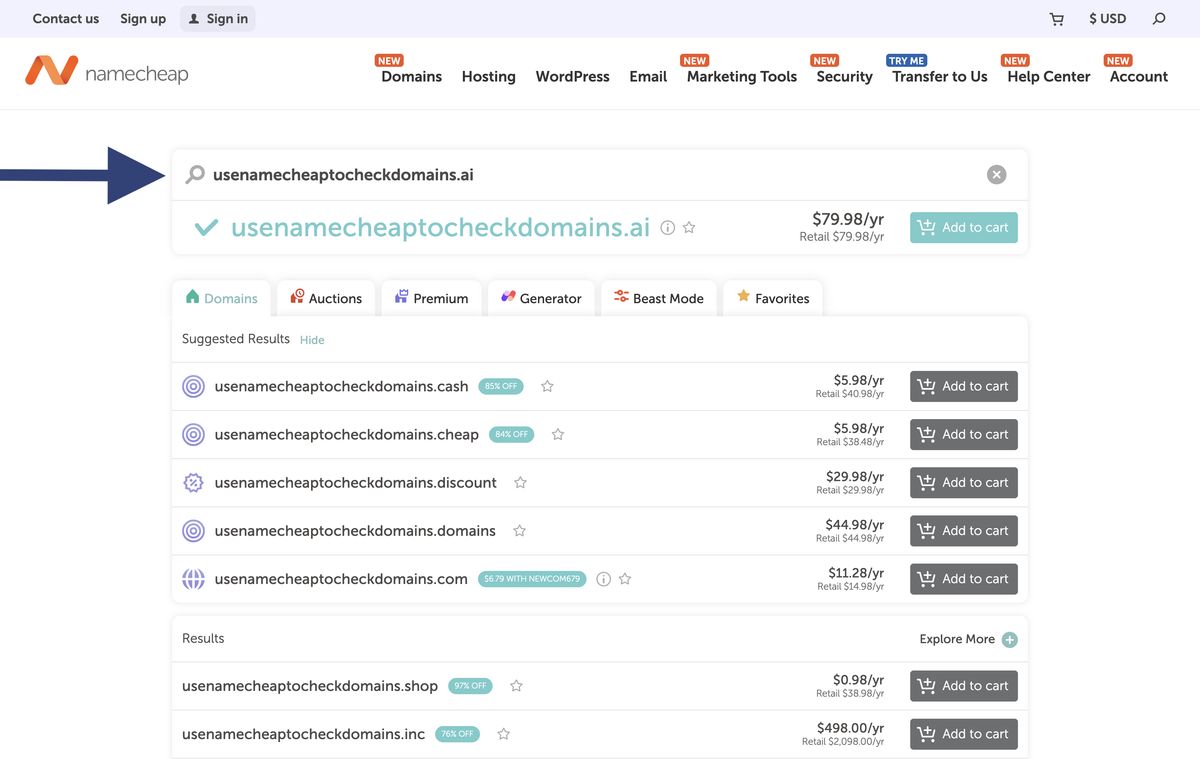
First-year sticker prices are marketing; renewal prices are the relationship. Both registrars run aggressive first-year promotions on .com registrations — figures move constantly, but Namecheap’s intro pricing has historically hovered in the $6–10 range and GoDaddy’s promotional pricing can dip even lower with multi-year commitments attached. The divergence shows up in year two: Namecheap’s .com renewals have typically landed in the mid-teens, while GoDaddy’s standard .com renewal has generally run a few dollars higher — and across a portfolio of twenty domains, a few dollars each becomes real money every single year, forever.
The bigger structural difference is WHOIS privacy. Namecheap includes it free, permanently, on every eligible domain — your name, address and email stay out of the public record at no charge. GoDaddy historically charged separately for full privacy protection and now bundles basic redaction while reserving enhanced privacy features for paid tiers, a packaging that has shifted more than once. Transfers tell a similar story: moving a domain to Namecheap costs roughly a year’s renewal (which you get added to the registration), and Namecheap does not charge exit fees or make the auth-code hunt difficult. All numbers below are hedged approximations — check live pricing before you buy, because both companies run promotions weekly.
| What you pay | Namecheap | GoDaddy |
|---|---|---|
| .com first year | ~$6–10 (promo) | ~$1–12 (promo, often with multi-year catch) |
| .com renewal | ~$14–16/yr | ~$18–22/yr |
| WHOIS privacy | Free forever | Basic included; full protection historically paid |
| Transfer in (.com) | ~$9–12, includes +1 year | ~$10–12, includes +1 year |
Hosting & extras
Both companies would rather sell you hosting than a domain, and both offer the full menu: shared hosting, WordPress hosting, VPS, email, SSL, website builders. Namecheap’s hosting is honest budget fare — its shared plans are among the cheapest legitimate options anywhere, its EasyWP managed WordPress product is startlingly cheap, and performance is acceptable for small sites, as we found in our full Namecheap review. GoDaddy’s hosting is more polished in presentation and backed by phone support, but benchmarks middling for the price; our GoDaddy review found it fine for brochure sites and hard to recommend against specialists.
Our honest take applies to both: buy the domain from the registrar that treats domains best, and buy hosting on its own merits. A serious small site is usually better served pairing a Namecheap domain with a dedicated host — Hostinger at the budget end, or a premium managed WordPress platform like Kinsta when uptime is revenue. Registrar-bundled hosting is convenience, not excellence, at both shops — and keeping the domain and the hosting at separate companies has a quiet operational benefit too: if you ever need to leave a host in a hurry, your DNS control does not live inside the account you are trying to escape.
Upsells & checkout experience
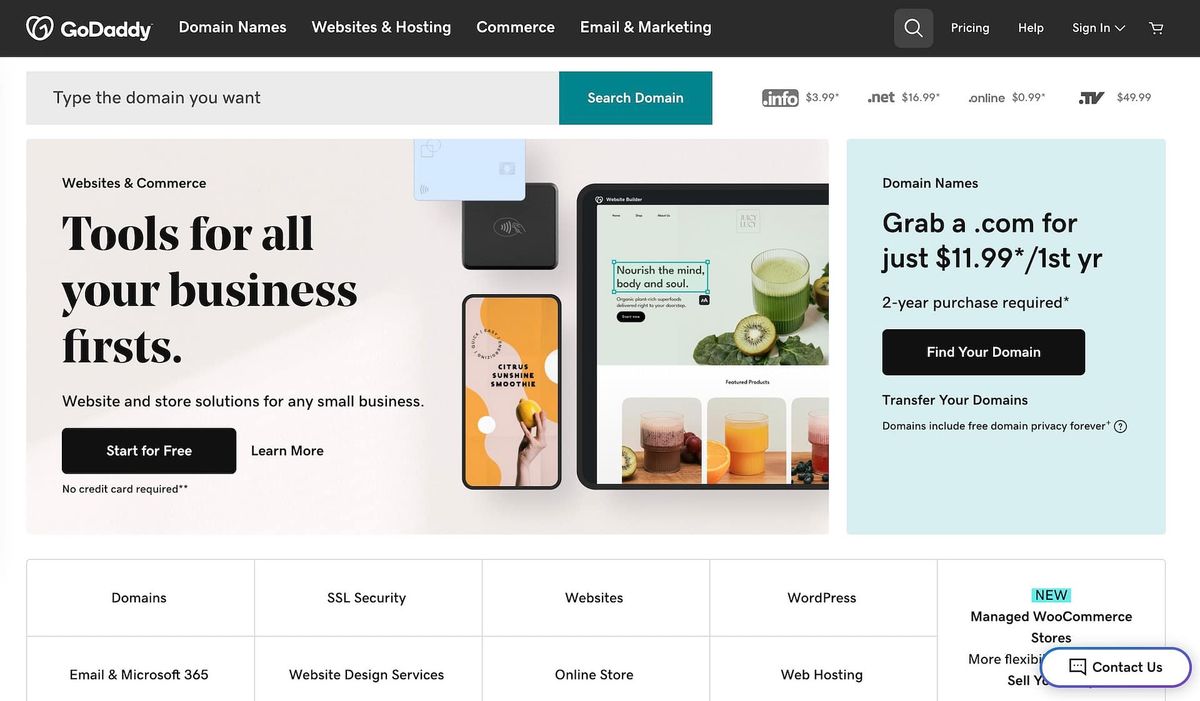
This is where the two cultures diverge most visibly. Put a single .com in a GoDaddy cart and the machine wakes up: multi-year terms preselected in some flows, prompts for privacy upgrades, email trials, website builder trials, SSL certificates, and the follow-up phone calls and emails after purchase. None of it is hidden, exactly — but the checkout is engineered to grow the basket, and inexperienced buyers routinely leave with $80 of subscriptions attached to a $12 domain. GoDaddy has toned this down over the years, and the current flow is tamer than its reputation — but the reputation was earned.
Namecheap’s checkout, by contrast, mostly just sells you the thing you clicked. There are offers — email, SSL, VPN — but they sit quietly in the cart as unchecked options rather than preselected defaults, and one-year terms are the default. For a technical buyer this is a minor quality-of-life difference; for a client or relative buying their first domain unsupervised, it is the difference between a $10 purchase and a phone call to you asking what “Full Domain Protection & Ultimate Bundle” means. On checkout ethics, Namecheap wins without much argument.
Support
GoDaddy’s trump card is the telephone. It operates phone support in dozens of markets and languages, around the clock in most of them, and for a certain customer — the restaurant owner whose site is down, the office manager who inherited the company domain — the ability to call a human being is worth every dollar of the renewal premium. Wait times vary with the hour, and the agents do sell (support calls are a sales channel at GoDaddy), but competence on core domain and DNS issues has been solid in our experience.
Namecheap runs no general phone line. Support is 24/7 live chat and tickets, and it is genuinely good — in our tests, chat connected in a few minutes and agents resolved DNS, transfer and renewal questions without escalation or upselling. The knowledge base is thorough and readable. If chat-first support suits you (it suits most technical users fine), you lose nothing. If you have ever thought “I just want to call someone,” that single sentence decides this entire comparison in GoDaddy’s favor.
Watch: Namecheap vs GoDaddy compared
Ecosystem: builder, email, security
GoDaddy’s ecosystem is the broadest in the industry: a genuinely decent AI-assisted website builder, Microsoft 365 email reselling at competitive bundle prices, managed WordPress, commerce tools including point-of-sale hardware, a logo maker, marketing tools and a domain brokerage. The strategy is to be the only vendor a small business ever needs, and for the do-everything-for-me customer it works — everything shares one login, one bill and one support line.
Namecheap’s ecosystem is smaller but sharper on value: Private Email hosting from a couple of dollars a month, cheap SSL certificates, the FastVPN product, a free logo maker, and Cloudflare-friendly DNS management with free DNSSEC. Its two-factor authentication options are strong, and domain lock and transfer-lock controls are straightforward. Neither company should be your identity provider or your everything-vendor if you can help it — but if forced to live entirely inside one ecosystem, GoDaddy’s is more complete, while Namecheap’s is more fairly priced tool by tool.
Security & account protection
Domains get stolen through accounts, not registries, so account security is not a footnote. Namecheap supports app-based two-factor authentication and U2F hardware keys, offers free DNSSEC on supported TLDs with a single toggle, and its transfer-lock and registrar-lock controls are plainly labeled. GoDaddy also supports two-factor authentication and adds account protections aimed at its small-business base, plus paid domain protection tiers that bundle transfer safeguards, expiration protection and privacy features into packages of escalating price and overlapping value.
Our guidance at either shop is identical and free: turn on two-factor with an authenticator app (not SMS), keep the registrant email on a domain you do not host at the same company, enable the registrar lock, and set renewals to auto with a payment card that will not silently expire. Most domain horror stories — the site that vanished, the domain that got transferred away — trace back to a reused password or a lapsed card, not to anything either registrar did wrong. Both platforms give you the tools; neither can force you to use them.
Our testing notes
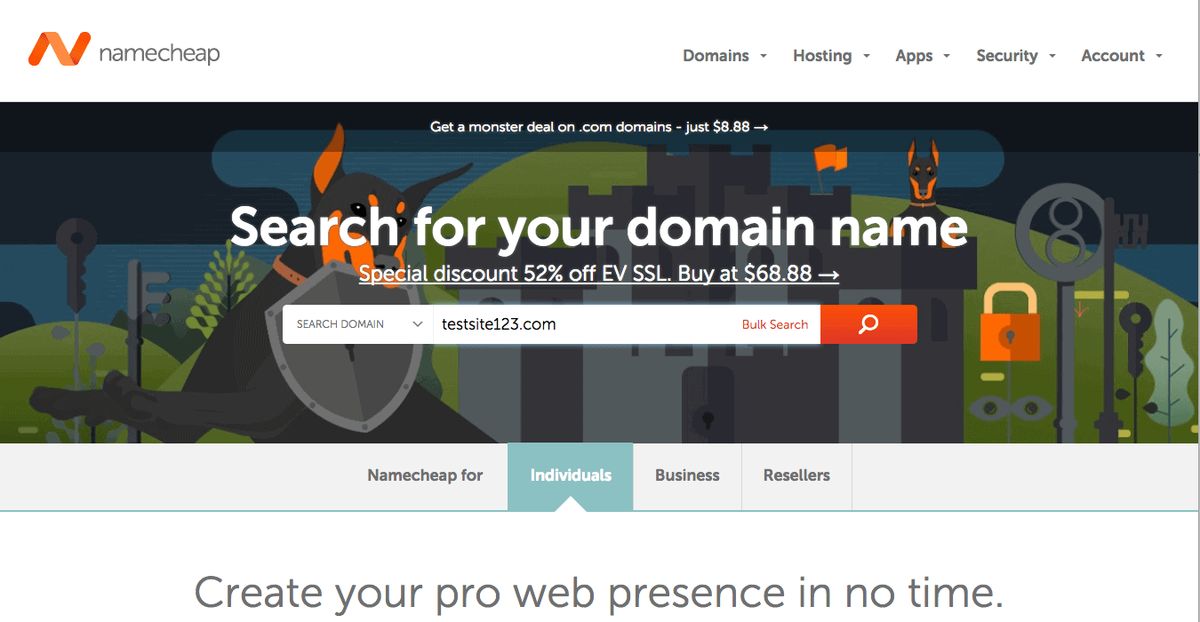
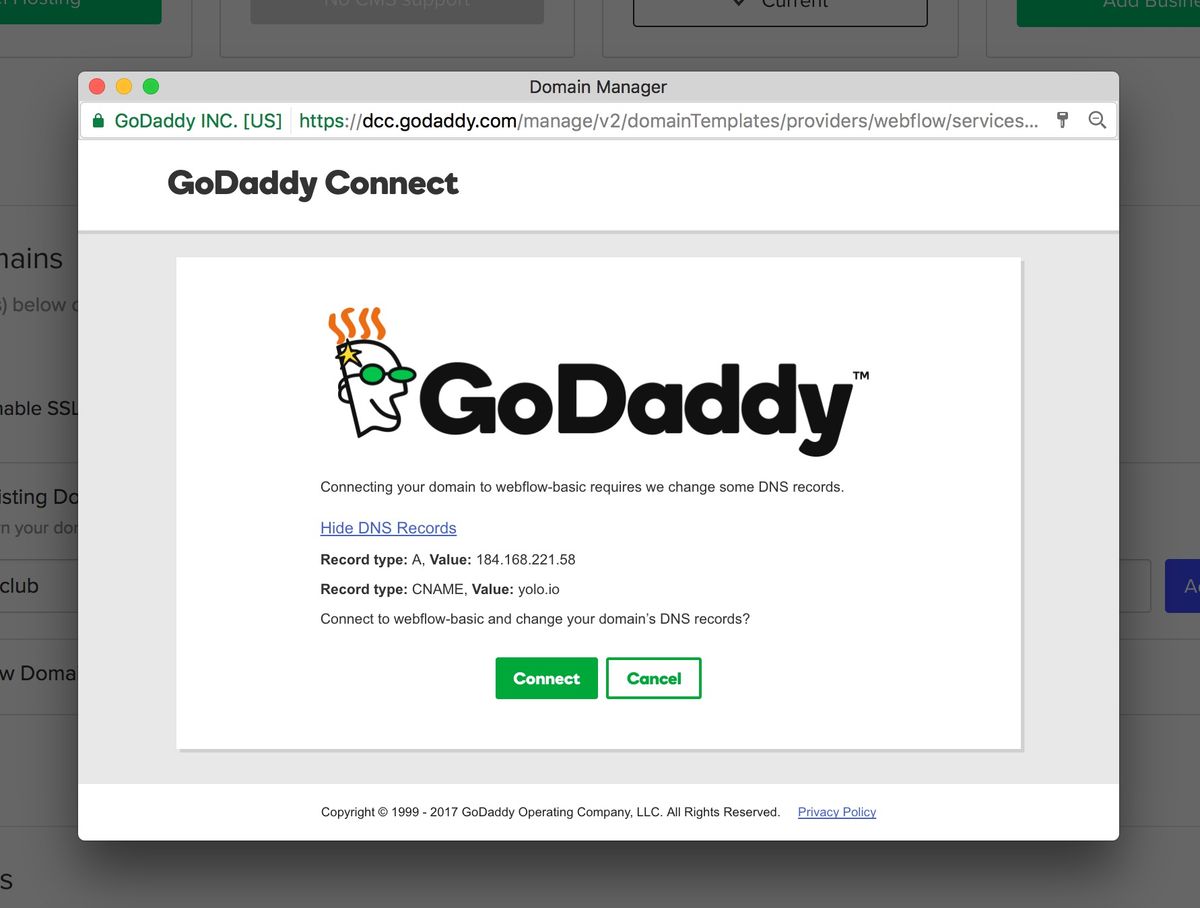
We ran both registrars through the lifecycle a real owner experiences. Registration to live DNS: both propagated fast; Namecheap’s DNS panel is cleaner, with record templates and no interstitial ads, while GoDaddy’s panel is fine but wraps common tasks in more clicks and more promotional real estate. A transfer out of GoDaddy to Namecheap completed in under a day once the auth code was in hand — GoDaddy did not obstruct, though the code lived behind more menus than it needed to. Renewal-price checking was the starkest usability gap: Namecheap publishes renewal pricing on the product page; at GoDaddy we found ourselves cross-referencing help pages to confirm what year two would cost.
We also watched both accounts’ inboxes for thirty days after purchase. Namecheap sent renewal reminders and a couple of product emails. GoDaddy sent noticeably more marketing across email and phone. Nothing abusive — but it reinforces the pattern that runs through this whole comparison: GoDaddy treats a domain as the top of a sales funnel, Namecheap treats it as the product. On non-.com TLDs the pattern held as well: we priced a small basket of .io, .co and .dev registrations at both, and Namecheap came out cheaper on most (though not all) of them at renewal, so portfolio owners with exotic extensions should run their own basket before assuming either side wins across the board.
The verdict
For most people reading a comparison like this — developers, site owners, freelancers, anyone comfortable with a DNS panel — Namecheap is the better registrar. It is cheaper where it counts (renewals, the price you pay forever), free WHOIS privacy is a permanent structural advantage rather than a promotion, the checkout respects you, and the support, while chat-only, is quick and honest. Domains are the core product, and it shows.
GoDaddy remains the right choice for a real customer type, and pretending otherwise would be dishonest. If you want phone support in your language at 3 a.m., if you are buying for a non-technical organization that values a household-name vendor, or if you genuinely want domains, builder, email and commerce under one roof with one support line, GoDaddy delivers that consolidation better than anyone — you simply pay a premium and keep a hand on your wallet at checkout. Price-sensitive and self-sufficient: Namecheap. Breadth and a phone number: GoDaddy. That is the whole verdict.
Domain deals
Both registrars discount constantly: Namecheap runs promo codes, transfer sales and monthly specials, while GoDaddy’s deepest cuts come on first-year registrations and bundled multi-year terms — always check the renewal before celebrating. We track current working offers for both on our deals page.
Frequently asked questions
Is Namecheap really cheaper than GoDaddy? On renewals — the price that matters long-term — usually yes, by a few dollars per domain per year on .com, plus free WHOIS privacy that GoDaddy has historically charged for. First-year promos at both change weekly, so compare the renewal line, not the sticker.
Does GoDaddy still push upsells at checkout? Less aggressively than its reputation suggests, but yes — expect preselected options and add-on prompts. Review every line item and the billing term before paying. Namecheap’s cart is the quieter of the two.
Can I transfer my domain from GoDaddy to Namecheap? Yes. Unlock the domain, grab the authorization code from GoDaddy’s panel, and start the transfer at Namecheap — it costs roughly a year’s renewal, adds a year to your registration, and typically completes within a day or two.
Is Namecheap’s free WHOIS privacy actually free forever? Yes, on every eligible TLD, for the life of the domain. It is a standing policy, not a first-year promotion.
Which has better DNS management? Both are reliable, but Namecheap’s panel is cleaner and quicker for editing records, and free DNSSEC is easy to enable. Heavy DNS users often move nameservers to Cloudflare regardless of registrar.
Should I buy hosting from my registrar? Usually not — registrar hosting is convenient but rarely best-in-class. Keep the domain at the best registrar and pick hosting on its own merits; see our Hostinger and Kinsta reviews for where we would actually host.
Does GoDaddy offer phone support and Namecheap not? Correct — GoDaddy offers 24/7 phone support in many countries, which is its biggest practical advantage. Namecheap is 24/7 live chat and tickets only, though response quality in our tests was excellent.
How to choose a domain registrar: a practical guide
Start with the renewal price, because that is the number you will pay every year for as long as the project lives — first-year promos are rounding errors over a domain’s lifetime, and any registrar that makes renewal pricing hard to find before checkout is telling you something about the relationship to come. Second, treat WHOIS privacy as a requirement, not a feature: your home address in a public database is a spam magnet at best, and a registrar that charges yearly for redaction is charging rent on your own name. Third, audit the checkout before you judge the company — register one cheap domain and count the preselected checkboxes, because that experience is what every future purchase and every renewal email will feel like. Fourth, match support to your actual self: if you will genuinely want a phone call when DNS breaks, pay GoDaddy’s premium happily; if you have never called a support line in your life, stop paying for one. Fifth, check the mechanics that matter at 2 a.m. — two-factor authentication options, transfer-lock controls, DNSSEC, API access if you automate — and confirm the registrar does not hold your auth code hostage when you leave, because the exit is part of the product. Finally, keep the domain decision separate from hosting, email and builder decisions; registrars bundle because bundles obscure comparison, and the best small-web stack almost always mixes vendors. Judged by that checklist, Namecheap is the default for the self-sufficient and GoDaddy the deliberate choice for those buying breadth and a phone number — and either beats drifting into whichever registrar happened to be advertising the day you had an idea.



