Shopify is no longer a website builder — it is the operating system of independent e-commerce. Millions of stores, a payments stack, a fulfilment network, a POS system and an app economy orbit the core product: the most reliable way to sell things online without building infrastructure. Plans start at ~$29/month (Basic, annual), scaling through Grow and Advanced to Plus for high-volume brands.
The 2026 story is consolidation of the checkout advantage: Shop Pay converts measurably better than generic checkouts, Shopify's AI (Magic and Sidekick) drafts product copy and storefront edits conversationally, and the platform keeps absorbing functions — email, B2B, retail — that used to be third-party apps.
Our verdict: for a real product business, Shopify is the least risky decision in its category — the platform tax is real, and worth it. Side-hustles and single-product tests can start cheaper elsewhere, but rarely stay there after traction. Score: 8.8 / 10.
→ Try Shopify — see current pricing
What makes Shopify different
Checkout conversion is the compounding moat: Shop Pay's stored-credential checkout outconverts generic flows, and every year of accumulated buyer accounts widens the gap. The app store solves the edge cases core software should not carry, themes deliver credible stores in a weekend, and the operational spine — inventory, taxes, shipping labels, fraud analysis — is where the subscription quietly earns itself.
Pricing
| Plan | Price (annual) | Fits |
|---|---|---|
| Basic | ~$29/mo | New and small stores |
| Grow | ~$79-105/mo | Growing teams, better reports |
| Advanced | ~$299-399/mo | Volume, custom reporting, lower fees |
| Plus | from ~$2,300/mo | Enterprise and high-volume brands |
Add payment processing (rates drop by tier; third-party gateways pay a surcharge) and apps — the real monthly cost of a working store typically runs 1.5-2x the plan price, which honest budgeting should assume upfront.
The merchant experience
Setup to first sale in a weekend is realistic: theme, products, payments, domain, shipping zones. The dashboard scales from solo operator to team without retraining, and the mobile app genuinely runs a store from a phone. The friction lives at the edges: app subscriptions creep, theme customisation beyond settings needs Liquid literacy, and international selling (Markets) rewards reading the documentation before switching it on.
Shopify vs the alternatives
Against WooCommerce: WordPress-native freedom and no platform fee, purchased with maintenance, security and plugin-conflict labour — the TCO conversation is closer than the sticker prices suggest. Against Wix/Squarespace commerce: fine for light catalogs attached to content sites; outgrown at scale. Against marketplaces (Amazon, Etsy): different business — marketplaces rent you demand; Shopify has you own the customer. Most serious brands run both deliberately.
Pros, cons and limits
Pros: best-in-class checkout; operational completeness; app ecosystem; uptime and security handled; scales from zero to enterprise without replatforming; strong AI assist layer.
Cons: app costs accumulate; transaction surcharge without Shopify Payments; theme-level control needs Liquid; content/blogging tooling is basic; B2B and international features tier-gated upward.
Shopify deals
The trial (commonly $1/month promotional periods for the first months) makes testing costless; annual billing trims ~25% off monthly rates.
The checkout moat, quantified
Because "better checkout" sounds like marketing, the mechanics deserve spelling out. Shop Pay stores payment and shipping credentials across the entire Shopify merchant network: a first-time visitor to your store who has ever bought from any Shopify store checks out in one tap. That network effect — hundreds of millions of stored-credential buyers — is unavailable to any standalone checkout you could build, and it shows up in the metric that matters: completed checkouts per initiated checkout. Shopify's published and independently replicated numbers put Shop Pay's conversion lift double digits above guest checkout. On a store doing $30,000/month with a typical 2-3% conversion rate, a single percentage point of checkout completion is worth more than the entire annual platform bill — which is the arithmetic that makes most platform comparisons beside the point for serious sellers.
The 2026 checkout additions compound it: one-page checkout as default, express-pay wallets surfaced earlier, and AI-driven checkout suggestions on Plus. The strategic read is simple — Shopify decided the checkout is the product, and a decade of that focus is why the moat is now structural.
The app economy: budget and discipline
The app store solves everything and bills for it monthly, so the mature approach is a deliberate stack. The near-universal core: reviews (Judge.me or Loox, $15-35), email/SMS (Klaviyo, scaling with list size — often the biggest line), subscriptions if applicable (Recharge/Skio, $99+), a bundler/upsell (Rebuy or similar, $99+), and page-building for landing pages (PageFly/GemPages, $24-50). The discipline: audit quarterly, because zombie apps drain both money and site speed — each app injects scripts, and a bloated stack visibly damages Core Web Vitals. The counterweight trend worth noting: Shopify keeps absorbing app functions into core (email basics, bundles, B2B, subscriptions APIs), so the necessary stack is shrinking year over year — re-check what core now includes before renewing any app.

Theme strategy: where design money actually goes
The theme store's $0-500 one-time pricing is the best value in the stack: modern paid themes (the perennial favourites and their successors) ship with performance budgets, rich sections and settings depth that make custom development unnecessary for most brands under eight figures. The professional pattern: buy a fast theme, customise with sections and the theme editor, resist custom code until product-market fit funds it — a custom build ($15-80k via agencies) buys brand distinction, not conversion, and conversion lives in photography, reviews, offer and speed. The one custom investment that pays early: a designed landing-page system for paid traffic, where message-match beats template-match.
Shopify's AI layer: Magic and Sidekick in practice
The AI additions are usefully unglamorous. Magic writes product descriptions, email subject lines and FAQ answers from minimal input — competent first drafts that need brand-voice editing, produced at catalog scale. Sidekick, the conversational admin assistant, answers "how do I" and "why did" questions against your actual store data — discount setup, report interpretation, order lookups — usefully lowering the admin learning curve for new merchants. Neither is a strategy engine; both are hours-recovered tools, and the honest assessment is that they make the platform's existing depth more accessible rather than adding new depth. The sleeper feature is Magic's image editing — background replacement and staging for product photos — which quietly replaces a $200/month photo-editing subscription for small catalogs.
International and multi-channel selling
Markets (Shopify's internationalisation layer) handles multi-currency pricing, duties estimation, localised domains and translated storefronts from one admin — genuinely simpler than the multi-store hacks of five years ago, with the caveat that pricing strategy and local payment preferences still need human decisions per market. Channel integrations push the catalog to Instagram, TikTok Shop, Google, Amazon and marketplaces with inventory sync — the operational upgrade being one source of truth for stock across every surface. For Southeast Asian sellers, the practical notes: local payment gateways integrate but verify fees against Shopify Payments availability in your country, COD workflows exist via apps, and the logistics apps ecosystem (regional 3PLs, GHN/GHTK-class carriers in Vietnam) is mature enough that the platform choice rarely blocks the operation.
When Shopify is the wrong answer
The honest disqualification list. Content-first businesses with incidental commerce: WordPress/Webflow with a buy button beats a store with a blog. Pure digital products at tiny scale: Gumroad/Lemon Squeezy's per-sale pricing beats a monthly platform bill until volume. Heavy B2B with complex quoting and ERP integration below Plus budget: dedicated B2B platforms fit better. Marketplace-only sellers with no brand ambitions: the platform's ownership advantages are wasted rent. And single-product validation tests: a landing page plus Stripe link answers the demand question for $0 before the store build is justified. Shopify's gravity pulls everything toward it; resisting until the business shape matches saves the subscription graveyard entry.
Unit economics before the platform: the pre-launch maths
The most valuable paragraph in any Shopify review is not about Shopify: it is the margin worksheet that decides whether a store should exist. Landed product cost, payment processing (~3%), shipping subsidy, platform and app rent, and the number that kills most stores — customer acquisition cost. At a $40 average order and 60% gross margin, a $24 contribution has to cover ads that commonly cost $15-35 per first purchase in competitive niches, which is why first-order profitability is rare and the real business plan is repeat rate. The platform's role in that plan is genuine but bounded: Shop Pay lifts conversion, native email automations lift repeat purchase, analytics make the numbers visible — but no checkout optimises a negative-margin offer into a business. Run the worksheet first; the store build is the reward for numbers that clear, not the method for discovering they do not.
For operators who clear the maths, the platform's compounding features start mattering in month two, not day one: the abandoned-checkout sequence recovering 5-10% of lost carts, the post-purchase upsell adding points of AOV, the reviews cycle building the conversion asset that paid traffic amortises against. Shopify's deepest value is that every one of these levers is a settings page, not a project — the operator's attention stays on offer and audience, which is where stores are actually won.
Migration to Shopify: the practical map
Inbound migrations (Woo, Wix, Squarespace, marketplace-only) follow a known path: product CSVs import cleanly, customer records with order history need apps or the official importer, URL redirects preserve SEO (the step skipped in every horror story), and payment/subscription migrations require provider coordination. Budget a weekend for a small catalog, a fortnight of parallel running for a real one. The counterintuitive advice: migrate before the busy season, never during, and treat the migration as the excuse to prune — dead SKUs, stale pages and zombie discount codes do not deserve tickets to the new platform. Outbound, for symmetry: product and customer data export freely; theme work and app configurations do not travel — the standard hosted-platform bargain, priced into the honesty of this review's score rather than hidden. Score: 8.8 / 10.
POS and the omnichannel quiet strength
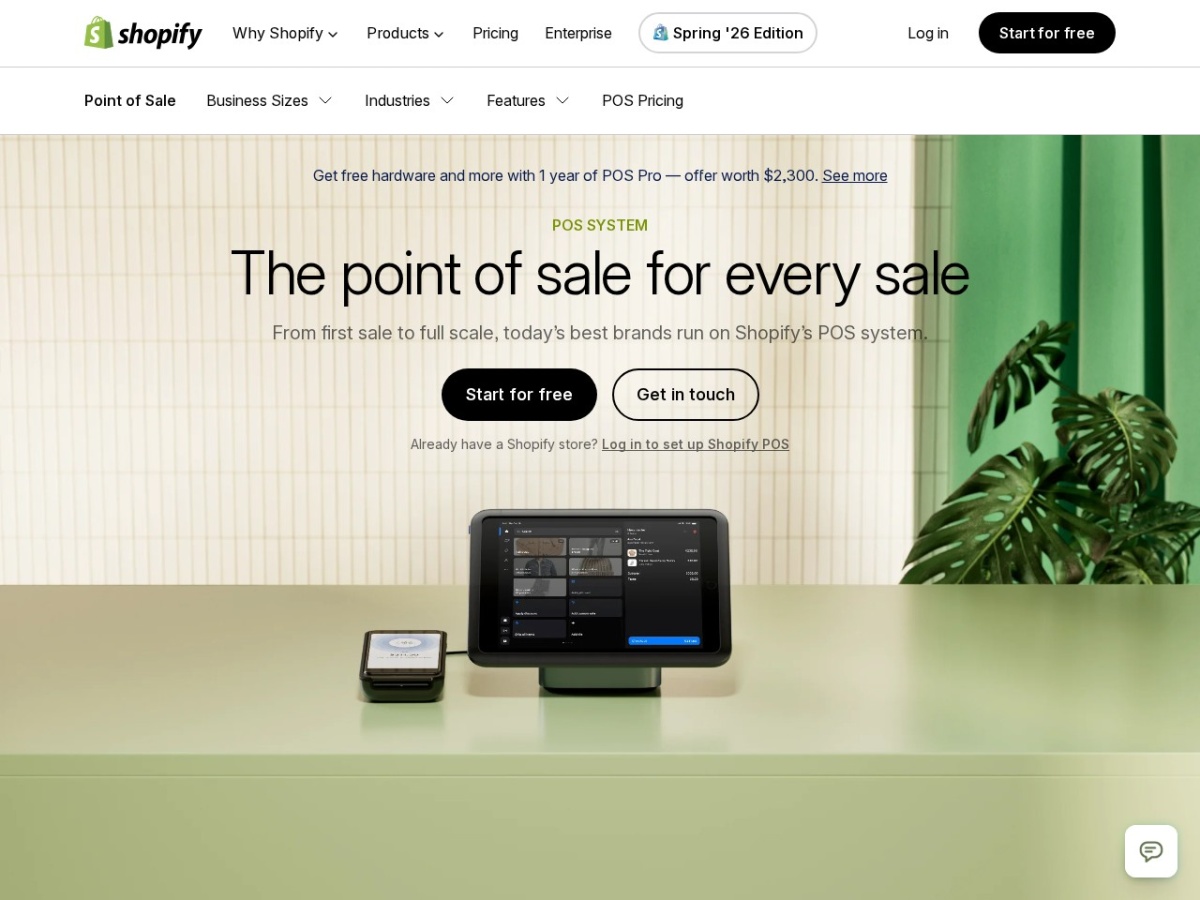
For businesses with any physical surface — retail, pop-ups, markets, events — Shopify POS is the under-reviewed half of the platform. The same catalog, inventory and customer base drive the card reader and the website: sell at a weekend market and the webstore's stock decrements live; a walk-in customer's email joins the same Klaviyo flows as an online buyer. POS Lite ships free with every plan (card-present rates apply), POS Pro adds retail-scale staff and inventory tooling per location. Against the Square-plus-separate-webstore pattern common among small retailers, the single-source-of-truth argument compounds monthly: no reconciliation spreadsheets, no oversold weekends, one customer record per human. For the café-with-merch, the brand doing pop-ups, or the Vietnamese shop straddling a physical stall and an online catalog, this integration is frequently the deciding feature no comparison table mentions.
The omnichannel synthesis is Shopify's quiet end-game: web, retail, social checkouts, marketplaces and B2B drawing on one operational core. Competitors match pieces; none currently match the breadth at SMB pricing, which is why the review's verdict holds even at the platform's premium: the subscription buys an operating system, and operating systems are judged by what they make unnecessary. Shopify makes the most things unnecessary. Score: 8.8 / 10.
Shopify's analytics: reading the store like an operator
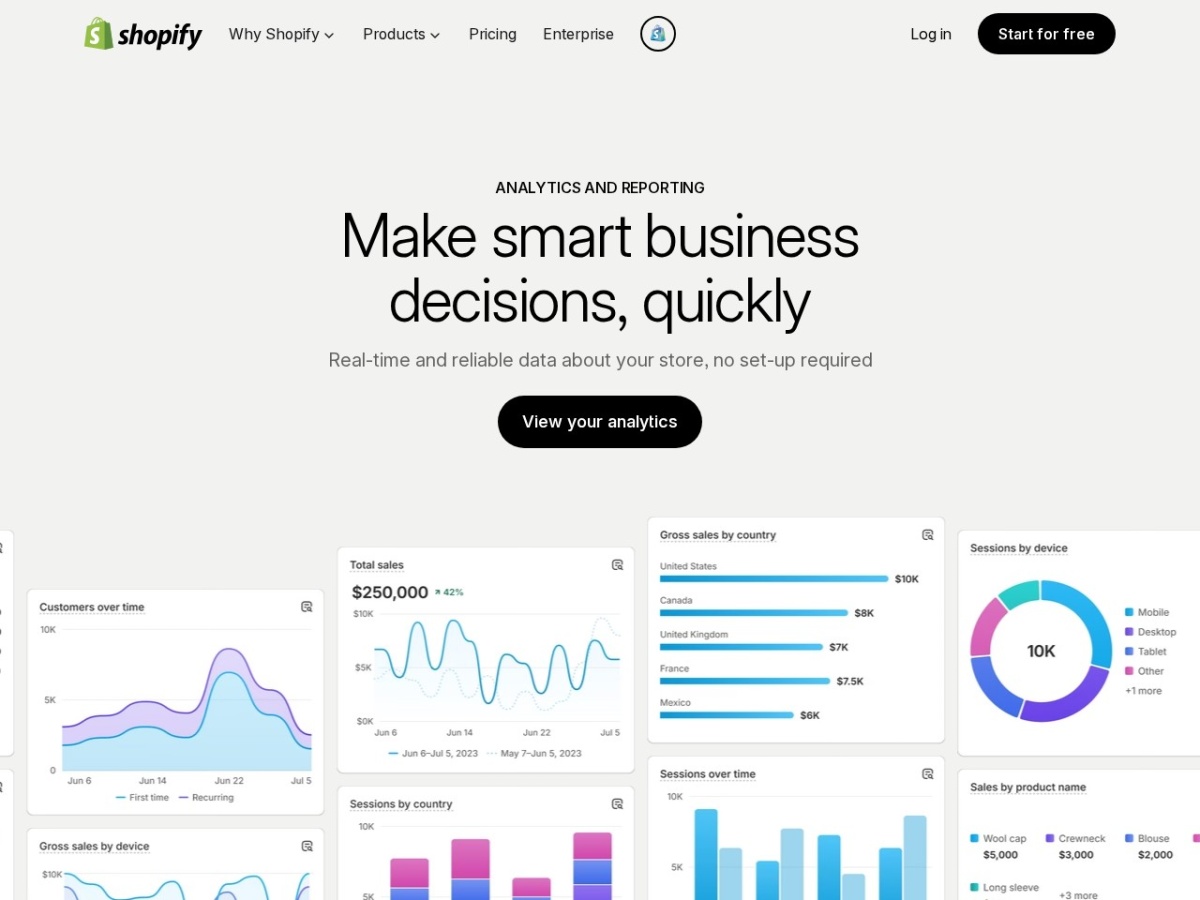
The reporting layer deserves its own habit protocol. The dashboards surface the operator's vital signs — conversion rate by traffic source, returning-customer rate, AOV trends, top products by contribution — and the weekly reading ritual beats the daily anxiety scroll: one fixed morning, five numbers, one decision per number. The reports that earn attention beyond defaults: sales attributed by discount code (the influencer-ROI ledger), customer cohort retention (the repeat-rate truth behind revenue vanity), and inventory days-remaining (the stockout early-warning that saves ad spend from landing on empty shelves). Advanced tiers unlock custom reports, but the discipline matters more than the tier — most operators drown in available data while starving for the five numbers that steer.
FAQ
Can I start with no inventory?
Yes — print-on-demand and dropshipping apps integrate natively; margins and differentiation remain your problem, not the platform's.
Shopify or WooCommerce?
Want to run a store: Shopify. Want to run a server that hosts a store: WooCommerce. The honest fork is appetite for maintenance.
Is the blog good enough for content SEO?
Serviceable, not strong — many brands pair a Shopify store with a WordPress or Webflow content site on a subdomain.
What do apps really cost?
A working store typically carries $50-200/month of apps (reviews, email, upsells, subscriptions). Budget it from day one.
When does Plus make sense?
Around seven-figure annual volume, when checkout customisation and lower rates repay the jump — not before.
The weekend launch protocol
Saturday: theme, brand basics, ten products with honest photography, payments and shipping zones configured. Sunday: domain, legal pages, one email automation (abandoned checkout), test orders on desktop and phone. Monday: launch to your warmest channel and let real behaviour — not the settings screen — dictate week one's fixes. The platform's entire value is that none of the infrastructure will be your bottleneck; from the first sale onward, the business is. Score: 8.8 / 10.