
PureVPN is one of the longest-running names in the VPN world, and in 2026 its pitch is a mix of low prices, a big server network, and an aggressive push on transparency. Its standout claim is an “always-on” audit by KPMG — a stricter form of privacy verification than the one-off audits most rivals publish. For a budget VPN, that’s an unusually strong trust signal.
But PureVPN also carries baggage: a well-documented logging controversy from years ago, and speed test results that reviewers describe as inconsistent. So the real question is whether the modern, audited PureVPN has genuinely turned the corner — or whether the low price comes with compromises. We dug into pricing, servers, speed, streaming, and its privacy record to find out.
Our verdict: PureVPN is an affordable, feature-rich VPN with an industry-leading continuous audit and a huge server network — worth considering for budget users, though speeds can be inconsistent and its history means the audits do real work. Score: 7.9 / 10.
→ Visit PureVPN and check the current deal
What is PureVPN and who is it for
PureVPN launched in 2007 and is one of the most established consumer VPNs, now operating from Hong Kong. It targets budget-conscious users who still want a full feature set: a large server network, dedicated streaming servers, port forwarding, split tunneling and optional extras like a password manager and data-breach monitoring on higher tiers.
It suits people who want a lot of VPN for very little money and value visible transparency — PureVPN’s continuous KPMG audit is arguably the most demanding privacy verification in the consumer space. It’s a weaker fit for users who need the absolute fastest, most consistent speeds, or who won’t look past the company’s older logging incident regardless of the audits since.
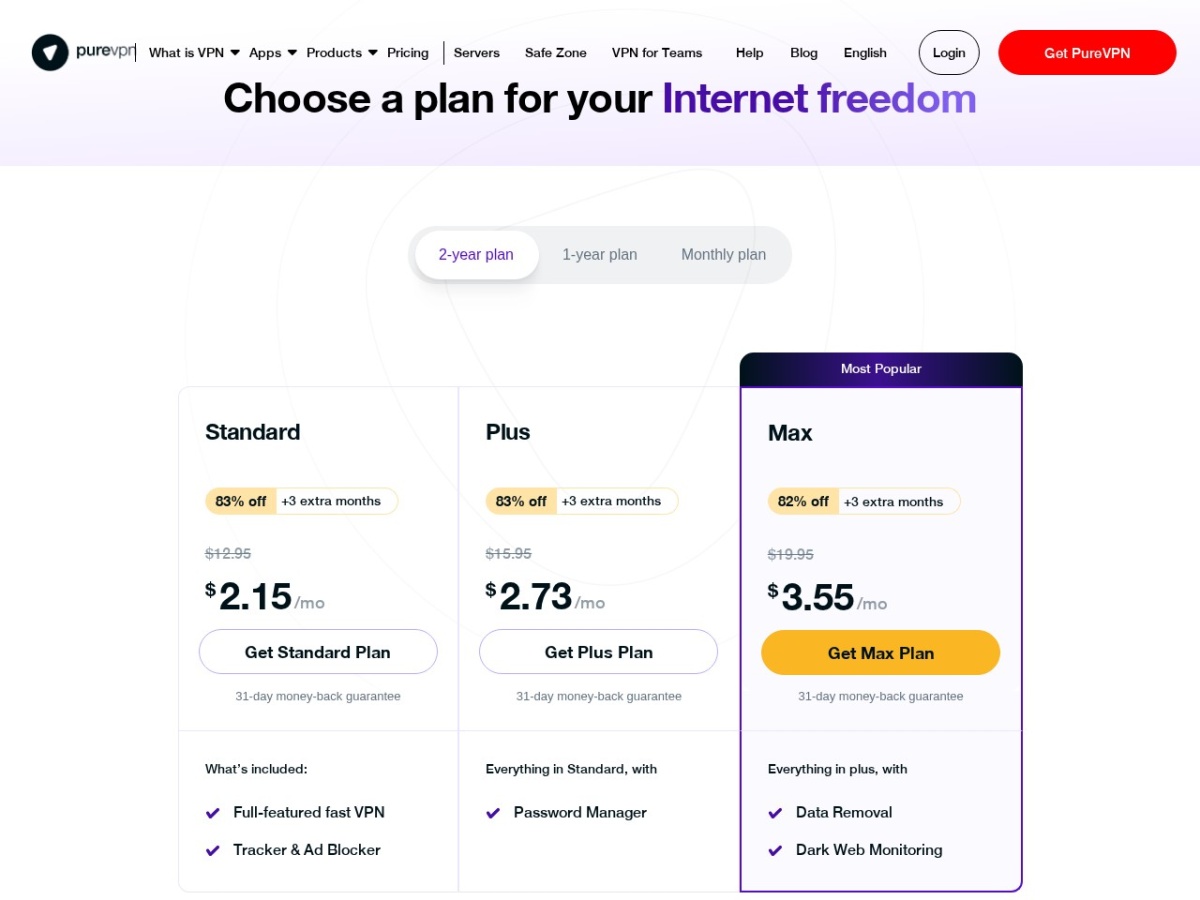
PureVPN sells three tiers — Standard, Plus and Max — that differ by bundled extras rather than core VPN quality. The underlying network, apps and security are the same across all three; you’re really choosing whether you also want a password manager or breach monitoring.
PureVPN pricing and plans
PureVPN is genuinely cheap on a long commitment. The Standard two-year plan comes in around $2.14/month billed up front, one of the lowest sticker prices among established VPNs. The Plus and Max tiers cost more because they bundle PureKeep (a password manager) and, on Max, data-removal and breach-monitoring tools. Monthly pricing is far higher, as usual, to steer you toward the long plan.
All plans include a 31-day money-back guarantee, and a dedicated IP address is available as a paid add-on for users who need a consistent address. Payment options include cards, PayPal and cryptocurrency, the last of which suits users who want to minimise the personal data attached to their subscription.
On pure value, PureVPN is hard to beat — few audited VPNs with this many features cost so little over two years. As always, watch the renewal price, which climbs after the introductory term, and diarise a reminder before it rolls over so you can reassess or renegotiate.
| Tier | Roughly (2-yr) | Extras | Refund |
|---|---|---|---|
| Standard | ~$2.14/mo | VPN only | 31 days |
| Plus | ~$3.00/mo | + Password manager | 31 days |
| Max | ~$3.50/mo | + Data removal & breach alerts | 31 days |
→ Get the latest PureVPN pricing
Servers and network
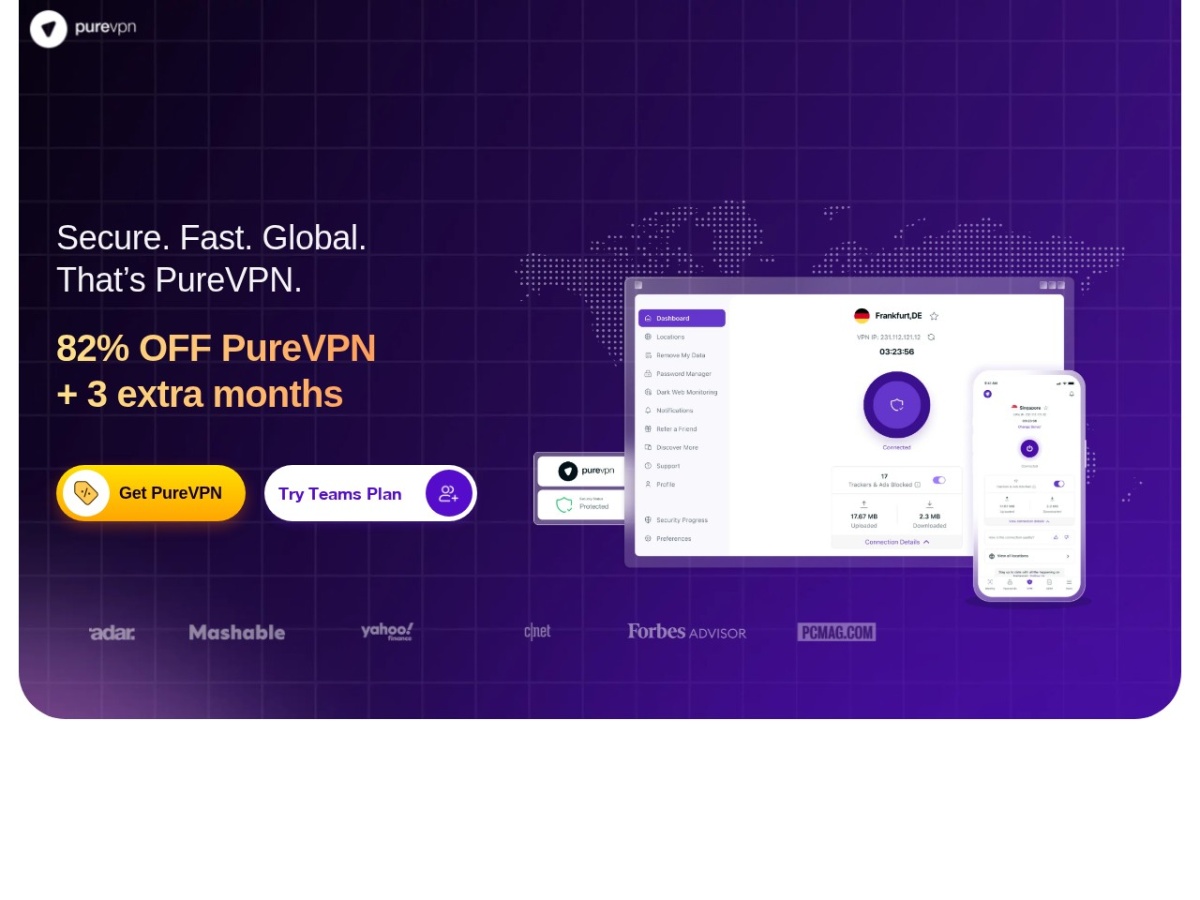
PureVPN operates 6,500+ servers in more than 140 locations, giving broad global coverage that’s especially useful for finding a nearby server or accessing content in specific regions. The network includes dedicated streaming servers and supports port forwarding — a feature torrenters and remote-access users specifically look for and that many rivals omit.
Server coverage spans the Americas, Europe, Asia-Pacific, the Middle East and Africa, so travellers and expats will usually find a local option. The apps make it easy to filter by purpose (streaming, P2P) and by location, keeping the large list manageable.
Speed and performance
Speed is PureVPN’s most uneven area. On nearby servers it performs well — fast enough for HD and 4K streaming and everyday use — and its WireGuard implementation helps. But reviewers consistently report inconsistency: some distant connections show noticeably higher latency or reduced throughput compared with top-tier rivals like NordVPN or ExpressVPN.
For most everyday tasks — browsing, streaming, video calls — you won’t notice a problem. But if you routinely need maximum, predictable speed over long distances (large transfers, competitive gaming from afar), PureVPN is a step behind the fastest providers. It’s “good for the price” rather than a speed leader.
Streaming and torrenting
PureVPN handles streaming well, reliably unblocking Netflix, BBC iPlayer, YouTube and other major platforms via its dedicated streaming servers. It’s a dependable choice for watching content from other regions, and the dedicated-server approach reduces guesswork.
For torrenting, PureVPN supports P2P with port forwarding, a kill switch and split tunneling, and allows up to 10 simultaneous device connections — enough for most households. It’s a capable torrenting VPN, though power torrenters who want unlimited devices might lean toward IPVanish or Surfshark.
Privacy, security and the audit story
Security-wise, PureVPN covers the essentials: AES-256 encryption, WireGuard, OpenVPN and IKEv2, a kill switch, split tunneling and DNS leak protection. Higher tiers add a password manager and breach monitoring, turning it into a small security suite rather than just a tunnel.
The privacy story is the interesting part. PureVPN’s biggest 2026 selling point is its continuous, “always-on” audit by KPMG — rather than a single annual report, KPMG can perform random audits of its no-logs claim at any time. That’s a more demanding, ongoing standard than most VPNs offer, and it’s a direct, deliberate answer to the company’s past.
That past matters for balance: years ago, under different circumstances, PureVPN provided logs in a US legal case, contradicting its no-logs marketing at the time. The company has since relocated, restructured its logging, and leaned hard into independent verification. The KPMG arrangement is meaningful, but the history is why that verification does real work — and why cautious users should weigh both.
Apps and ease of use
PureVPN’s apps cover Windows, macOS, iOS, Android, Linux, browsers, Fire TV and routers. The interface is clean and beginner-friendly, with quick-connect, purpose-based server filters and easy access to protocol and kill-switch settings. Getting connected takes under a minute.
The experience is consistent across platforms, and the higher-tier security extras integrate into the same account. Support is available via 24/7 live chat and a knowledge base, with generally responsive agents — useful when configuring port forwarding or a dedicated IP.
PureVPN vs the alternatives
PureVPN competes on price and features. It’s cheaper than most and its continuous audit is a genuine differentiator, but it trails the leaders on speed consistency and carries historical baggage. CyberGhost matches its value with better streaming labelling; Surfshark and IPVanish beat it on unlimited devices; NordVPN outclasses it on speed and features for more money.
| VPN | Best for | Devices | Rough long-plan price |
|---|---|---|---|
| PureVPN | Budget + continuous audit | 10 | ~$2.14/mo |
| CyberGhost | Streaming on a budget | 7 | ~$2.19/mo |
| Surfshark | Unlimited devices | Unlimited | ~$2.19/mo |
| NordVPN | Speed & features | 10 | ~$3.39/mo |
Pros and cons
Pros: Very low long-term price; huge 6,500+ server network in 140+ locations; industry-leading continuous KPMG audit; port forwarding and dedicated streaming servers; 10 simultaneous connections; optional password manager and breach monitoring; crypto payment; 31-day refund.
Cons: Inconsistent long-distance speeds; a real logging controversy in its past that still colours its reputation; renewal price rises after the intro term; higher tiers needed for the security extras; not the choice for users who want unlimited devices.
Who should use PureVPN — and who shouldn’t
Buy it if you want a lot of VPN features for very little money, you value visible, continuous third-party auditing, and you need port forwarding or dedicated streaming servers without paying premium prices.
Look elsewhere if you need consistently top-tier speeds everywhere, you want unlimited device connections, or the company’s historical logging incident is a dealbreaker no amount of subsequent auditing can offset for you.
Frequently asked questions
Is PureVPN safe to use in 2026?
Its no-logs policy is now verified by a continuous KPMG audit — a stricter standard than most VPNs. That said, it had a logging incident years ago, which is precisely why the ongoing independent verification matters.
How much does PureVPN cost?
The Standard two-year plan is around $2.14/month billed up front, with Plus and Max tiers costing more for bundled password-manager and security extras. All come with a 31-day money-back guarantee.
Is PureVPN good for streaming?
Yes. It reliably unblocks Netflix, BBC iPlayer and other major platforms through dedicated streaming servers.
How many devices can I connect?
Up to 10 devices simultaneously on one subscription, across all major platforms plus routers and Fire TV.
What is PureVPN’s “always-on” audit?
It’s an arrangement allowing KPMG to audit PureVPN’s no-logs claim at random, ongoing intervals rather than once a year — a more demanding transparency standard than most rivals offer.
The bottom line
PureVPN packs a large network, useful features like port forwarding, and an industry-leading continuous audit into one of the cheapest long-term prices available. Speeds can be inconsistent and its history means the audits genuinely earn their keep, but for budget users who value transparency and features over raw speed, modern PureVPN is a credible, improved option. Use the 31-day guarantee to test it on your own connection. Score: 7.9 / 10.



